Wenzhou Prance Hydraulic Equipment Co., Ltd

Why do hydraulic valve spools stick and what should be inspected?
Sticky hydraulic valve spools are often a fluid-and-system story before they are a single-part story. Capture contamination clues and filter history first, then decide whether cleaning, flushing or valve review belongs in the next step.

Part 1. How does contamination make a spool stick?
Particles can lodge in clearances, varnish can increase friction, and water or degraded fluid can change lubrication and corrosion behavior. The spool may hesitate, stick off-center or fail to return.
Part 2. Which inspection points belong on the first pass?
Check recent fluid samples, filter condition, reservoir breathers, hose replacements, and any work that opened the circuit. Note whether sticking appeared after maintenance or after a temperature change.
Part 3. What evidence should be logged before changing parts?
| Evidence | Why it helps | Send with quote |
|---|---|---|
| Fluid sample notes | Separates particle, water and varnish clues | Yes |
| Filter change history | Shows control gaps | Yes |
| Symptom timing | Links sticking to events | Yes |
| Valve external condition | Leakage or damaged connectors | Yes |
A valve replacement without addressing dirty fluid often repeats the failure.
Part 4. Where should flushing and cleanliness targets be confirmed?
Flushing method, target cleanliness and verification sampling belong to the equipment procedure and the component documentation. Do not invent a code from a blog article.
Part 5. When is valve inspection still required after cleaning the fluid?
If lands are scored, orifices are blocked or the spool remains sticky after approved cleaning steps, the valve itself needs review. Keep nameplate data for any replacement discussion.
Part 6. What RFQ inputs support a contamination-related valve review?
Provide fluid type, known cleanliness data, filter arrangement, symptoms, pressure, flow, mounting and photos of the installed valve.
- Product-family route: valve family review after contamination context is documented
- Send with quote: fluid evidence and symptom timeline
- Fit boundary: cleanliness requirements are model-specific
Important: Do not install a replacement valve into a still-dirty circuit and expect the sticking symptom to disappear permanently. — Parker basic hydraulic formulas
Use the following related guidance during the review:
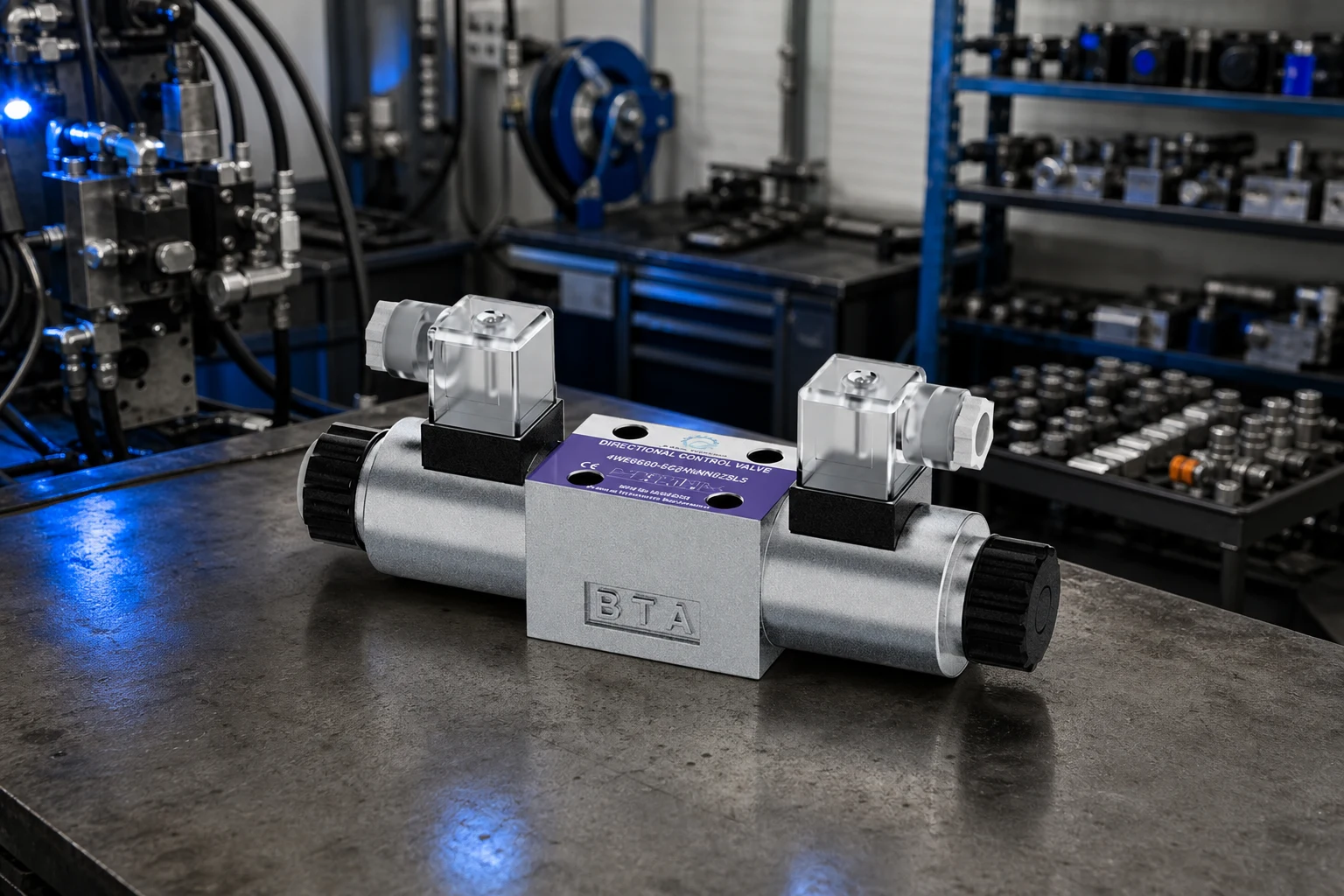
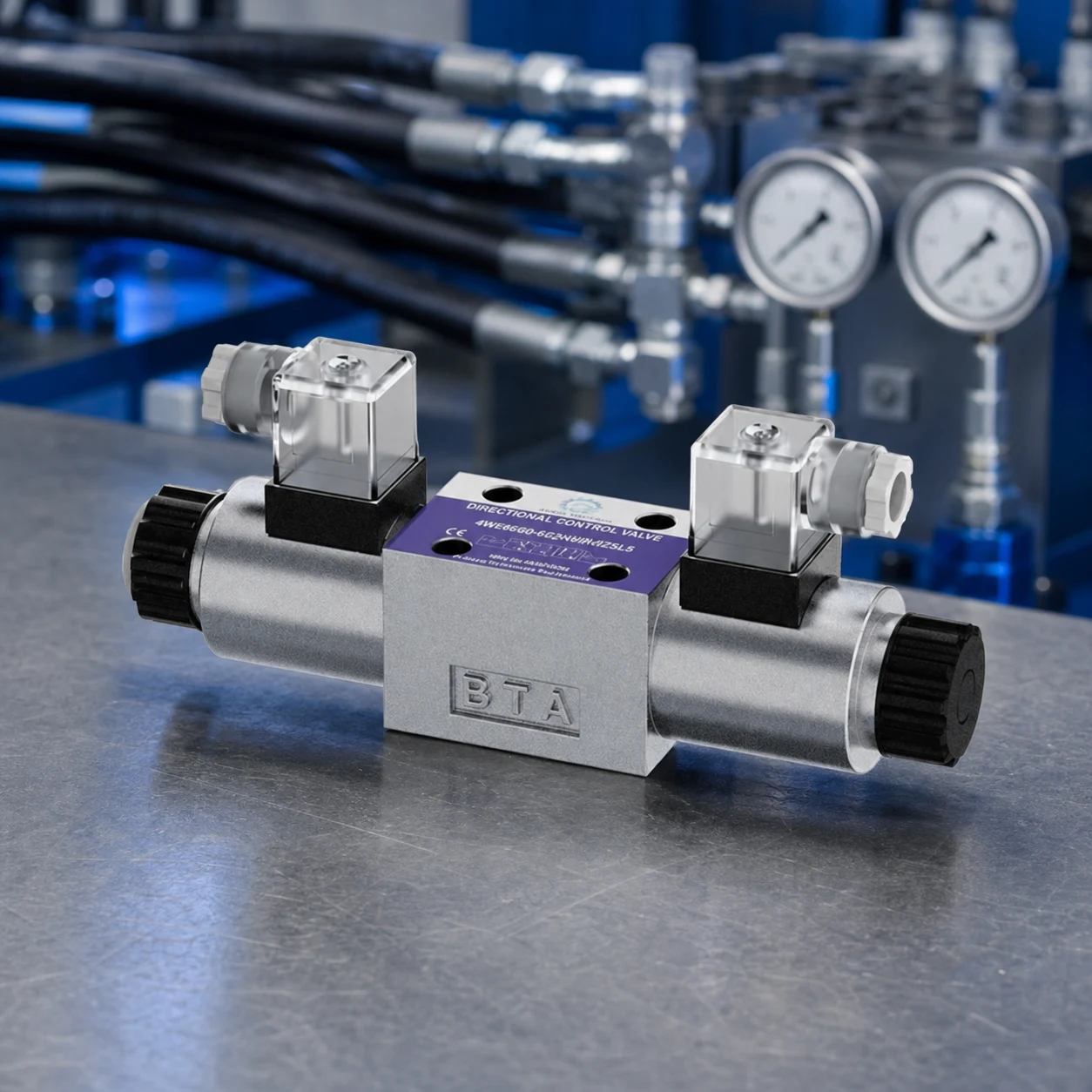
For a product-family review, start with the hydraulic valves range, review the directional valve 4WE route when relevant, then submit the full application through the contact page. A model recommendation requires the applicable datasheet and complete operating inputs.
FAQs
Why do hydraulic valve spools stick?
Contamination, varnish, damaged lands or incorrect fluid conditions can increase friction or block movement.
Can a new valve fix contamination alone?
No. Remaining dirty fluid or debris sources can damage the replacement.
What should be inspected first?
Fluid condition, filters, recent maintenance openings and the symptom timeline.
Do proportional valves need stricter cleanliness attention?
Many precision valves specify tighter fluid conditions; confirm the model datasheet.
Is visible fluid dirtiness enough evidence?
It is a clue, but documented sampling and filter history are more useful for RFQ review.
What belongs in a contamination-related RFQ?
Fluid data, filter details, symptoms, duty points, mounting and nameplate information.
References
- Parker basic hydraulic formulas — fluid and operating-condition context for contamination-related valve review.
- Danfoss Series 40 technical information — why cleanliness and operating limits belong with component review.