Wenzhou Prance Hydraulic Equipment Co., Ltd

Hydraulic Axial Piston Pump: Working Principle & Specs
A hydraulic axial piston pump uses pistons arranged parallel to the drive shaft to convert rotation into high-pressure flow. It is the standard main-pump architecture on excavators, presses, and many industrial power units—especially when you need pressures above roughly 210 bar (3,000 psi) and variable displacement control.
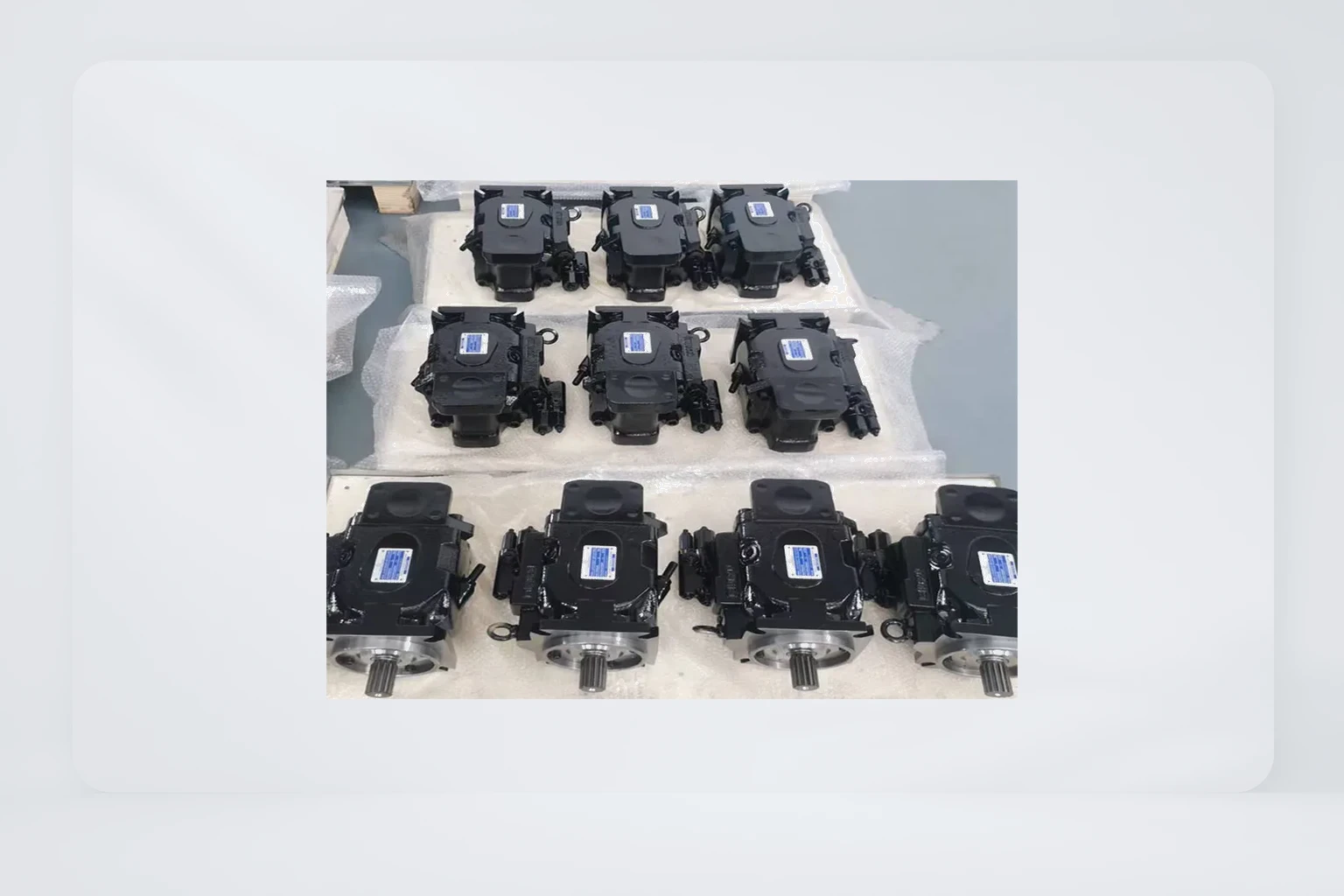
This cluster guide explains the working principle, major subtypes, key components, and specification checklist for U.S. buyers. For the broader piston-pump family overview, see our hydraulic piston pump types and selection guide.
Table of Contents
- Part 1. What Is a Hydraulic Axial Piston Pump?
- Part 2. How Does an Axial Piston Pump Work?
- Part 3. Swashplate vs Bent-Axis: Which Design Fits Your Duty?
- Part 4. What Are the Main Components?
- Part 5. How Do Variable Displacement and Controls Work?
- Part 6. How Do You Size an Axial Piston Pump?
- Part 7. Which Applications Use Axial Piston Pumps?
- Part 8. A10VSO Series Specs for Open-Circuit Duties
- FAQ
- References
Part 1. What Is a Hydraulic Axial Piston Pump?
An axial piston pump is a positive-displacement pump whose pistons move back and forth along the same axis as the input shaft. A rotating cylinder block carries multiple pistons—often seven to eleven in common industrial sizes—through suction and discharge phases each revolution.
Unlike external gear pumps, axial piston units routinely serve high-pressure, variable-flow circuits. They are widely used as main pumps on mobile machinery and as the pressure source on industrial HPUs for metal forming, injection molding, and test equipment.
Part 2. How Does an Axial Piston Pump Work?
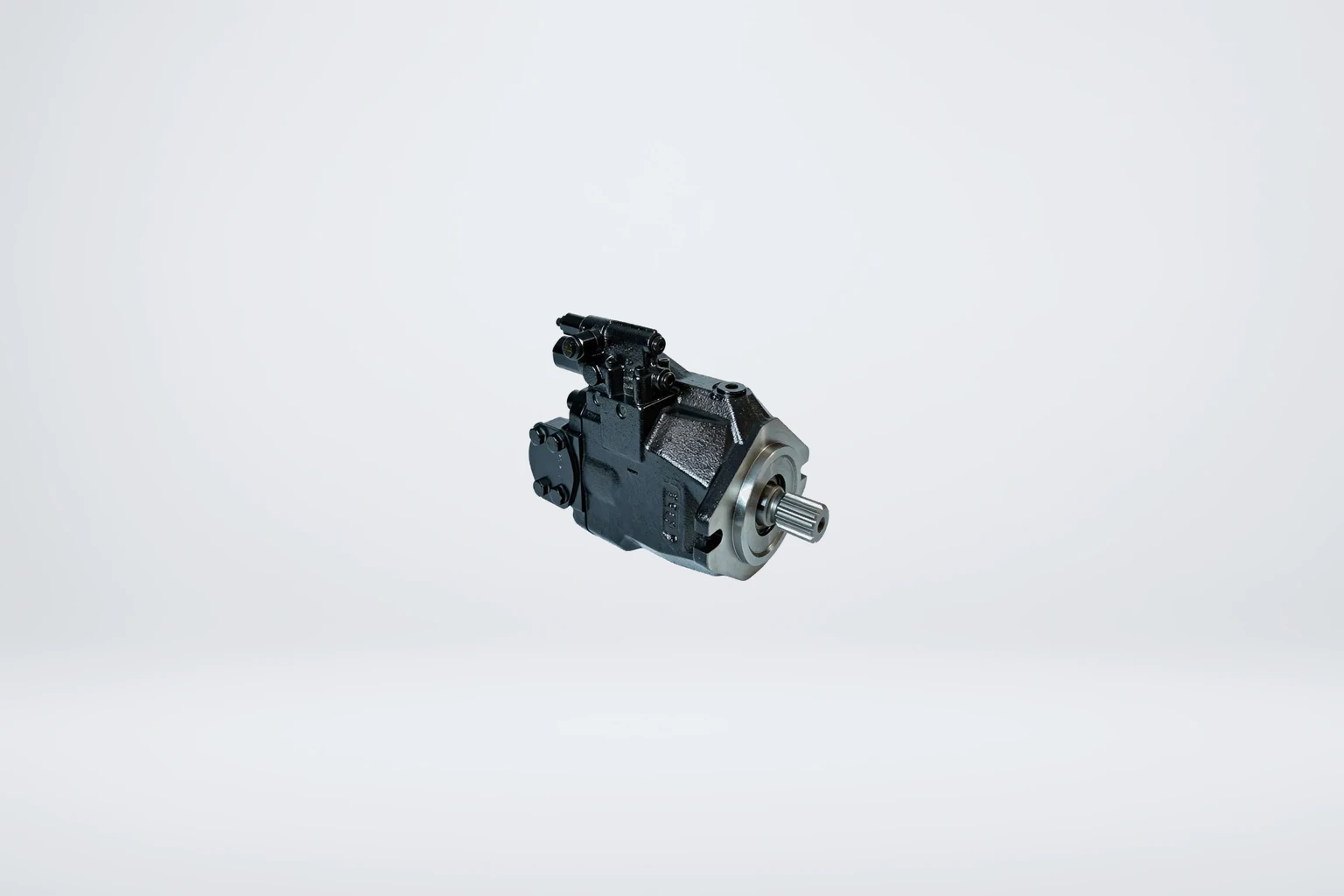
The cycle has two repeating phases per piston:
- Suction — As the cylinder block turns, each piston moves outward, increasing chamber volume. Fluid enters through inlet ports in the valve plate.
- Discharge — Continued rotation forces the piston inward, reducing volume and pushing fluid out at system pressure.
What makes pistons reciprocate while the barrel spins? In the dominant swashplate layout, piston shoes ride on an angled stationary plate. The plate angle sets stroke length. In a bent-axis layout, the cylinder block is tilted relative to the shaft, and pistons connect to the drive flange through ball joints.
Tip: On first install, confirm shaft rotation (CW/CCW), case drain line routing, and control port plumbing before run-up. Reversed rotation or a blocked case drain can destroy a new unit quickly.
Part 3. Swashplate vs Bent-Axis: Which Design Fits Your Duty?
| Design | Typical strengths | Typical limits | Common uses |
|---|---|---|---|
| Swashplate (inline) | Compact; easy variable displacement; tandem pump stacking | Slipper/swashplate interface sensitive to contamination | Excavator main pumps, industrial open-circuit HPUs |
| Bent-axis | High mechanical efficiency; robust at high speed/shock | Larger envelope; many units fixed displacement | Hydrostatic drives, high-speed inputs, heavy shock |
For most open-circuit mobile and general industrial variable-flow jobs, swashplate axial pumps are the default choice. Bent-axis designs earn consideration when efficiency at high speed or severe duty cycles dominates the specification.
Part 4. What Are the Main Components?
| Component | Function |
|---|---|
| Cylinder block (barrel) | Holds pistons; rotates with the shaft |
| Pistons and slippers/shoes | Reciprocate to displace fluid; transfer load to swashplate |
| Swashplate or bent-axis mechanism | Sets piston stroke |
| Valve plate | Separates inlet and outlet timing (kidney ports) |
| Drive shaft | Transfers input torque to the rotating group |
| Case / case drain | Collects internal leakage for cooling and lubrication |
Important: Axial piston pumps depend on fine clearances. ISO 4406 fluid cleanliness targets from the manufacturer datasheet are not optional—they directly affect slipper life and case-drain leakage.
Part 5. How Do Variable Displacement and Controls Work?
In a variable swashplate pump, changing the swashplate angle changes displacement:
- Steep angle → long piston stroke → higher flow per revolution.
- Near-zero angle → minimal stroke → near-zero flow while the shaft still turns (standby).
Common control strategies include:
- Pressure compensated (PC) — Pump destrokes toward zero flow as system pressure reaches the compensator setting, reducing heat at partial load.
- Load sensing (LS) — Adjusts displacement to maintain a controlled pressure drop across a metering valve; common on multi-function mobile machines.
- Electric proportional — Swashplate angle commanded by a proportional solenoid for precise industrial motion.
Tip: Match the control type to the circuit architecture. A PC pump on a load-sensing valve bank may hunt or overheat unless the system designer intended that pairing.
Part 6. How Do You Size an Axial Piston Pump?
- Pressure — Define continuous working pressure and peak spikes. Size rated pressure with margin (often 10–20% above expected continuous duty).
- Flow — Approximate flow: Q (L/min) ≈ displacement (cm³/rev) × speed (rpm) ÷ 1000.
- Power — Input power (kW) ≈ Δp (bar) × Q (L/min) ÷ 600 (approximate; verify with efficiency data).
- Speed — Stay within catalog nmax at full displacement; derate at higher ambient temperature if required.
- Interface — Verify shaft, rotation, flange, port size, and control ports before ordering.
Example: At 1,500 rpm and 71 cm³/rev nominal displacement, theoretical flow is about 107 L/min (28 U.S. gpm)—before volumetric efficiency losses.
Part 7. Which Applications Use Axial Piston Pumps?
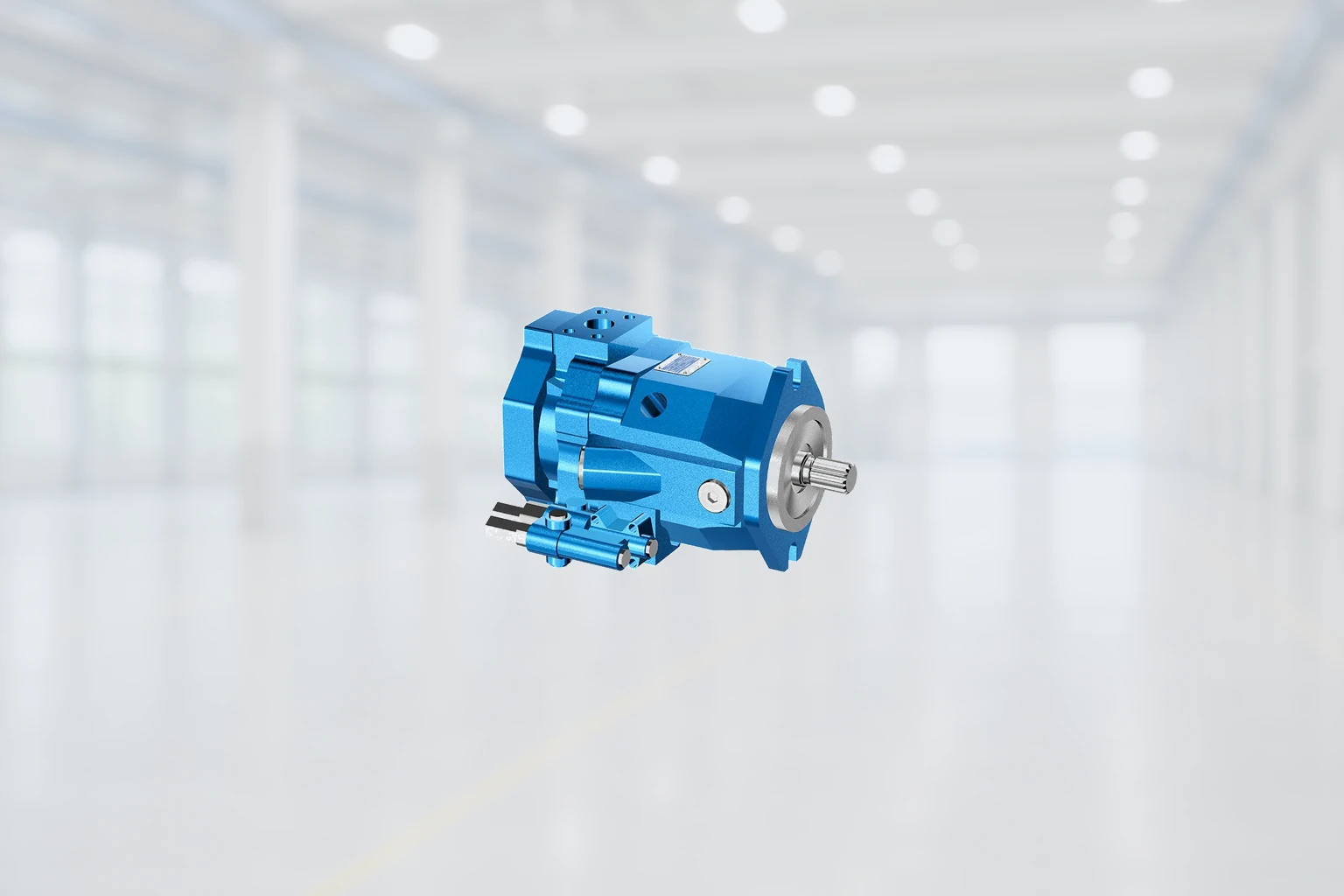
- Construction and mining — Main pump on excavators, wheel loaders, and drill rigs (see also hydraulic pumps for excavators).
- Industrial presses and forming — High force with stable pressure control.
- Plastic injection and machine tools — Variable flow for acceleration/deceleration profiles.
- Mobile material handling — Load-sensing circuits with multiple actuators.
Part 8. A10VSO Series Specs for Open-Circuit Duties
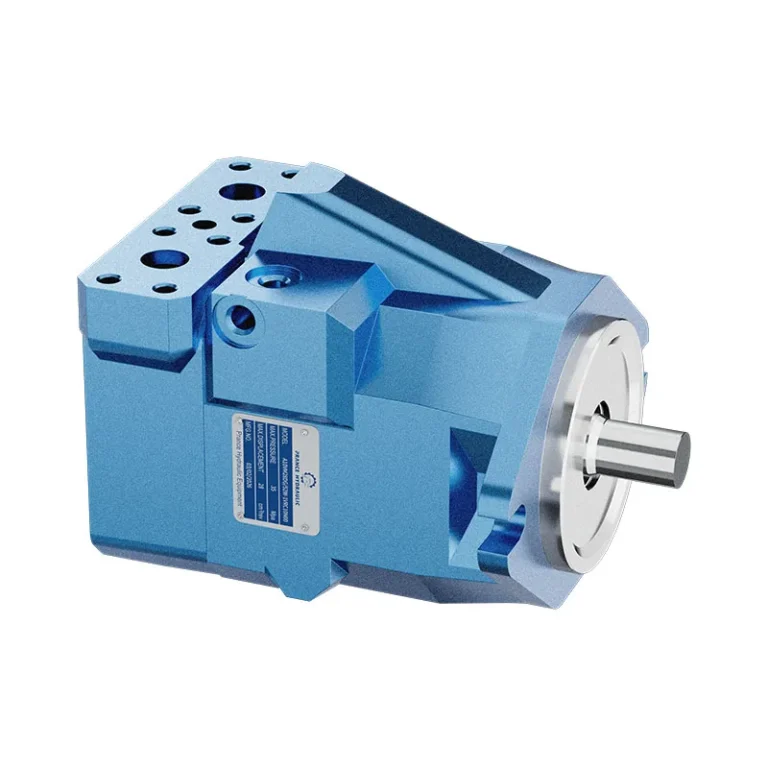
Prance Hydraulic supplies the A10VSO variable displacement axial piston pump for open-circuit hydrostatic drives. Published catalog highlights include:
| Size (cm³/rev) | Max speed (rpm) | Max flow at nmax (L/min) | Max power at Δp=280 bar, nmax (kW) |
|---|---|---|---|
| 18 | 3,300 | 59.4 | 27.7 |
| 45 | 2,600 | 117 | 55 |
| 71 | 2,200 | 156 | 73 |
| 100 | 2,000 | 200 | 93 |
| 140 | 1,800 | 252 | 118 |
280 bar (4,060 psi) is used in the published power table; always confirm continuous vs peak pressure for your duty cycle. For higher displacement and 420 bar class duties, review the A4VSO series on the same site.
Manufacturing follows ISO-certified processes. Share target pressure, flow, speed range, control type, and mounting details via our contact form for selection support.
FAQ
What is an axial piston pump?
It is a positive-displacement pump with pistons parallel to the drive shaft, used for high-pressure hydraulic systems with fixed or variable flow.
How does an axial piston pump work?
A rotating cylinder block drives pistons through suction and discharge phases. A swashplate or bent-axis mechanism creates reciprocating motion while the barrel spins.
What is the difference between swashplate and bent-axis designs?
Swashplate pumps tilt a stationary plate against sliding shoes—compact and easy to make variable. Bent-axis pumps tilt the cylinder block relative to the shaft—often higher efficiency and robustness at speed.
When should you choose an axial piston pump?
When system pressure and variable flow requirements exceed practical gear or vane pump limits—typically above ~210 bar (3,000 psi) continuous class depending on duty.
What are the main components?
Cylinder block, pistons/slippers, swashplate or bent-axis mechanism, valve plate, shaft, and case drain path.
How do you size an axial piston pump?
Match displacement and speed to required flow, rated pressure to system pressure with margin, and verify input power and interface dimensions.
What is variable displacement?
Output per revolution changes—usually by adjusting swashplate angle—so flow matches load without excessive throttling.
What pressure can axial piston pumps reach?
Swashplate industrial pumps commonly operate in the 280–350 bar (4,000–5,000 psi) class depending on series and duty; always use catalog continuous ratings.
What applications use them?
Excavators, presses, injection molding machines, cranes, and other mobile or industrial high-pressure circuits.
How do you maintain an axial piston pump?
Maintain fluid cleanliness, monitor case-drain flow trends, keep suction lines tight, and replace filters per schedule.
References
- Wikipedia — Axial piston pump
- HK Hydraulik — Axial piston pump glossary
- Fluid Power World — A designer’s guide to hydraulic pumps
- Prance Hydraulic — A10VSO variable displacement piston pump
- Prance Hydraulic — Hydraulic piston pump selection guide
Get a Free Quote — Send displacement, pressure, speed, and application details for A10VSO/A4VSO selection.