Wenzhou Prance Hydraulic Equipment Co., Ltd

Which installation records matter before a pump coupling review?
Hydraulic pump coupling alignment should be reviewed from a controlled installation record that joins the pump shaft, coupling, mounting, drive arrangement, drawing revision, observations, and applicable documentation. A visual impression or a familiar coupling cannot establish alignment, readiness to run, or a replacement fit.
Part 1. What should a coupling-alignment review establish?
Start by identifying the machine function and the decision being requested. Record whether the question follows a new build, an installation change, a replacement, or an observation after operation; that distinction gives the rest of the evidence a usable frame.
The pump, coupling, mounting, and drive should be treated as one review subject. A detached part number or a single shaft photograph may identify a component, but it does not show how that component sits in the installed arrangement.
Applicable documentation places a limit around the conclusion. The record should make open points visible before a supplier or project team is asked to compare a configuration.
Part 2. Which installation records belong together?
Gather the record in a way that keeps the installation traceable. This is an RFQ evidence table, not a procedure for setting a coupling or deciding whether a machine can run.
| Buyer should provide | Why it matters | Send with quote |
|---|---|---|
| Pump and coupling identification | Connects the question to known items | Include readable identifiers and source documents |
| Shaft, mounting, and drive views | Shows the installed arrangement | Mark the machine location and viewing direction |
| Drawing revision and change history | Separates original design from later changes | State which revision is controlled |
| Observations with date and operating context | Preserves what was actually seen | Keep descriptions separate from diagnoses |
| Available measurement or service record | Identifies documented evidence already available | Provide source and date without interpreting a result |

The hydraulic pump engine matching article provides related drive-context reading. It does not establish a coupling fit or an alignment result for a particular installation.
Part 3. Why does the installation history matter?
The installation history explains why a familiar assembly may need a fresh review. A changed mount, new drive component, altered drawing revision, or incomplete service record can change what needs confirmation even when the pump itself appears unchanged.
Keep the current observation beside the earlier document rather than choosing one as automatically correct. That gives the review team a way to identify a difference without treating it as proof of a defect.
When the concern began after operation, the hydraulic pump noise troubleshooting article can help organize observations. It does not diagnose an alignment condition or authorize a repair.
Important: Do not use a visual shaft position, a replaced coupling, or an unverified measurement as permission to run or adjust a pump. Technical conclusions require the applicable product documentation and project conditions (Danfoss Series 40 technical information).
Part 4. Why does a familiar coupling not settle alignment?
A coupling can look familiar while the surrounding record remains incomplete. Its appearance does not reveal the controlled drawing, installed mount, drive arrangement, measurement method, or the conditions under which the observation was made.
That is why a coupling question should retain its installation evidence instead of collapsing into a visual comparison. The hydraulic engineering review article is a useful route for recording unanswered project questions without asserting a fit.
Describe what is known in precise terms, then mark the rest as unknown. This approach gives an engineer or supplier a bounded question rather than a request to infer a result from one component.
Part 5. When should a team pause before running the pump?
Pause when the pump and coupling cannot be identified together, the mounting or drive arrangement differs from the controlled record, the drawing revision is unavailable, an observation has no operating context, or a proposed change lacks documentation. A pause is also appropriate when a run decision depends only on a visual impression.
The next useful action might be to obtain the controlled drawing, record the installed arrangement, or preserve an observation with its date and location. Those steps create evidence without turning the article into a field instruction.
This is the fit boundary: the page supports a coupling-review record. It does not set alignment values, approve installation, diagnose a condition, authorize startup, or promise pump and coupling compatibility.
Part 6. How should coupling-review evidence be sent for review?
Send the pump and coupling identification, shaft and mounting views, drive arrangement, applicable drawing revision, installation and change history, observations with conditions, available measurement or service records, application, quantity, delivery requirements, and the exact question needing confirmation.
For family-level navigation, consult the hydraulic pump product family and the OEM / ODM route. Submit the controlled record through the contact page instead of requesting an alignment or compatibility conclusion from a single image.
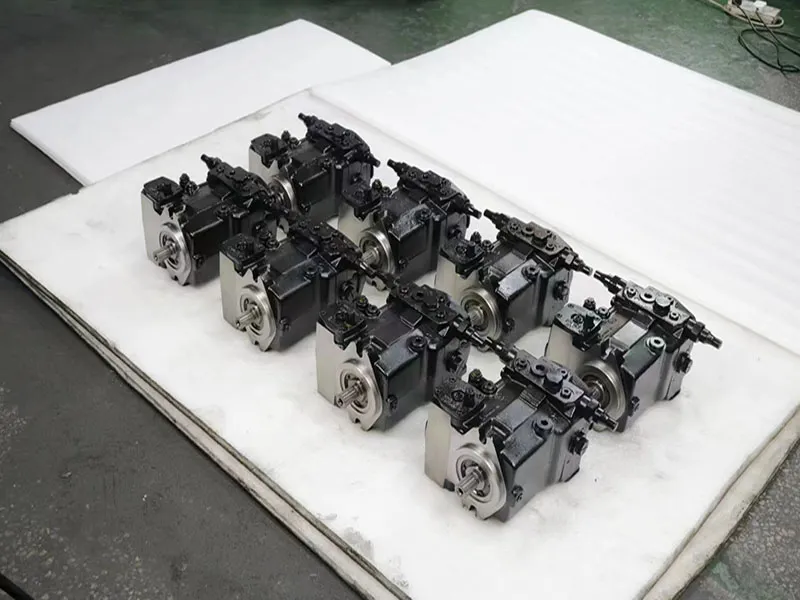
The product recommendation remains at family level. A named pump, coupling, or drive arrangement should not be proposed until the selected-item documentation and installation record have been reviewed.
FAQs
What should be checked before a hydraulic pump coupling review?
Collect the pump and coupling identification, shaft and mounting evidence, drive context, controlled drawing revision, installation history, observations, and applicable documentation before asking for a conclusion.
Can coupling alignment be confirmed by eye?
No. A visual impression can document an observation, but it does not establish an alignment result, a tolerance, or readiness to run.
Does a new coupling prove the installation is ready?
No. A replacement part does not replace the need to review the installed arrangement, controlled record, and applicable project conditions.
Which drawings should be included in the review?
Include the applicable controlled drawing revision and any documented change information that helps identify the pump, mount, coupling, drive, and installation context.
When should a pump remain out of service for review?
Pause when the installed arrangement cannot be tied to documentation, a change is unexplained, observations lack context, or a run conclusion would depend only on an assumption.
What belongs in a pump coupling installation RFQ?
Include pump and coupling identifiers, shaft and mount views, drive context, drawing revision, installation history, observations, available records, application, quantity, delivery requirements, and the open question.
References
- Danfoss Series 40 technical information — applicable conditions and documentation bound technical conclusions.
- Danfoss H1F motor technical information — system context is part of hydraulic component review.
- Danfoss technical documentation — documentation establishes the boundary for component conclusions.
- Danfoss cartridge valves technical information — application-specific context limits a technical conclusion.