Wenzhou Prance Hydraulic Equipment Co., Ltd

What record should verify a pump’s rotation direction?
Hydraulic pump rotation direction verification should start with the installed pump’s evidence, not an arrow copied from another product. A buyer may need to clarify a direction question after installation, service, or a proposed replacement. The reliable starting point is a traceable pump identity, the applicable document revision, the viewing reference used by that document, and the known drive and installation context.
Part 1. Why is a verification record better than a generic direction answer?
A direction question can sound simple while still depending on component identity and document context. A label, a drawing, a drive description, and a viewing reference may each contribute to the review. Without those materials, a generic clockwise or counter-clockwise answer can be detached from the actual pump and the way its documentation defines the view.
This page therefore organizes a record rather than an installation method. It helps an OEM, distributor, or integrator state the question precisely before requesting a model-specific review. The related hydraulic pump priming procedure covers a different first-start evidence set and should not be read as a direction instruction.
| Record question | Evidence to retain | Why it matters |
|---|---|---|
| Which pump is installed? | full model reference and nameplate image | connects the question to a documented family |
| Which document applies? | document title, revision, and relevant figure | avoids importing another family’s convention |
| From which view is the reference taken? | drawing note or document reference | keeps the wording attached to the source |
| What changed? | installation, overhaul, exchange, or drive-work record | gives a reviewer bounded history |
Part 2. Which identity and document details must be collected?
Begin with the physical item and its controlled documentation. A partial model string, an online catalogue photograph, or a familiar pump shape cannot establish which manual or drawing applies. Record the complete identification visible on the installed item, the document revision supplied for that family, and the circuit or equipment context in which the question arose.
The viewing reference should be copied as evidence, not paraphrased into a direction claim. If a drawing contains an arrow or a shaft-end note, attach the relevant page and record the revision. That practice lets the next reviewer distinguish a verified document reference from a recollection or a convention learned on a different machine.
Important: A generic article cannot authorize an installation, coupling action, first start, or return to service. An identified pump’s evidence needs a competent review against its applicable controlled documents. ISO 4413
Part 3. Which drive and installation evidence belongs with the record?
The pump does not sit outside its drive and circuit context. For a controlled inquiry, retain the available drive description, coupling or mounting evidence, work scope, and any document that identifies the installed arrangement. These inputs do not determine a rotation direction by themselves; they prevent the question from being separated from the equipment that must be reviewed.
| Buyer should provide | Review purpose | Common gap |
|---|---|---|
| Complete pump identity | locates the applicable product documentation | sending only a brand family name |
| Document page and revision | preserves the governing viewing reference | using an undated online image |
| Drive and coupling description | makes the installation context visible | assuming the drive is unchanged |
| Installation or overhaul scope | identifies what was altered | describing a repair without the retained interfaces |
| Circuit role and equipment reference | helps delimit the review | treating the pump as an isolated part |
This is an RFQ evidence set, not a request to prescribe a direction or a startup method. Once the record is complete, the hydraulic pumps page can serve as a family-level orientation point for a documented inquiry.
Part 4. Why can a shaft-view assumption create a mismatch?
Words such as “left,” “right,” “clockwise,” and “counter-clockwise” need a declared observation point. If a person looks at a different end of the component than the drawing assumes, the same physical motion can be described differently. The solution is not to pick the more familiar convention; it is to preserve the document’s viewing reference and compare it with the identified installed unit.
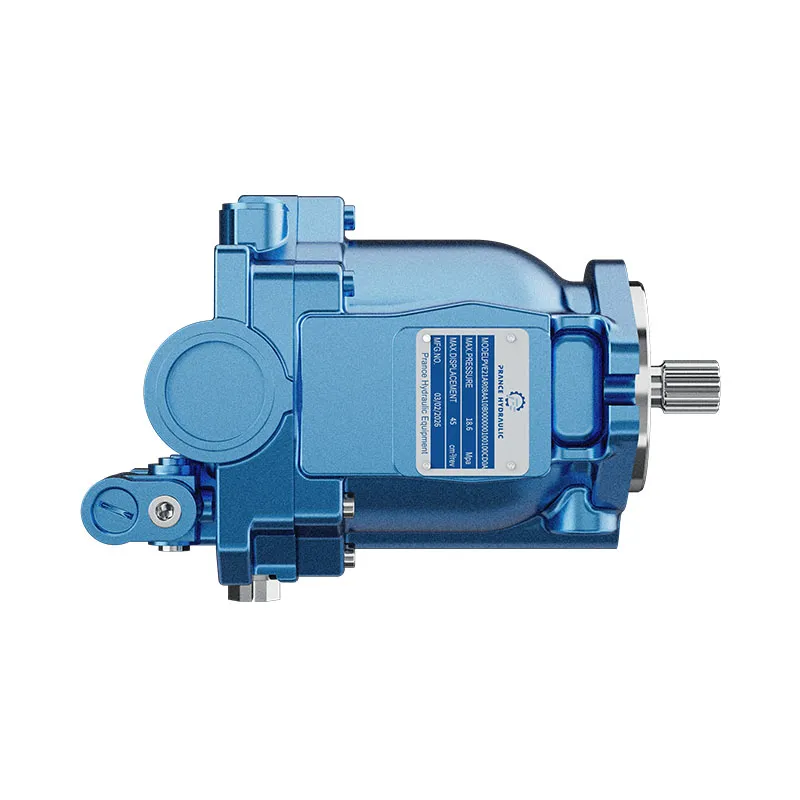
This boundary also explains why a photograph alone is incomplete. It may show a shaft, ports, a label, or a mounting face, but it may not establish the document revision, the viewing convention, or the relevant drive arrangement. The related hydraulic pump coupling alignment article can help organize mechanical-installation evidence without supplying a direction answer.
Part 5. When must the question move to engineering review?
Move the question to a competent engineering review when the pump identity, controlled document, viewing reference, drive context, or work record is missing. The same boundary applies when the next decision would involve installation, energization, rotation, coupling, fluid handling, startup, or acceptance. A direction question does not make those decisions lower risk.
The useful outcome of this record is a visible list of what is known and what is still open. It helps a reviewer ask for the right document rather than making a claim from an ambiguous image. This article does not confirm a pump direction or diagnose an installation condition.
Part 6. Which pump-family route supports a documented inquiry?
Use the OEM / ODM page when the question concerns a documented pump match or an installation context requiring review. Include the model reference, nameplate image, governing document page, viewing-reference note, drive description, and installation or overhaul record. The contact page provides a direct route for sharing that evidence.
The hydraulic pumps page is suitable for product-family orientation only. It is not a recommendation of a direction, pump, coupling, startup action, or performance outcome. State the missing evidence clearly where the record is incomplete.

FAQs
What is needed before rotation direction is confirmed?
Collect the installed pump identity, the applicable document revision, the document’s viewing reference, and the known drive and installation record. Those materials establish a controlled review subject.
Does pump rotation depend on which end is viewed?
The wording must always be tied to the viewing reference stated in the applicable documentation. Do not transfer a direction phrase without recording that reference.
Can a photograph confirm rotation direction?
Usually not on its own. It can support identity or installation evidence, but it may not establish the governing document, its revision, or the viewing convention needed for a conclusion.
Can a generic arrow be transferred to another pump?
No. A marking or diagram must be read with the identified pump family and the applicable document. Similar appearance does not prove the same documented convention.
When should a rotation question be escalated?
Escalate when the record lacks a complete identity, controlled document, viewing reference, or drive context, or when the next decision would affect installation, startup, or return to service.
What belongs in a pump matching inquiry?
Provide the full model reference, nameplate image, document page and revision, viewing-reference note, drive description, and installation or overhaul history. These RFQ inputs support a controlled family-level discussion.