Wenzhou Prance Hydraulic Equipment Co., Ltd

Which records separate a coil symptom from a valve conclusion?
A hydraulic solenoid valve coil failure should begin as a symptom record, not an immediate coil-replacement decision. A hot coil, an unexpected valve response, or a reported electrical concern can be important evidence, but none alone proves which component is at fault. Identify the installed valve and coil, preserve the operating and service context, and compare the record with the applicable product documentation before a replacement or repair discussion.
Part 1. What does a coil-related symptom establish, and what does it not establish?
A coil-related symptom establishes an observation about an installed assembly. It may be a report of heat, an unexpected response, a visible condition, or a change noticed after service. It does not establish an electrical cause, an internal valve condition, a wiring issue, a compatible replacement, or an authorized corrective action.
Keeping this boundary clear avoids narrowing the investigation too early. The existing hydraulic directional valve troubleshooting page remains useful for broad directional-valve symptoms. This page narrows the task to the evidence that must be assembled before a symptom becomes a coil conclusion.
| Record question | Evidence to keep | Why it changes the review |
|---|---|---|
| What was observed? | dated description, images where useful, and machine state | retains the symptom without naming a cause |
| Which valve is installed? | traceable valve model, coil marking, and nameplate image | prevents an assumption based on appearance |
| What changed beforehand? | service, installation, wiring, or component-change record | creates a bounded history for review |
| Which document governs? | current manufacturer document and revision | anchors the later comparison to an identified manufacturer reference |
Part 2. Which valve, coil, and document details identify the review subject?
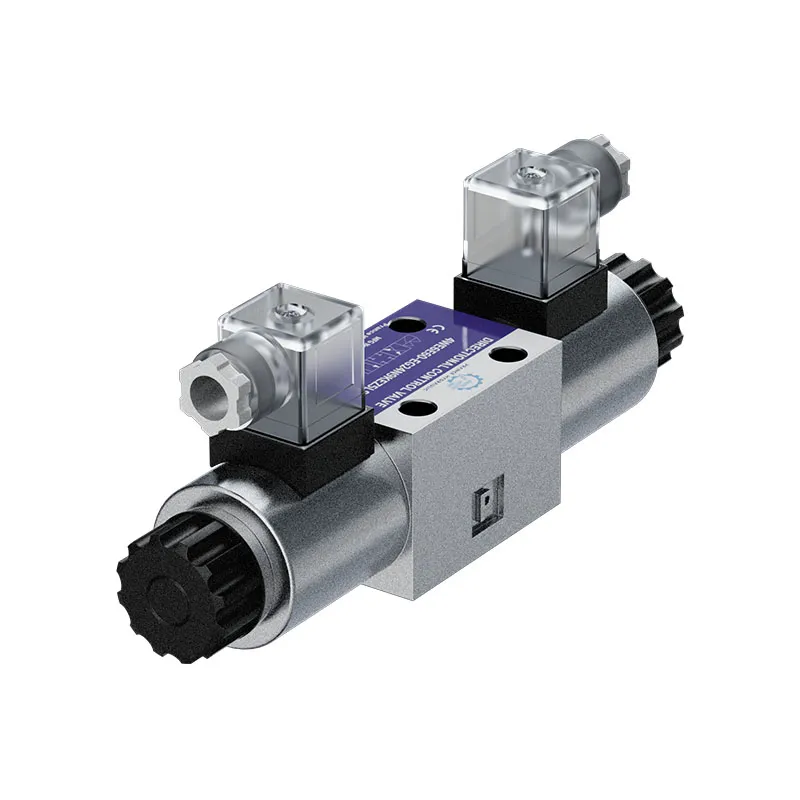
Start with the installed assembly. A valve body, coil marking, connector arrangement, and applicable document identify a review subject more reliably than a generic description such as “a 24-volt coil” or “a directional valve.” Manufacturer documentation is organized around identified product families, so the family and revision matter before an interchangeability or replacement question can be evaluated.
Record the valve model, coil marking as observed, document revision, circuit function, and any known recent change. If the equipment includes multiple similar valves, identify the exact location without assuming that adjacent units use the same document or component arrangement.
Important: This article does not authorize energization, isolation, measurement, wiring changes, disassembly, or return to service. A competent reviewer must compare the valve record with its identified product documentation. ISO 4413
Part 3. Which electrical, response, and service-history evidence should be preserved?
Preserve the evidence that describes the symptom and the system context. A report should distinguish what was observed from what was inferred. For example, it can record the valve identity, the coil marking, the condition in which the symptom appeared, the relevant service history, and the controlled document already available. It should not turn a web article into a resistance threshold, voltage instruction, energization test, or coil-selection rule.
| Buyer should provide | Review purpose | Common gap |
|---|---|---|
| Valve model and clear nameplate image | identifies the documented valve family | a partial marking or similar online image |
| Coil marking and connector view | describes the installed assembly | assuming all visually similar coils interchange |
| Symptom and machine-state record | preserves what happened and when | stating a cause without a record |
| Recent service or change scope | clarifies what was changed or retained | omitting work performed near the valve |
| Applicable document revision | gives the reviewer a controlled reference | using an unrelated data sheet |
These are RFQ inputs, not electrical instructions. They can support a family-level inquiry through the hydraulic valves page. They do not establish a voltage, a wiring action, a coil selection, a valve setting, or a successful system outcome.
Part 4. How should a spool or contamination concern be separated from a coil conclusion?
An observed valve response can have more than one possible context. The coil, the valve mechanism, the fluid condition, the circuit, and the recorded service history should not be collapsed into a single cause because a symptom appears near an electrical component. Keep the coil-specific record separate from any mechanical or contamination question until an appropriately qualified review can compare the evidence with the controlled document.
The related hydraulic valve contamination article provides a separate evidence perspective on spool movement and inspection. It does not prove that a coil is serviceable or defective. Separating these records protects the inquiry from an unsupported component conclusion.

Part 5. When should the question move to competent engineering review?
Move the question to competent engineering review when the valve identity, coil marking, document revision, service history, or symptom record is incomplete. The same boundary applies when the next decision would involve energization, electrical measurement, wiring, disassembly, a component replacement, a hydraulic setting, or return to service. ISO 4413 and HSE guidance both support a controlled approach rather than an improvised action drawn from a generic search result.
The record makes uncertainty visible. It lets a reviewer ask for a missing document or a better description of the installed component instead of treating a suspected coil condition as a confirmed failure. This page therefore does not diagnose a valve or approve a replacement.
Part 6. Which valve-family route supports a controlled inquiry?
For a documented component or matching discussion, use the OEM / ODM page after gathering the valve identity, observed coil marking, applicable document, symptom record, and relevant service context. The contact page can receive those materials for a controlled family-level conversation.
The hydraulic valves page is the appropriate product-family orientation point. It is not a recommendation of a coil, connector, valve, wire arrangement, setting, or operating result. Where evidence is incomplete, record the missing item rather than substituting a generic coil or a conclusion.

FAQs
Does a hot or non-responsive coil prove the coil has failed?
No. It records a symptom on an installed assembly, not a confirmed component cause. Identify the valve and coil, the applicable document, and the service context before a competent reviewer decides what the symptom means.
What details identify a hydraulic solenoid valve coil for review?
Provide the valve model, clear nameplate image, observed coil marking, connector view, applicable document revision, and the location of the installed valve. Visual similarity does not establish interchangeability.
Why should the machine state and service history be recorded?
They describe the context in which the symptom appeared and what changed before it was seen. That information is more useful than a conclusion that a coil is bad without a controlled record.
Can a spool or contamination concern be treated as proof of a coil problem?
No. Mechanical and fluid-condition questions are separate evidence tracks. Preserve both records so an appropriately qualified reviewer can assess the installed valve against the applicable documentation.
When should a coil-related symptom be escalated for engineering review?
Escalate when the component identity, controlled documentation, service history, or observation record is missing, or when the next decision would involve energized work, measurement, wiring, replacement, disassembly, a setting, or return to service.
What should be included in a valve matching inquiry?
Include the valve model, nameplate image, observed coil marking, document revision, symptom record, recent work scope, and relevant circuit context. Those RFQ inputs support a controlled discussion without implying a coil or valve replacement will fit or resolve the condition.