Wenzhou Prance Hydraulic Equipment Co., Ltd

Pressurized Hydraulic Reservoirs: Pump Inlet Benefits and Limits
Hydraulic pump reservoir pressurization raises the pressure acting on the oil surface, which can improve the absolute pressure available at a pump inlet. It is useful only when the entire reservoir, inlet arrangement, seals, case drain and protective equipment are designed for it. It does not repair a blocked suction line, remove entrained air, or authorize exceeding a pump’s inlet or housing limits. Before choosing it, establish the worst operating condition, calculate the inlet pressure budget, and confirm the approved limits for the exact pump and tank. A sealed cap alone is not a controlled pressurization system.
Start with the inlet problem you actually have
A pump must fill its working chambers as they expand. Inlet conditions therefore matter before the machine reaches its normal working pressure. Cold viscous oil, high pump speed, a long suction hose, restrictive fittings, elevation and a low reservoir level can reduce the pressure available at the inlet. Some problems occur only during the first seconds of a cold start; others develop during a fast transient or when the equipment works on a slope.
Record the condition that produces the symptom. A pump that becomes noisy only at startup needs a different investigation from one that becomes noisy after the tank level falls. Noise alone does not prove cavitation. Air leakage, mechanical vibration and other hydraulic faults can produce confusingly similar symptoms. Use appropriate measurements and the equipment’s approved diagnostic procedure rather than treating tank pressure as a universal adjustment.
Pressurization belongs late in this investigation, after checking the basic inlet path. If the existing machine specifies an atmospheric reservoir, converting it creates a system design question. A supplier’s generic statement that a pump has good suction performance is insufficient evidence for that conversion.
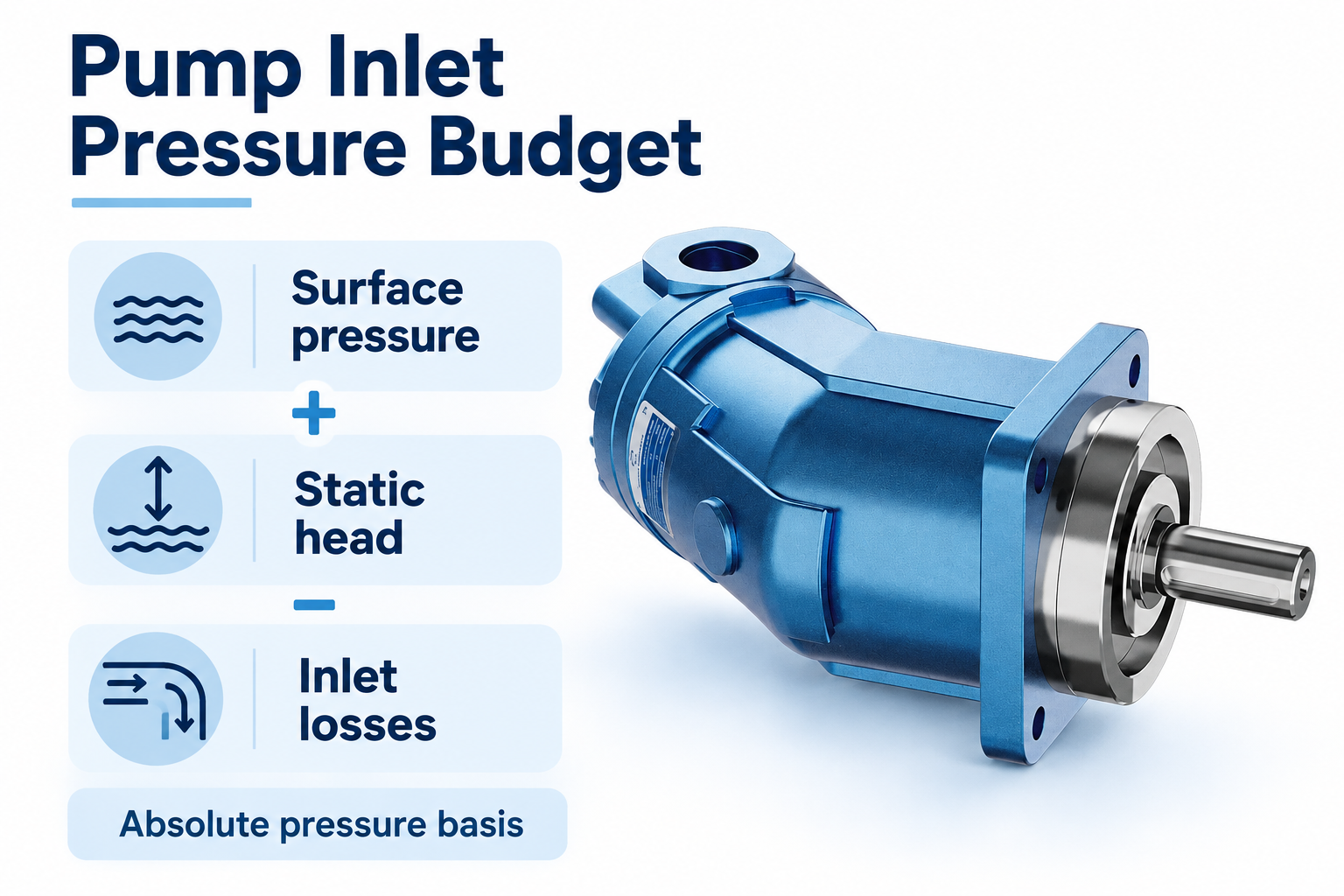
Use absolute pressure for the pressure budget
Gauge pressure is referenced to the surrounding atmosphere. Absolute pressure is referenced to a vacuum. The pump’s documentation may specify its inlet boundary using either convention, so the first calculation step is to identify which convention applies. A reading that looks acceptable as gauge pressure can be misunderstood if compared directly with an absolute-pressure limit.
For a steady, liquid-filled inlet path, a useful engineering bookkeeping expression is: inlet absolute pressure equals oil-surface absolute pressure plus static liquid head minus inlet pressure losses. This is a pressure budget, not a complete dynamic model. Acceleration, pulsation, moving equipment and local restrictions can create conditions that a simple steady calculation misses. Put every term in consistent pressure units and use the actual oil density when converting elevation into pressure.
Raising oil-surface pressure adds to that budget. Reducing an avoidable line loss can also improve it. These are different interventions with different consequences. A larger, shorter inlet route may solve a restriction without introducing stored gas energy into a reservoir. Conversely, a machine with a deliberately pressurized reservoir may depend on its specified pressure-control system for normal operation.
Compare the available responses before adding pressure
The correct response depends on what consumes the inlet margin. Use the following table to organize a review, rather than treating any row as permission to modify a machine. The basic relationships follow fluid statics and pump inlet principles; the university course listed below provides background. Component and reservoir approvals must come from their own documentation.
| Observed condition | First question | What reservoir pressure can change | What still needs correction or approval |
|---|---|---|---|
| Cold-start inlet depression | Is oil viscosity within the approved starting range? | Raises surface-pressure contribution | Starting speed, oil selection and restrictive line losses |
| Pump mounted above liquid level | What is the actual static lift at minimum level? | Can offset part of the negative static head | Priming, drain-back and inlet sealing |
| Restrictive strainer or fitting | What pressure loss occurs at the actual flow? | May mask part of the loss | Restriction selection and maintenance |
| High-altitude operation | What local atmospheric pressure applies? | Can provide a controlled surface pressure if designed for it | Pressure reference, regulator behavior and vessel rating |
| Gas bubbles or foaming | Is air entering or being returned into the oil? | Does not establish the source or remove contamination | Leak paths, return arrangement and air release |
| Excessive case pressure | How is the pump housing drained? | May increase the drain destination pressure | Housing, shaft seal and case-drain limits |
A sound review compares the modified system against the worst approved combination of oil condition, speed, level and ambient pressure. Checking only a warm machine at idle can miss the condition that determines the design.
A pressurized reservoir is a pressure boundary
An atmospheric tank is not automatically suitable for positive gas pressure. The shell, welded seams, cover, gasket, sight gauge, filler assembly and every attached fitting participate in the pressure boundary. A seemingly modest pressure acting over a large cover produces a substantial force. There is no safe generic tank-pressure setting that can be inferred from the pressure rating of the pump outlet.
The FAA handbook describes purpose-designed reservoir pressure control in aircraft; those examples support the principle, not a pressure setting for another machine. A designed pressurization arrangement needs defined control and protection. Depending on its approved design, this can involve a suitable gas source, regulation, overpressure protection, indication and a controlled way to remove stored pressure before maintenance. The required arrangement and any applicable vessel obligations depend on jurisdiction and equipment design. Do not copy a setting from another machine or use an ordinary breather as a pressure regulator.
Filling and servicing also change. Removing a cap from a pressurized space can release gas and oil. A stopped pump does not prove that the reservoir is depressurized. Follow the machine’s isolation and verification procedure, including hydraulic, mechanical and gas energy. NIOSH’s hazardous-energy guidance is relevant to that distinction, but it does not replace a machine-specific service procedure.
Check the pump case and shaft seal separately
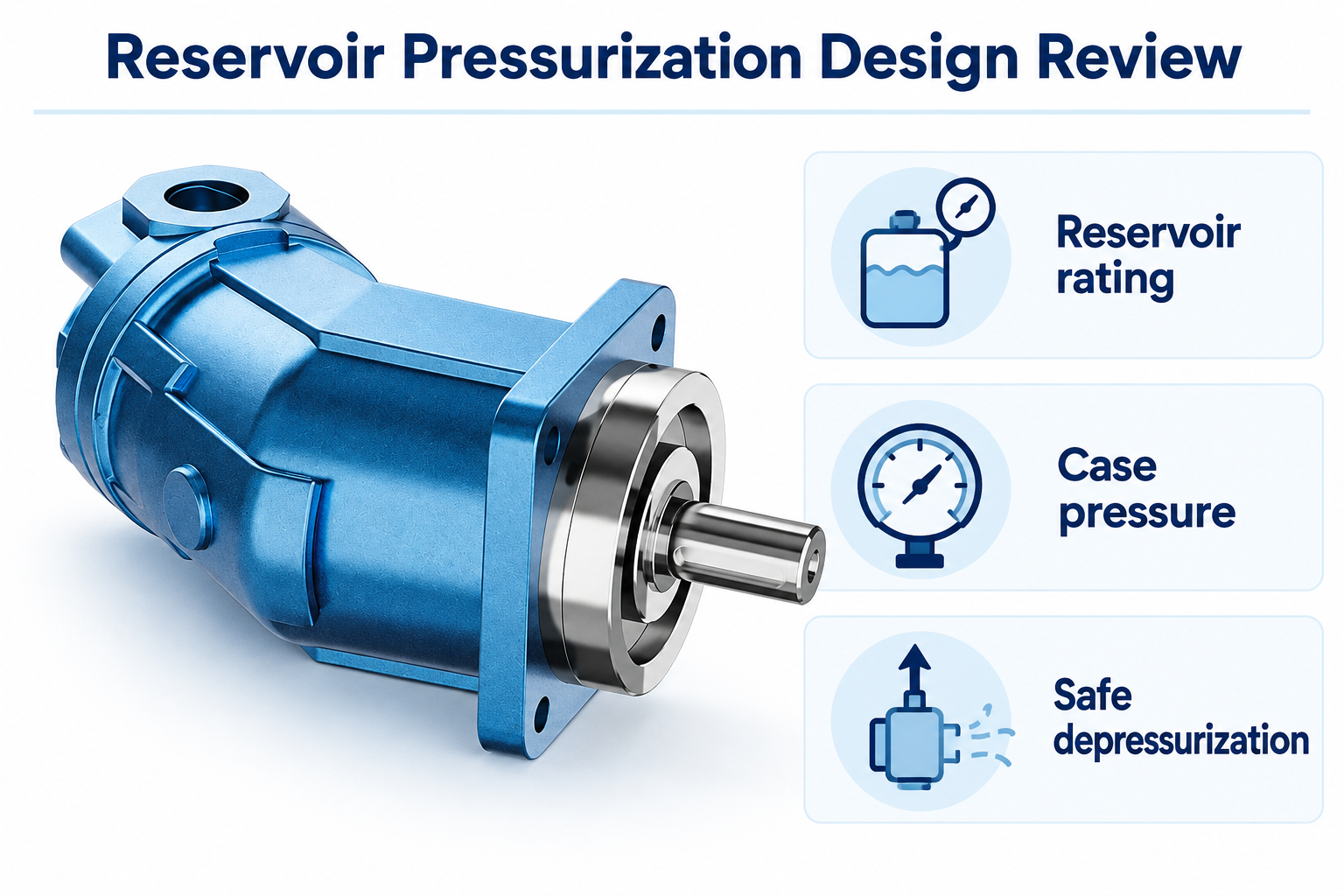
The inlet port and pump housing are separate pressure boundaries. Increasing inlet pressure can affect internal leakage and case conditions depending on the pump’s construction. If a case drain discharges into a pressurized reservoir, the drain destination now has a higher base pressure. Add the drain-line losses and transient effects when checking housing pressure. Never assume that a drain line is effectively at atmospheric pressure because it returns to the tank.
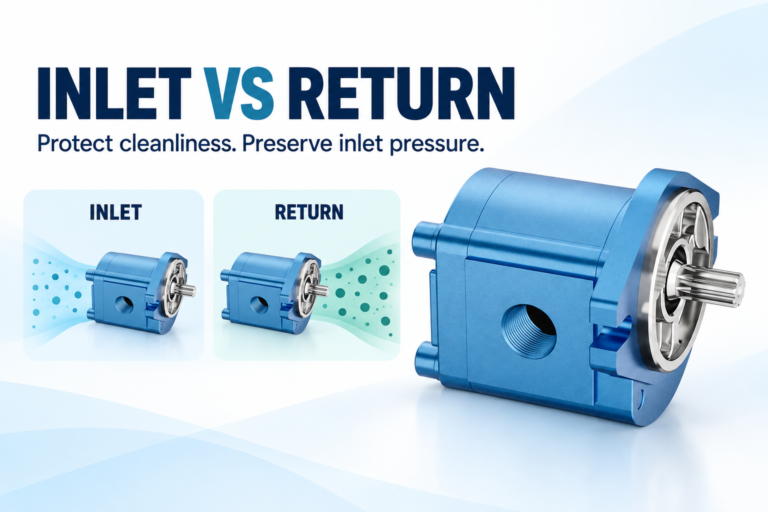
Read the exact model’s requirements for case drain routing, allowable case pressure, shaft seal conditions, filling and startup. Some components or arrangements need special provisions; others may prohibit the proposed combination. The exterior product illustration accompanying this guide cannot establish which options are fitted. A catalog photograph shows identification context, not a validated pressurized installation.
Treat auxiliary devices with the same care. Level indicators, temperature sensors, coolers, return filters and service fittings may have different pressure limits from the main tank. Return-flow peaks can add losses to an already pressurized return destination. A safe design review traces the full return and drain route rather than stopping at the pump inlet.
Pressurization does not make every inlet fault disappear
Adding gas pressure does not clean a dirty strainer or restore a collapsed hose. It can make a pressure measurement look better while leaving the original restriction in place. That may hide deterioration until another condition consumes the remaining margin. Establish a baseline and retain a way to monitor the inlet path after commissioning.
Pressurization also does not demonstrate adequate air separation. Returning fluid can entrain air, and gas can be present in oil in several forms. Oil condition, residence time, return placement and leakage paths still matter. Avoid unsupported claims that any positive reservoir pressure eliminates cavitation or aeration under all operating conditions. Those claims ignore speed, temperature, fluid properties and dynamic losses.
Finally, distinguish a designed pressure source from accidental tank pressure. A blocked breather, heating oil or an incorrect replacement cap can create unintended pressure. That is a fault to investigate against the original design, not evidence that the machine would benefit from a higher setting. Restore the approved function before considering changes.
Build a verification plan around operating extremes
Before commissioning, list the operating cases: minimum oil level, maximum approved starting viscosity, highest permitted pump speed, expected altitude range and the relevant movement or slope conditions. Identify which can occur together. Use suitable instrumentation at appropriate locations and sample quickly enough to capture the event under investigation. A slow panel gauge may not reveal a short inlet depression.
Record surface pressure, inlet pressure, oil temperature and speed with their reference conventions. Where relevant, also record case pressure and drain conditions. Compare these measurements with the approved boundaries for the exact equipment. Do not increase pressure until noise disappears and then call that a verified setting; noise reduction does not prove that every component remains within its limits.
Define acceptance before the test. It should include correct pressure control and protective behavior, acceptable inlet and case conditions, stable oil level indication, no leakage, and safe service isolation. Retain the design approval and commissioning results with the equipment documentation so later maintenance does not unknowingly replace a critical cap or regulator with an unsuitable part.
What to send with a pump or system inquiry
Provide the full pump code, reservoir design information, fluid grade, temperature range, speed range and required flow. Include minimum and maximum liquid levels, pump elevation, inlet line dimensions, fittings and restrictions. State whether the tank is atmospheric, intentionally pressurized, or showing unexplained pressure. These descriptions lead to different engineering questions.
For an intentional pressure system, add the specified pressure range and reference, protection arrangement, case-drain destination and approved reservoir rating. If those details are unavailable, request the original machine documents before selecting components around an assumed pressure. A supplier can assess a defined operating envelope more reliably than a request for a pump that simply “sucks better.”
Frequently asked questions
Does reservoir pressurization increase hydraulic pump outlet pressure?
It changes the pump inlet pressure conditions. Working outlet pressure still depends on load, circuit control and component limits. Do not use tank pressure as a substitute for correcting an outlet-pressure or relief-valve problem.
Can I pressurize an ordinary hydraulic tank?
Only an engineering review can establish whether the complete tank and its fittings are suitable. An atmospheric tank, filler cap or sight gauge must not be assumed to have a usable pressure rating.
Will positive tank pressure stop cavitation?
It may improve inlet absolute pressure, but cavitation risk still depends on fluid properties, temperature, speed and local pressure losses. Check the worst operating condition against the exact pump requirements rather than relying on a positive gauge reading alone.
Why does case-drain routing matter?
A drain connected to a pressurized tank starts with that destination pressure, with additional losses along the drain path. The resulting housing pressure must remain within the pump and shaft-seal limits under the relevant operating conditions.
What should be checked before removing the filler cap?
Follow the machine’s approved isolation and depressurization procedure and verify that stored pressure has been removed. Stopping the motor or reading zero at another hydraulic gauge does not establish that the reservoir is safe to open.
Product and related engineering resources
The A2FO Series Axial Piston Fixed Displacement Pump catalog exterior is used as the real product reference in these explanatory images. It does not establish the approved service method, optional construction, or operating limits for an individual order. Confirm the complete code and its documentation. Related resources: A2FO Series Axial Piston Fixed Displacement Pump, hydraulic pump range, Hydraulic Pump Inlet Conditions: A Buyer Checklist Before Ordering, Swash Plate Pump Working Principle: From Rotation to Variable Flow.
Sources and limits of this guide
The FAA handbook illustrates why reservoirs may be pressurized to supply pump inlets and why purpose-designed protection and servicing matter. Its aircraft examples and settings must not be transferred to an industrial reservoir. NPTEL supports general hydraulic principles; NIOSH supports hazardous-energy prevention. Exact component limits require the approved machine and component documents.
- FAA Aviation Maintenance Technician Handbook, Airframe Volume 2, Chapter 12: reservoir principles; aircraft examples are not industrial tank settings
- NPTEL: Fundamentals of Industrial Oil Hydraulics and Pneumatics
- NIOSH: preventing injuries from hazardous energy
University lesson: operating principles
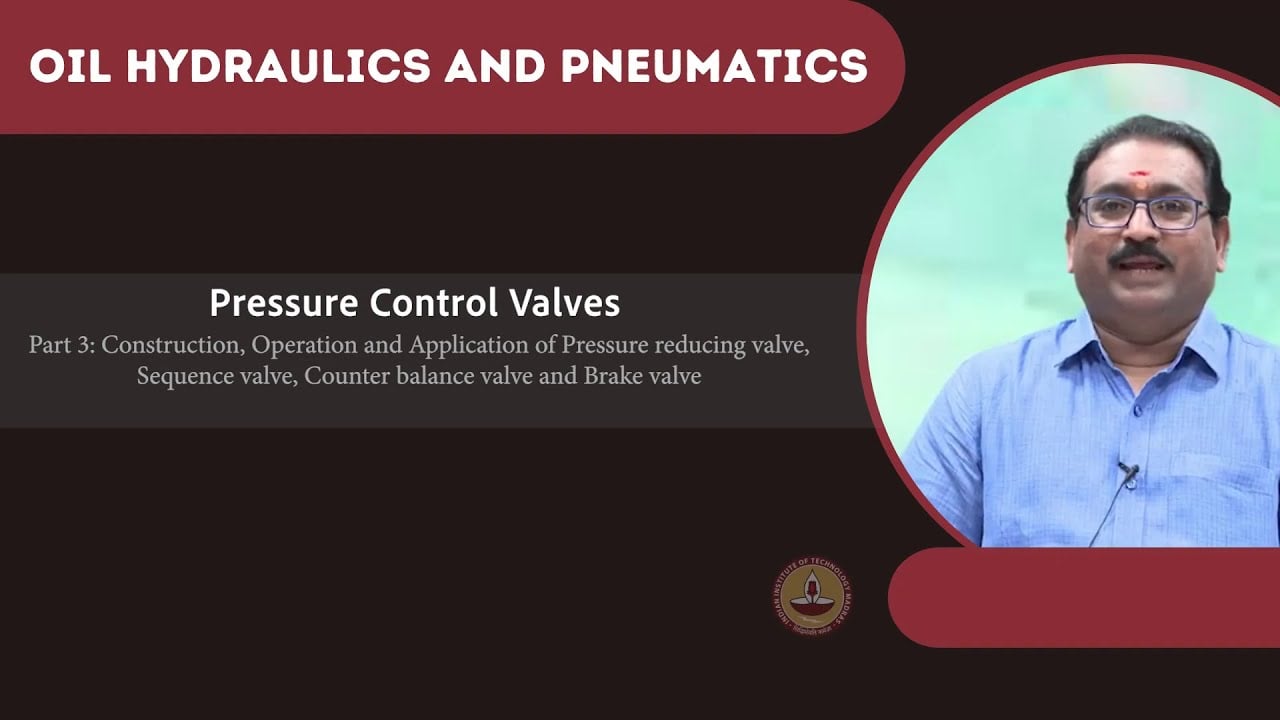
NPTEL-NOC IITM presents 5.8 – Pressure Control Valves. The lesson supports the pressure-control principles relevant to the regulator and overpressure-protection review used in this discussion; it is not a model-specific performance or installation approval.