Wenzhou Prance Hydraulic Equipment Co., Ltd

Two-Way vs Three-Way Pressure-Compensated Flow Control
The practical difference in 2 way vs 3 way pressure compensated flow control is the route available to excess pump flow. A two-way regulator meters the controlled stream without providing its own separate excess-flow outlet. A three-way regulator splits supply between a controlled outlet and a bypass outlet. Both require adequate pressure margin and correct application limits. Choose between them by tracing the complete circuit, especially the pump control, bypass destination and heat balance. A valve described as proportional, directional or three-position is not automatically either type of pressure-compensated flow regulator.
Trace the extra flow before selecting the valve
Suppose an actuator needs less flow than the pump can deliver. Ask where the remainder goes in every relevant operating state. With a fixed-displacement pump, the difference cannot simply disappear because the actuator’s flow control closes. A separate unloading, relief or bypass path must accommodate it, or pressure rises toward whatever protective limit is available.
A two-way regulator can work in such a circuit, but the circuit must provide that separate route. If excess flow passes continuously through a relief valve at high pressure, the system may run hot even though actuator speed looks satisfactory. Stable speed and efficient operation are different acceptance questions.
A three-way regulator includes an excess-flow path as part of its regulating arrangement. That path may return to tank or supply another permitted branch, depending on the exact design. Do not assume the bypass port is pressure-free or approved for a secondary load. Its allowable pressure, minimum flow and interaction with the controlled outlet must be checked in the manufacturer’s documentation.
What pressure compensation actually controls
An adjustable metering opening produces a flow that depends on its area and the pressure difference across it. Pressure compensation changes an associated restriction or bypass action to keep that metering pressure difference approximately controlled within the valve’s operating range. The flow setting then becomes less sensitive to changes in supply or actuator load pressure.
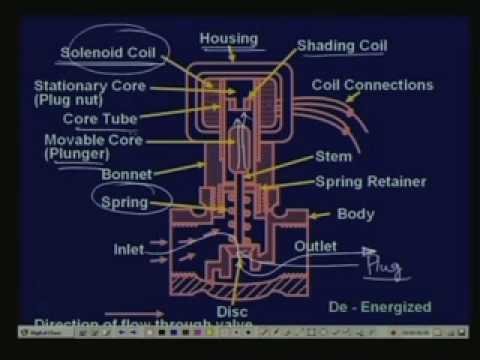
The NPTEL material linked below explains the distinction between an ordinary restriction and a compensated flow-control arrangement. Compensation is a bounded function, not a promise of identical flow under all conditions. Insufficient pressure margin, excessive flow, reverse flow or operation outside the specified fluid range can take a regulator outside its useful control range.
Pressure compensation also does not necessarily include temperature compensation. Viscosity and discharge behavior can change with oil condition. Where tight speed regulation is required over a wide temperature range, obtain the relevant flow-versus-pressure and flow-versus-temperature evidence. A catalog label alone is not a quantitative speed-error guarantee.
Compare the two arrangements at circuit level
Use the following table when discussing a schematic with a supplier. It describes the functions of the circuit arrangements rather than the specification of any photographed Prance directional valve. Confirm the actual port names and symbols for the proposed regulator.
| Questão de seleção | Two-way compensated regulator | Three-way compensated regulator |
|---|---|---|
| Where is the controlled stream? | Through the regulator’s metered path | Through the designated controlled outlet |
| Where does surplus pump delivery go? | Through another circuit path or reduced pump delivery | Through the designated bypass path, subject to design limits |
| What must a fixed pump have? | A suitable separate route for surplus flow | A properly sized and connected bypass plus pressure protection |
| What matters with a variable pump? | Correct pump control and sufficient regulating margin | Compatibility between pump control and continuous bypass demand |
| Can bypass serve another load? | Not an integral feature of the two-way regulator | Only where the specific regulator permits the required conditions |
| What can still cause speed error? | Inadequate margin, leakage, fluid condition or saturation | The same issues plus bypass-pressure and priority interactions |
A three-way flow regulator is not the same thing as a three-port directional valve. Likewise, the number of positions in a directional symbol does not describe the method of flow compensation. Read the complete function symbol and pressure-sensing arrangement before comparing product names.
Match the regulator to the pump’s control behavior
A fixed-displacement pump delivers a volume primarily related to displacement and shaft speed, with actual delivery affected by leakage. Closing a two-way regulator does not command that pump to reduce displacement. The remaining delivery still needs a path. This is the first question to resolve when a retrofit replaces an open flow path with a regulating restriction.
A pressure-controlled variable-displacement pump may reduce delivery when demand falls, provided its control and the circuit are arranged to do so. That makes a two-way arrangement a possible choice, but the pump must still maintain enough pressure above the load for the regulator to operate. A nearly closed valve can also leave standby pressure and leakage losses that need to be included in the assessment.
Load-sensing systems add another interaction: the pump’s pressure margin and the regulator’s requirement must be compatible. A separate flow regulator can duplicate or interfere with compensation already present in the valve bank. Ask for a circuit review rather than adding two independent controls on the assumption that more compensation always gives better speed stability.
Budget the pressure needed for regulation
For an inlet-metering arrangement, supply pressure must cover actuator demand, piping losses and the pressure difference required across the regulating assembly. If available supply is consumed by the load, the regulator cannot maintain the requested stream merely because its knob has not moved. The actuator slows as the control runs out of pressure authority.
Use an illustrative pressure budget: assume a hypothetical actuator requires 100 bar, connecting lines consume 5 bar, and the selected regulator’s verified requirement at the chosen flow is 10 bar. The required supply would be at least 115 bar under those assumed conditions. These are teaching values, not ratings or settings for a Prance product; transient behavior and the complete circuit still require evaluation.
Do not automatically add only the metering-orifice differential stated in an explanation of compensation. A complete assembly can need additional pressure loss through ports, passages and a compensating element. Use the supplier’s applicable operating curve at the actual flow and fluid condition. Include return pressure where it affects actuator differential or a reference connection.
Compare heat using the whole flow balance
cURL Too many subrequests by single Worker invocation. To configure this limit, refer to https://developers.cloudflare.com/workers/wrangler/configuration/#limits.
cURL Too many subrequests by single Worker invocation. To configure this limit, refer to https://developers.cloudflare.com/workers/wrangler/configuration/#limits.
cURL Too many subrequests by single Worker invocation. To configure this limit, refer to https://developers.cloudflare.com/workers/wrangler/configuration/#limits.
cURL Too many subrequests by single Worker invocation. To configure this limit, refer to https://developers.cloudflare.com/workers/wrangler/configuration/#limits
cURL Too many subrequests by single Worker invocation. To configure this limit, refer to https://developers.cloudflare.com/workers/wrangler/configuration/#limits.
cURL Too many subrequests by single Worker invocation. To configure this limit, refer to https://developers.cloudflare.com/workers/wrangler/configuration/#limits.
cURL Too many subrequests by single Worker invocation. To configure this limit, refer to https://developers.cloudflare.com/workers/wrangler/configuration/#limits.
cURL Too many subrequests by single Worker invocation. To configure this limit, refer to https://developers.cloudflare.com/workers/wrangler/configuration/#limits
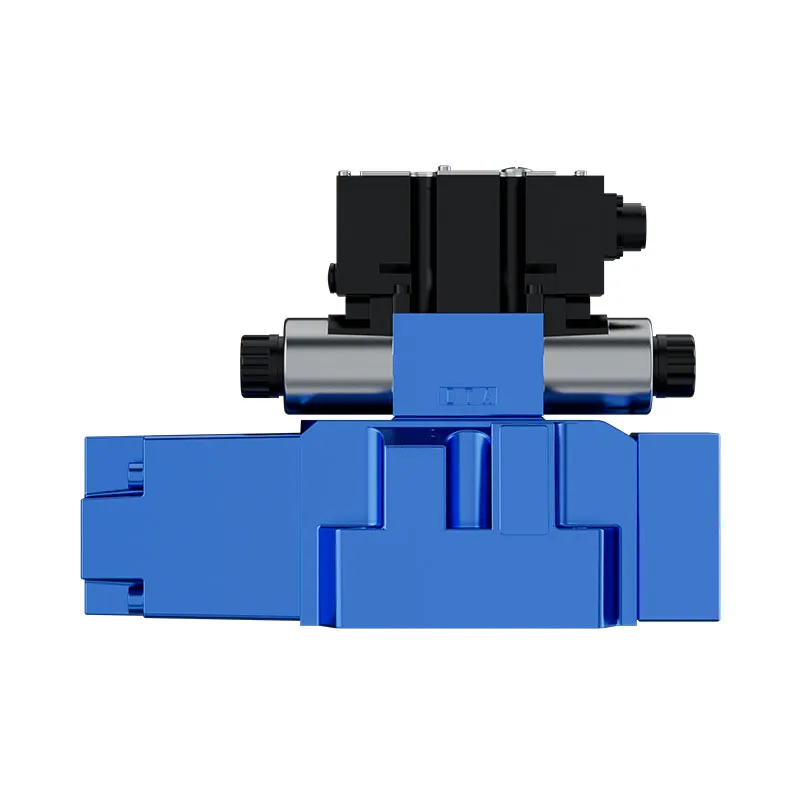
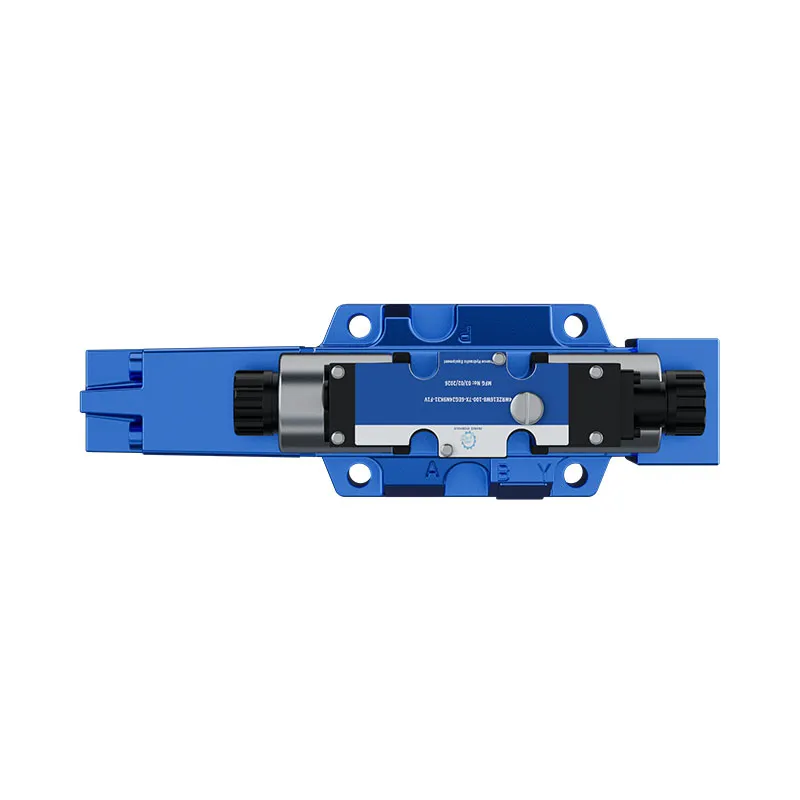
The original 4WRZE photographs below identify a related pilot-operated proportional directional-valve family offered on the website. They are included for component identification in the wider control circuit. They do not show a two-way or three-way compensated regulator, and no such regulating function is established by the exterior photographs.
If a proposed system includes both a directional valve and a separate regulator, request a schematic showing their separate roles. Confirm pressure-sensing points, pilot and drain arrangements, return conditions and whether any pressure compensation is integral or external. A proportional flow characteristic at a stated pressure drop is not the same as automatic load-independent flow regulation.
For an enquiry, supply pump type and control code, available supply flow, actuator demand range, maximum load pressure, bypass destination and operating temperature range. State how accurately speed must be held and over which conditions. Ask for applicable curves and an acceptance test rather than a single nominal flow number.
Verify performance without masking a circuit mismatch
Commission the selected arrangement under the approved machine procedure. Confirm controlled flow at the intended demand points while changing the load within the specified range. Observe supply and bypass conditions together; a steady actuator speed can conceal excessive relief flow or high thermal load.
Record oil temperature, actual flow and the measurement locations. Check transitions into stopping, restart and simultaneous operation where applicable. If regulation fails only near maximum load, investigate available pressure margin before increasing the flow adjustment. If heat rises during low demand, trace the surplus stream before adding a larger cooler.
Before opening lines or changing connections, isolate the machine and control stored energy. Use rated measurement equipment and qualified personnel. The final selection should solve both the speed requirement and the circuit’s excess-flow problem, with a documented operating envelope for each.
Perguntas frequentes
Is a three-way regulator always more efficient?
No. It can reduce losses compared with dumping surplus flow at a high relief pressure, but the result depends on supply pressure, bypass conditions and pump control. Compare the complete energy balance.
Can a two-way regulator be used with a fixed pump?
Yes, if the circuit provides an appropriate route for surplus delivery and meets its pressure and thermal requirements. The regulator alone does not remove the need for that route.
Does pressure compensation guarantee constant motor speed?
It regulates a flow within stated limits. Motor leakage, available pressure margin, temperature and load behavior can still change shaft speed. Define the required speed accuracy and verify it under the actual conditions.
Can I connect another actuator to the bypass outlet?
Only if the specific regulator permits the necessary bypass pressure and operating interaction. Confirm priority, insufficient-supply behavior and protection for both functions from the approved circuit documentation.
Is a proportional directional valve a compensated regulator?
Not necessarily. Proportional operation describes how an input changes the valve opening. Pressure compensation is an additional control function that must be confirmed from the exact hydraulic arrangement.
Recursos relacionados de produto e engenharia
Válvula Proporcional Piloto para Prensa 4WRZE, gama de produtos de válvulas hidráulicas, Válvula Reguladora de Caudal Hidráulico: Mantenha a Velocidade Estável Sob Carga Variável, Load Sensing vs Pressure Compensated Pump: Control Differences. Confirme o código completo do produto e os requisitos da aplicação ao solicitar uma revisão de configuração.
Referências técnicas
- NPTEL: pressure compensated flow control and other control valves
- NPTEL: flow-control valve applications and compensation
- OpenStax University Physics: continuity and fluid flow
Further learning: hydraulic valves
Lecture – 25 Flow Control Valves by nptelhrd provides background on valve functions. The lecture explains flow-control principles; surplus-flow routing and pump compatibility must be checked against the actual schematic. It supplements the component fundamentals; it is not a test procedure for the complete circuit discussed above.