Wenzhou Prance Hydraulic Equipment Co., Ltd

What is the difference between fixed and variable displacement pumps?
Fixed vs variable displacement pump selection starts with the duty cycle: a fixed-displacement pump changes theoretical flow mainly through shaft speed, while a variable-displacement pump can also change flow through displacement at a given speed. Choose variable displacement when the machine needs pump-level flow matching; choose fixed displacement when the required output is stable and the circuit control strategy supports it.
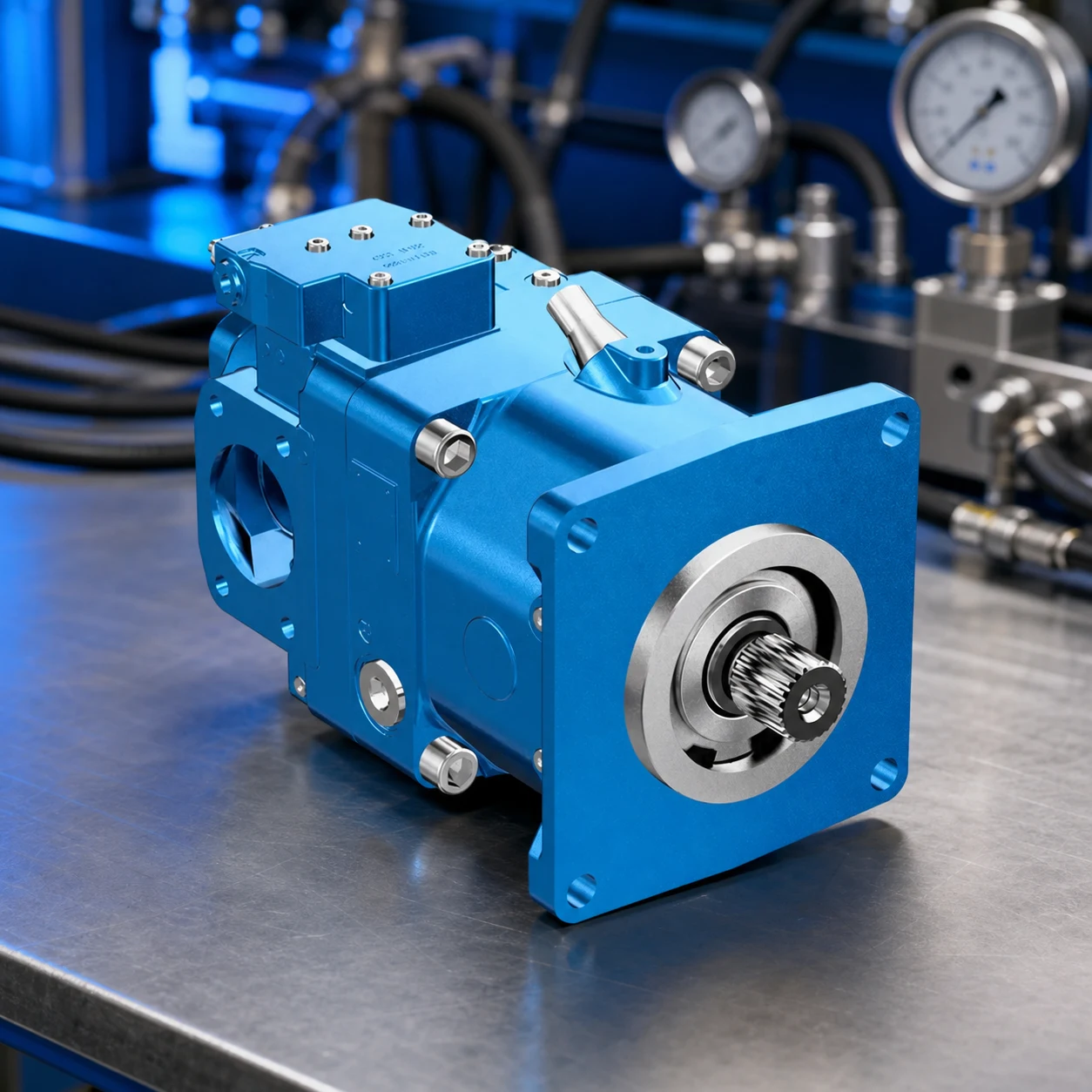
Part 1. What is the difference between fixed and variable displacement pumps?
A positive-displacement pump moves a nominal volume each revolution. In a fixed-displacement design, that volume is set by the pump geometry, so theoretical flow changes mainly when shaft speed changes. In a variable-displacement design, the effective swept volume can be changed by the control mechanism while the shaft keeps turning.
That control difference is the architecture decision. It is not a quality ranking. A fixed pump can be the correct choice in a stable-duty circuit, while a variable pump is the correct starting point when flow must track changing load without relying only on downstream throttling.
Part 2. How does duty cycle drive the architecture choice?
Map the machine’s operating points before comparing catalog families. Record continuous and peak flow, pressure, speed, time at each condition and whether the circuit needs frequent flow reduction at near-constant speed.
| Duty pattern | Architecture starting point | Why |
|---|---|---|
| Stable flow at a narrow speed range | Fixed displacement | Output is defined by displacement × speed |
| Frequent flow changes at near-constant speed | Variable displacement | Displacement can track load at the pump |
| Flow changes mainly because drive speed changes | Fixed displacement with speed control review | Speed can change theoretical flow directly |
| Mixed pressure and flow control needs | Variable displacement with documented control strategy | Pump and control must be reviewed together |
Part 3. When is a variable-displacement pump the better fit?
Select a variable-displacement architecture when the duty cycle needs the pump itself to reduce or increase delivery without depending only on a relief valve, throttle or frequent drive-speed changes. Parker’s pump training material identifies variable-displacement designs for applications where flow and pressure must track load more closely than a fixed-output path allows.
This does not make every variable pump interchangeable. Control type, inlet condition, speed range, fluid, mounting and pressure duty still determine the exact model. Read the open-loop variable displacement piston pump guide when the circuit uses an open-loop hydrostatic path.
Part 4. Can a fixed pump and variable-speed drive replace variable displacement?
A variable-speed drive changes theoretical flow in direct proportion to pump speed, so a fixed-displacement pump can serve some changing-flow duties when the drive can vary speed across the required range. That is a different control path from variable displacement at constant speed.
Use fixed displacement plus variable speed when the drive, inlet condition and pressure duty support the full speed range. Use variable displacement when the duty needs flow adjustment at near-constant shaft speed or when the control strategy is built around pump displacement rather than drive-speed modulation.
Part 5. What are the trade-offs in control complexity and system design?
Fixed-displacement systems can be simpler when the circuit already defines a stable flow requirement and the control valves, accumulators or drive strategy are designed around that output. Variable-displacement systems add control components and commissioning steps, but they can reduce throttling losses when the duty cycle spends significant time away from full flow.
Compare total system fit, not a headline label:
- required control response and repeatability;
- heat generation from throttling versus displacement control;
- available prime-mover speed range and torque;
- commissioning and service documentation; and
- whether the existing circuit can be adapted without redesign.
Part 6. What should a buyer provide before requesting a pump quote?
Send a duty-cycle summary with:
- required flow at each operating point;
- continuous and peak pressure;
- shaft speed range, including any PTO or gearbox ratio;
- control requirement: fixed output, variable speed, pressure control, load-sense or other;
- fluid type, viscosity, cleanliness and temperature;
- inlet arrangement and available inlet pressure information;
- mounting, shaft, rotation and port requirements; and
- application, quantity and documentation needs.
If the duty-cycle review points to variable flow control, use the variable axial piston pump route after those inputs are documented. The architecture comparison does not approve a specific model; datasheet review confirms displacement, pressure, speed, control and compatibility. Submit the RFQ through the contact page.
FAQs
What is the difference between fixed and variable displacement pumps?
Fixed-displacement pumps deliver a set volume per revolution, so theoretical flow changes mainly with speed. Variable-displacement pumps can change effective displacement at a given speed through their control mechanism.
When should a hydraulic system use a variable displacement pump?
Use variable displacement when the duty cycle needs pump-level flow matching at near-constant speed or when the control strategy is built around changing displacement rather than only changing drive speed or throttling downstream.
Are fixed displacement pumps cheaper to operate?
Operating cost depends on duty cycle, throttling losses, drive strategy, efficiency and maintenance—not on the architecture label alone. Compare the full duty profile before deciding.
Can a fixed pump work with a variable-speed drive?
Yes, when the required flow range can be achieved by changing pump speed and the inlet, pressure and drive limits support that range. It is not a substitute for every variable-displacement control requirement.
How does duty cycle affect pump selection?
Duty cycle defines how often the system needs full flow, reduced flow and changed pressure. That pattern determines whether fixed displacement, variable displacement or fixed displacement with speed control is the correct starting point.
What information is needed to choose between fixed and variable displacement?
Provide flow at each operating point, pressure, speed range, control requirement, fluid, inlet condition, mounting details and application information.