Wenzhou Prance Hydraulic Equipment Co., Ltd

Monoblock vs Sectional Valve: Choose the Right Mobile Valve Bank
Monoblock valve vs sectional valve selection is mainly a choice between an integrated body and a modular stack. A monoblock directional valve machines several spool bores and flow passages into one casting. A sectional valve is assembled from an inlet section, individual working sections, and an outlet or end section held together by tie rods or bolts. Monoblocks are often compact, economical, and well suited to standardized machines. Sectional valves are easier to configure for different spool functions, actuator sections, and future changes. Neither format determines the correct flow, pressure, center condition, spool type, relief arrangement, or control method. Those circuit details must be specified first.
What a monoblock hydraulic valve is
A monoblock valve contains multiple control spools in a single continuous housing. Internal galleries distribute pump supply and tank return across the bank. Each spool meters or directs flow to a pair of work ports. The casting may include a main relief cavity, power-beyond option, load checks, and other functions, but availability depends on the series.
The integrated body reduces joints between working sections and can create a compact, rigid assembly. It also fixes the number and basic arrangement of sections once manufactured. If one spool bore or an internal gallery is damaged, replacing or repairing only that station may be less practical than with a modular stack.
What a sectional hydraulic valve is
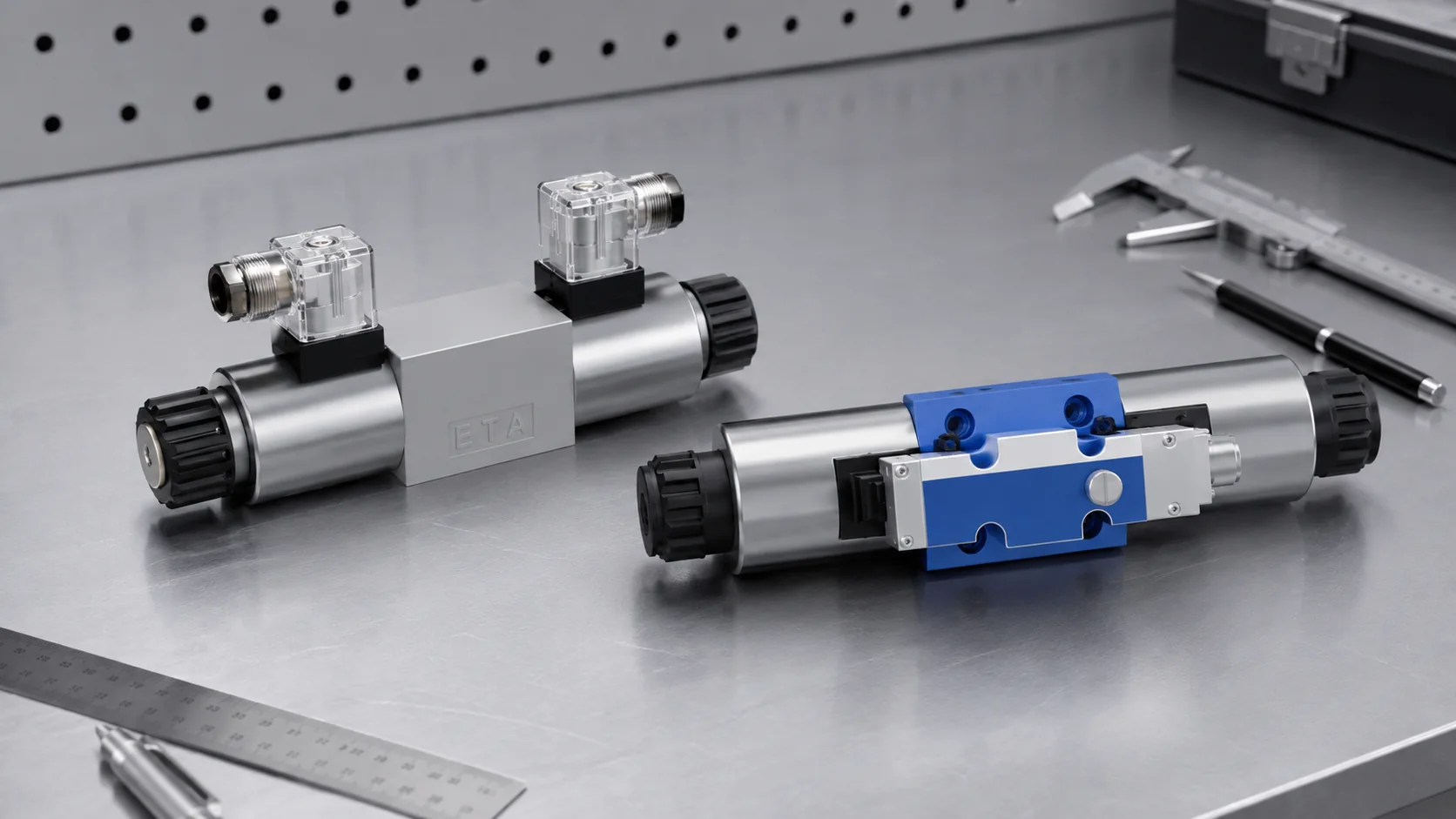
A sectional valve builds the bank from separate slices. The inlet section connects supply and often carries a main relief or unloading function. Working sections contain spools selected for individual actuators. The outlet section routes tank flow and may provide power beyond or other continuation paths. Tie rods compress the stack and seals separate the internal galleries.
Modularity allows an OEM to combine different spool actions, flow controls, port options, actuator methods, or auxiliary valves within one family. It can also permit replacement of a damaged working section. That flexibility adds joints, seals, assembly procedures, tie-rod torque requirements, and more configuration choices that must be controlled.
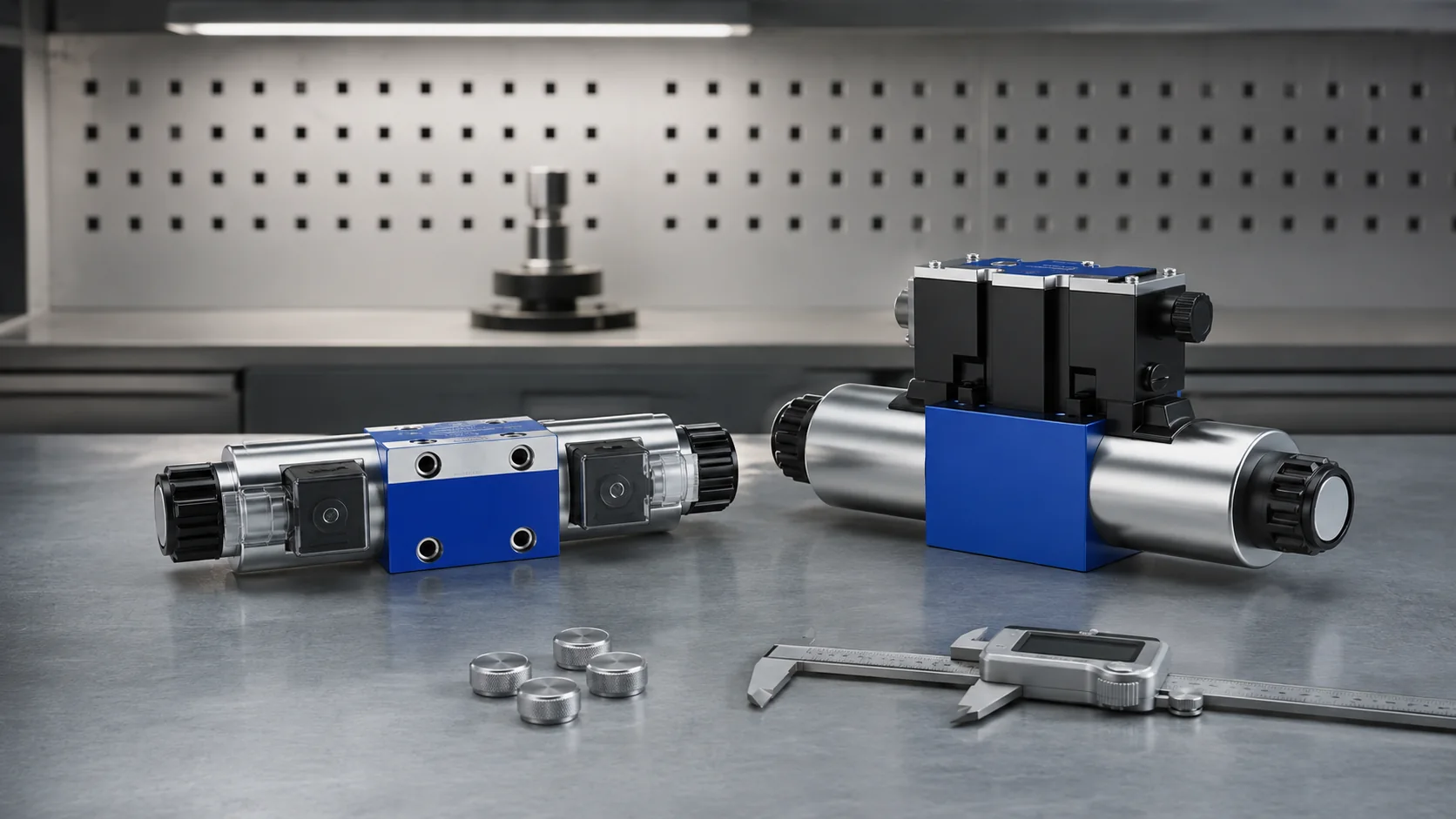
Practical comparison
| Decision factor | Monoblock valve | Sectional valve | Confirm for the project |
|---|---|---|---|
| Housing | One integrated multi-spool casting | Inlet, work, and outlet sections stacked together | Bank size and installation envelope |
| Configuration | Limited to available casting and spool options | High mix-and-match flexibility within a series | Function required at every station |
| Expansion | Normally fixed after selection | Sections may be added if the design permits | Tie rods, flow capacity, and approval |
| Joint count | Fewer inter-section joints | Sealed interfaces between sections | Assembly cleanliness and torque |
| Service | Whole body may need replacement for bore damage | Individual section may be serviceable | Parts, contamination, and repair limits |
| Cost | Often favorable for standardized volume | Often higher but configuration can reduce external plumbing | Total installed lifecycle cost |
Start with the hydraulic circuit, not body style
Before choosing monoblock or sectional construction, define what the valve must do in neutral and in every shifted position. Record pump type, open- or closed-center architecture, actuator type, simultaneous functions, desired metering, load-holding method, regeneration or float needs, and the path required for downstream valves. A body style cannot correct an incompatible center condition.
A directional valve starts, stops, and changes flow paths. A public hydraulics training reference in the US Department of Education’s ERIC archive covers open- and closed-center systems, valve symbols, and directional-valve inspection. Use current project standards and the selected manufacturer’s symbol, because port letters alone do not reveal every internal connection.
A second public training reference in the US Department of Education’s ERIC archive covers tracing flow through a directional control valve. These training materials explain circuit principles; they do not replace the selected valve bank’s current technical data.
Flow rating and pressure drop
Catalog flow rating is not enough. Pressure drop depends on spool opening, flow direction, oil viscosity, temperature, gallery path, section count, and whether multiple functions operate simultaneously. Pump-to-work, work-to-tank, power-beyond, and carry-over paths may have different losses. In a sectional bank, upstream and downstream interactions can change when several spools meter flow at once.
Ask for pressure-drop curves for the exact spool and path. Add line, fitting, filter, cooler, and downstream-valve losses to estimate total circuit demand. Excessive pressure drop wastes energy as heat and can reduce actuator force. Our guide to hydraulic valve pressure drop explains how to interpret evidence without treating one published number as universal.
Open center, closed center, and power beyond
An open-center bank provides a low-pressure path from pump to tank in neutral and commonly fits fixed-displacement pump circuits. A closed-center valve blocks or controls the neutral supply path and may suit a compatible variable-displacement system. Other center arrangements unload some ports while blocking others. The pump and valve must be designed as one circuit.
Power beyond is not simply another tank port. It carries pressurized carry-over flow to a downstream valve while separating return flow according to the valve design. A required sleeve or adapter must match the series, and the downstream relief strategy must protect the circuit. Connecting a downstream valve to an ordinary low-pressure tank cavity can damage the housing or create unsafe behavior.
Spool choice for each actuator
A double-acting cylinder, single-acting cylinder, reversible motor, and motor requiring freewheel do not necessarily use the same spool. Float, regenerative, tandem, motor, and cylinder spools connect ports differently in neutral and transition. Actuation can be manual, cable, pneumatic, hydraulic pilot, solenoid, or proportional.
A sectional bank can make it easier to mix spool functions. A monoblock series may still offer multiple spool codes, but the allowed combinations are constrained by the casting and product program. For every station, document the actuator, required positions, spring return or detent, neutral connections, metering direction, and failure state.
Relief valves, load checks, and load control
A main relief limits pressure at its sensing location by diverting flow. It does not necessarily protect a trapped actuator port from an external load, thermal expansion, or shock. Port reliefs, anti-cavitation checks, counterbalance valves, pilot-operated checks, or external load-control manifolds may be required.
Load checks can reduce reverse movement when a spool begins to shift, but they are not automatically rated load-holding devices. For suspended or overrunning loads, use an engineered control arrangement with appropriate redundancy and validation. Never rely on normal spool leakage to hold a safety-critical load.
Sectional-bank assembly risks
Modularity introduces interfaces. Wrong seals, contamination, damaged faces, incorrect section order, uneven tie-rod tightening, or incorrect torque can cause external leakage, internal cross-port leakage, binding, or housing distortion. Assemble only on a clean bench with the approved seal kit, sequence, lubrication, and torque procedure.
Adding a section changes total bank length and can affect flow distribution, inlet capacity, pressure drop, tie rods, mounting support, and machine controls. Confirm that the product family permits the expansion. After assembly, pressure-test every function and verify neutral behavior before returning the machine to service.
Monoblock service risks
The single body removes section joints, but spool bores and galleries remain sensitive to contamination and distortion. Overtightening mounting bolts on an uneven surface can twist a body and make spools stick. Damaged spools and bodies are often precision-matched; polishing, swapping, or machining without approved limits can create leakage or seizure.
When a spool sticks, record whether the cause follows oil temperature, mounting torque, actuation linkage, electrical command, load pressure, or contamination. Our article on hydraulic valve spool contamination provides a structured inspection path.
Selection by machine lifecycle
A monoblock can be a strong choice for a stable machine platform with a fixed number of functions, tight space, and cost-sensitive production. A sectional bank can be valuable when variants require different station counts, mixed spool functions, future accessories, or service replacement of one slice. Total cost includes brackets, hoses, external checks, wiring, commissioning, spare parts, and downtime—not the valve price alone.
Prance Hydraulic’s hydraulic valve product family and hydraulic valve overview provide the closest product paths. Related planning resources include sectional valve selection, spool center conditions, and manual versus solenoid actuation.
RFQ checklist
- Hydraulic schematic and pump type
- Required number of working sections
- Function and spool symbol for each station
- Neutral center and power-beyond requirement
- Flow by function, including simultaneous operation
- Continuous and transient pressures at every port
- Main, port, and load-control valve requirements
- Actuation, detents, spring returns, and fail state
- Port threads, orientation, envelope, and mounting support
- Fluid, viscosity, temperature, cleanliness, duty cycle, and environment
Educational video: directional valve flow paths

Watch the directional valve animation on YouTube. The video explains spool flow paths; body construction and ratings remain product-specific.
FAQ
Which is better, a monoblock or sectional valve?
A monoblock often suits compact standardized machines; a sectional bank suits configurable machines. The correct choice depends on circuit functions, flow, pressure, lifecycle, and service needs.
Can sections be added to any sectional valve?
No. The family must permit expansion, and the correct sections, seals, tie rods, sequence, flow capacity, and assembly procedure are required.
Can a monoblock valve use power beyond?
Some series can when fitted with the specified sleeve or adapter. Verify the internal gallery design, downstream connection, and relief strategy.
Does a sectional valve leak more?
It has more sealed interfaces, but correct components and assembly can provide reliable service. Contamination, damaged faces, wrong seals, or incorrect torque increase risk.
Can either valve hold a suspended load safely?
Do not assume normal directional spools are load-holding devices. Use an engineered load-control or braking solution appropriate to the hazard.