Wenzhou Prance Hydraulic Equipment Co., Ltd

Tandem Pump Flow Priority: Keeping Steering Supplied Under Load
Hydraulic pump tandem section priority is a circuit function, not a benefit automatically created by placing two pump sections on one shaft. Steering can have a dedicated section, or a shared supply can feed a correctly matched priority arrangement. The practical question is whether the steering circuit receives its required flow and pressure at the lowest approved engine speed while other functions demand power. A larger combined pump displacement does not answer that question. This guide focuses on reserving steering supply during simultaneous operation, rather than choosing tandem shafts or combining two pump outlets.
Identify which supply actually feeds steering
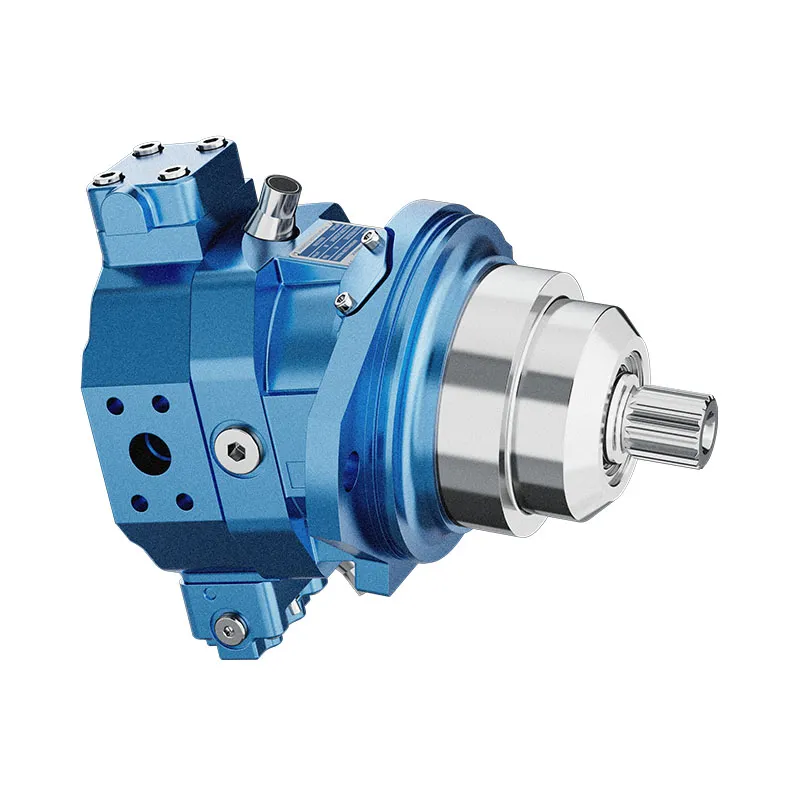
Start with the machine schematic and trace the steering supply back to its source. Mark each pump section, its outlet, and every junction before the steering control. A photograph of a double pump cannot establish whether steering has a dedicated supply or shares one with implements. Trace return and pilot connections as well; a supply drawing without these paths can hide important interactions.
In a dedicated arrangement, one section supplies steering and another supplies work functions. Separation reduces direct competition for delivery, but both sections still depend on the same drive. Engine speed reduction during a demanding implement movement can reduce steering flow. A dedicated section therefore needs verification at the actual simultaneous operating condition, not merely at unloaded rated engine speed.
In a shared arrangement, a priority device allocates available delivery between steering and secondary functions. The cited USPTO steering-apparatus claim illustrates preferential delivery to a steering branch. It is one documented architecture, not a universal circuit standard. This is the central distinction from a simple tee, which does not independently establish a protected steering allocation. The exact control strategy must come from the approved circuit.
Understand priority, excess flow, and load demand
A priority branch and a secondary branch serve different obligations. The first must satisfy the approved steering demand; the second receives whatever allocation the circuit permits after that demand and its control requirements are satisfied. Do not assume the labels on a replacement casting match the old unit. Match port functions against the exact schematic and documentation.
A load signal communicates demand in circuits designed to use one. The cited NHTSA-filed defect report documents that priority-valve damage can compromise steering supply in a shared hydraulic system. That report supports treating this as a system-level safety concern. That functional description does not establish that every steering unit uses the same signal arrangement. An open-center unit, a load-sensing unit, and an electrically coordinated system require different compatibility checks.
For procurement, request the steering-unit type, priority-device identification, and signal connections together. A quotation that lists only maximum pressure and port thread leaves the control compatibility unresolved. Do not improvise signal-line plugs, tees, or orifice changes to make an unknown replacement behave like the original.
Check the lowest-speed condition first
The maximum delivery printed in a pump catalog is usually the wrong starting point for steering-priority diagnosis. Establish the lowest engine speed at which the machine is permitted to steer and operate its work functions simultaneously. Then determine the corresponding pump-shaft speed through the actual drive ratio. Use measured speed if the engine droops during the event.
For a fixed-displacement section, theoretical flow in L/min equals displacement in cm³/rev multiplied by shaft rpm and divided by 1,000. Delivered flow is lower when volumetric losses are included. A variable-displacement section also requires its commanded displacement and regulator behavior. These calculations screen an arrangement; they do not replace a controlled acceptance test.
As an explicitly hypothetical example, a 12 cm³/rev section at 800 rpm produces 9.6 L/min theoretically. With an assumed volumetric efficiency of 0.90, delivery would be 8.64 L/min. If an engineering requirement calls for 10 L/min at that condition, the arithmetic already shows a shortfall. Neither increasing the relief setting nor fitting a higher-pressure hose creates the missing flow. These numbers are illustrative and are not Prance product ratings.
Build a simultaneous-demand budget
List steering and work-function demands by operating event rather than summing every maximum value on the machine. Steering while lifting, steering while braking, and steering with a cooling fan at demand may impose different combinations. Include approved continuous control flows and leakage allowances where documented. Avoid treating nominal actuator flow as the complete pump requirement.
Separate hydraulic availability from mechanical availability. Two outlets may each meet their independent flow requirement while the engine or drive cannot sustain both pressure demands together. For design review, calculate the combined power demand at the simultaneous duty point and compare it with the available drive capability. This is a reason to review engine droop, rather than automatically blaming the priority valve.
The following is an author-proposed decision aid, not a component specification. It connects observations to the next engineering check without prescribing a universal setting.
| Observation during approved simultaneous operation | Question to resolve | Useful next evidence |
|---|---|---|
| Steering slows only when engine speed falls | Is the steering supply flow limited by shaft speed? | Synchronized speed and steering-supply flow |
| Steering slows with stable drive speed | Is supply diverted or restricted before the steering control? | Supply, priority-branch, and secondary-branch measurements |
| Implement motion slows while steering remains correct | Is this the intended priority response? | Machine performance requirements and circuit description |
| Steering hesitates at the beginning of a turn | Is demand transmission or valve response delayed? | Signal pressure and valve-command timing |
| Both functions become unstable as oil warms | Does leakage or control behavior change with temperature? | Matched cold and warm operating records |
Separate inadequate flow from inadequate pressure
A steering circuit can receive adequate flow at light load yet fail to overcome the required steering resistance. Conversely, pressure may reach its intended limit while steering remains slow because flow is insufficient. Record the symptom precisely: high hand effort, delayed response, slow cylinder movement, or failure to reach the demanded direction are different findings.
Compare pressure at meaningful locations. Pump-outlet pressure alone cannot establish what reaches the steering inlet after upstream losses. A pressure difference across a hose, filter, manifold passage, or control device can explain why a nominally adequate pump does not deliver the expected result. Measurements must use approved test points and instruments suitable for the circuit.
Pressure-relief behavior also needs interpretation. NPTEL explains how pressure-control and unloading functions provide different routes for pump delivery. A branch losing flow because of its protective path is not repaired by blindly increasing a setting. Identify the valve’s intended function, its sensing point, and the pressure at which the observed event occurs before proposing a change.
Investigate signal and return interactions
A small pilot line can be functionally important even though it carries little flow. Damage, an incorrect connection, or an unmatched control type can prevent the priority device from seeing the demand it was designed to respond to. Inspect routing and identification against the machine documents before dismantling a valve. Never use a guessed signal connection as a field test.
The return path deserves the same attention. Shared return components can create interactions that are absent during single-function testing. Determine whether steering, work functions, pilot drains, and any auxiliary circuits share restrictions. Compare actual return conditions with the limits for each component; a main-line pressure rating is not a substitute for a drain or return rating.
Temperature changes the diagnostic context. Compare tests at defined oil conditions and record the fluid grade. A result obtained immediately after a cold start cannot demonstrate warm-duty performance. Equally, a warm test does not clear a machine whose steering hesitation occurs only during an approved cold operating condition.
Relate the review to an actual pump quotation
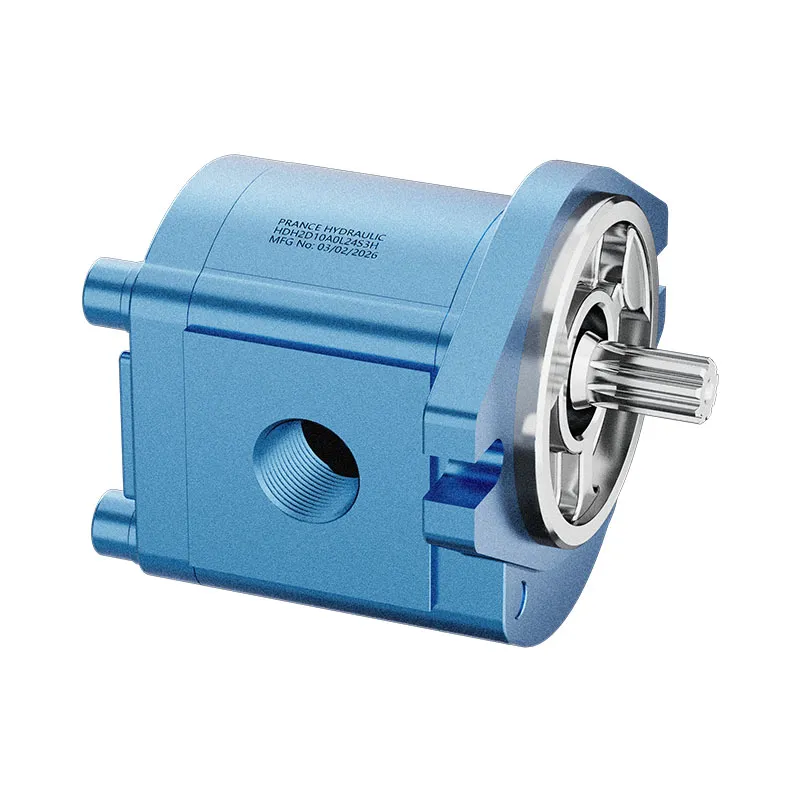
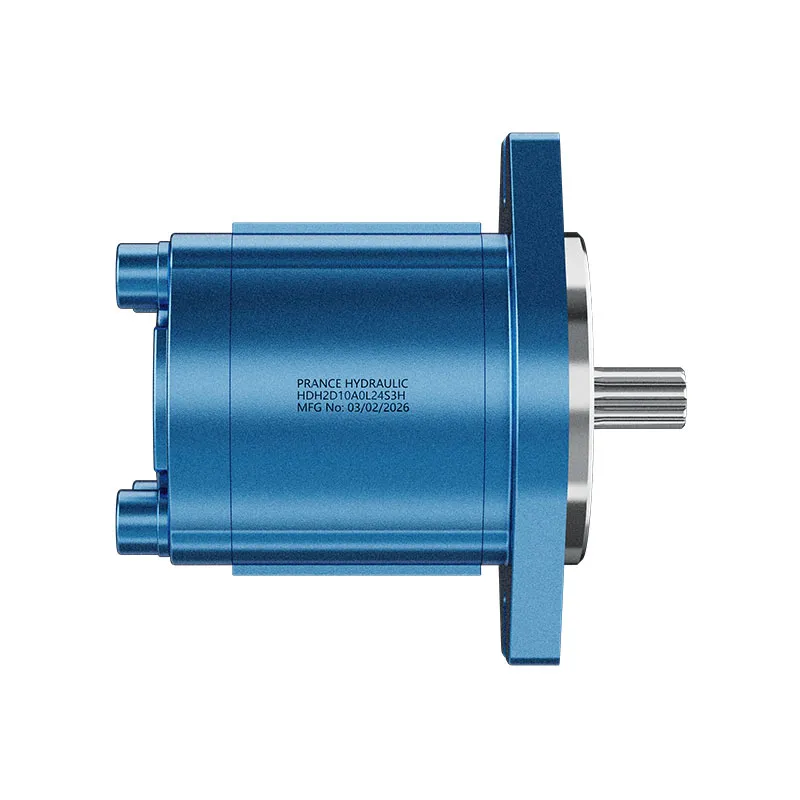
The Prance External Gear Pump HDH page provides a real product starting point for a supply discussion. Its photographs identify the offered external product form; they do not establish that a selected unit includes a steering-priority function or an approved tandem arrangement. Request the complete configuration and circuit confirmation before treating it as a suitable steering supply.
Keep the pump request separate from the priority-control request. For the pump, specify delivery requirement, shaft speed, rotation, fluid, mounting, drive interface, pressure duty, and inlet conditions. For the control arrangement, provide the steering-unit identification, simultaneous functions, signal type, and acceptance requirement. Combining both into a single phrase such as “steering pump” hides decisions the supplier needs to resolve.
When a proposed replacement differs from the original displacement, check more than steering speed. Revisit secondary-function behavior, drive load, inlet demand, and relief losses. The same mounting flange and outlet position do not prove that the altered circuit will preserve the intended priority response.

Verify the machine without creating a steering hazard
Steering is a safety-critical function. Plan testing with the machine manufacturer or qualified responsible engineer, secure the machine, and use the approved procedure and test area. Do not discover limits by driving an unstable machine near people or by intentionally disabling protective functions. Stop if steering response becomes unpredictable, pressure exceeds approved limits, or leakage appears.
Begin with the documented baseline and change one approved condition at a time. Record steering input, machine response, shaft speed, temperature, and simultaneous work demand on the same timeline. Repeat only within the permitted duty. A single successful unloaded turn does not establish acceptable performance under combined load.
Acceptance should state an observable result: the required steering response remains available throughout the approved operating envelope while secondary functions behave as designed. Preserve the test conditions with the result. This allows a future replacement to be compared against the same requirement instead of relying on an operator’s recollection that the old system felt faster.
Frequently asked questions
Does the front section of a tandem pump always supply steering?
No. Section order does not define circuit priority. Trace the actual outlets and identify the control arrangement. A front section can feed a work circuit, while another section supplies steering, depending on the approved machine design.
Can a tee replace a steering-priority valve?
A tee creates a junction but does not reproduce a controlled priority function. Any change to steering allocation requires a circuit review and machine approval. Similar connections do not establish equivalent behavior.
Why does steering improve when engine speed increases?
Higher shaft speed can increase fixed-displacement pump delivery, but the observation alone does not identify the fault. Compare actual speed, delivered flow, leakage, and priority-control behavior at the conditions where the symptom occurs.
Should implement movement stop whenever the steering wheel turns?
That depends on available supply and the designed allocation. Some reduction may be intended when steering takes priority. Compare the measured result with the machine’s simultaneous-function requirement rather than assuming either full speed or complete stoppage is always correct.
What should accompany a replacement-pump inquiry?
Provide the full existing code, circuit drawing, steering-unit details, minimum operating speed, simultaneous duty, pressure requirements, and installation interfaces. Include the actual failure symptom and test conditions so that a physically compatible pump is not mistaken for a verified system solution.
Related product and engineering resources
External Gear Pump HDH, hydraulic pump product range, Tandem Hydraulic Pump Selection: Flow Splits, Shafts, and Controls, Hydraulic Pump Outlet Check Valves: Reverse Flow and Shutdown Isolation. Confirm the complete product code and application requirements when requesting a configuration review.
Technical references
- USPTO: example of priority supply in an industrial-vehicle steering apparatus; not a universal circuit standard
- NHTSA filed defect report: loss of steering supply associated with priority-valve damage
- NPTEL: unloading-valve function
Further learning: hydraulic pumps
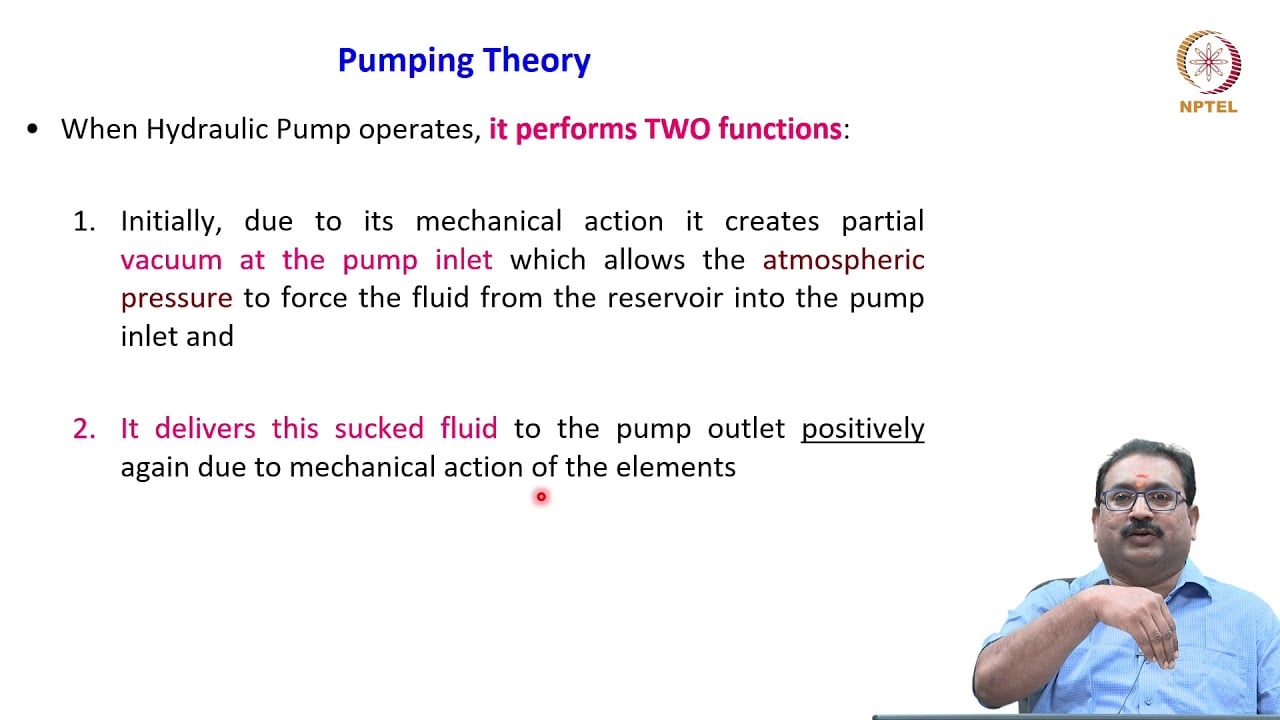
3.2 – Hydraulic Pumps by NPTEL-NOC IITM provides background on pump operating principles. This NPTEL lesson explains the pump or valve fundamentals used here. It does not demonstrate the exact startup, steering, or cavitation test described in this article. It supplements the component fundamentals; it is not a test procedure for the complete circuit discussed above.