Wenzhou Prance Hydraulic Equipment Co., Ltd

Which records should support pressure testing after a component change?
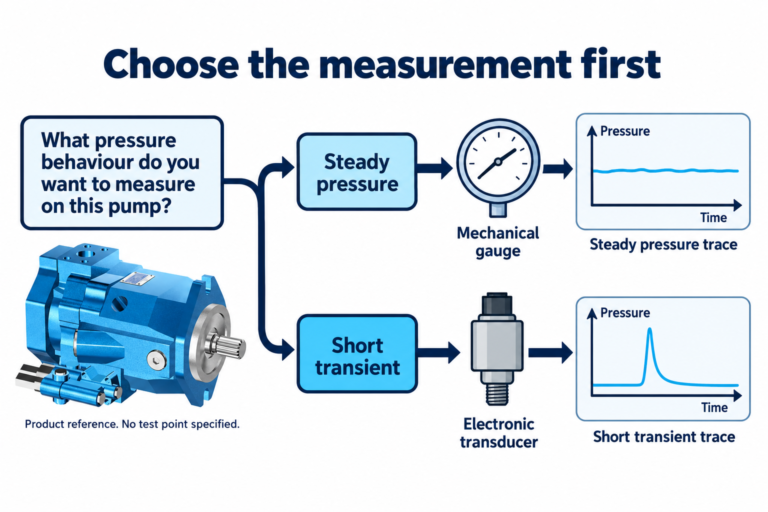
Hydraulic system pressure testing after a component replacement needs a traceable review record before anyone interprets a result. The record should connect the changed item, circuit scope, approved test basis, instrument identity and observations. It should not invent a pressure value, a dwell period, a valve setting or a pass/fail decision for an unspecified system.
Part 1. What should a pressure-test record answer after a replacement?
A useful record answers four review questions: what component changed, which circuit is in scope, which approved basis governed the work, and what observations were recorded. That is different from publishing a test method. Search results often frame the topic as a checklist or procedure, but a buyer cannot safely derive a test condition from a generic list when the installed components and project documentation are unknown.
The value of this page is its decision boundary. It helps an OEM or integrator organize the facts that a supplier or engineering reviewer must see, while leaving the actual work to the approved site procedure. It also prevents a replacement conversation from collapsing into “the system was pressure tested” with no traceable circuit or instrument context.
| Review question | Evidence to preserve | What it prevents |
|---|---|---|
| What changed? | component identity and replacement scope | mixing a new component with an older system condition |
| What was examined? | circuit and interface description | treating the whole machine as one unspecified test point |
| What governed the work? | approved document and revision | using a generic web number as a project basis |
| What was recorded? | observation and ownership note | presenting an unsupported pass/fail conclusion |
Part 2. Which circuit and changed-component facts define the review scope?
Name the changed component and identify the part of the circuit affected by that change. Danfoss cartridge-valve technical information describes hydraulic circuits as combinations of directional, pressure and flow-control functions. That general point explains why a replacement record must describe its circuit context rather than treating a pump, valve, hose or manifold as an isolated object.
For a buyer, the record can distinguish the changed item, connected interfaces, available drawing references and the component documents that are actually present. It should also say which facts are unknown. An incomplete drawing set is not a reason to fill gaps with assumed ports, settings or system behavior.
| Buyer should provide | Why it belongs in the review | Avoid |
|---|---|---|
| Changed-component model reference | anchors the inquiry to the installed item | calling a family name a verified model match |
| Circuit or drawing reference | identifies the affected functions and interfaces | inferring passage or valve geometry from a photo |
| Replacement scope | separates new work from retained equipment | assuming every interface was replaced |
| Available component documents | shows the actual evidence base | applying limits from an unrelated component family |
The hydraulic manifold block design article is a useful companion when drawing, valve and interface records need to be organized. It does not establish the test basis for a particular system.
Part 3. How should the test basis and instrument identity be recorded?
Record the approved test basis by document title and revision, together with the identity of the instrument used to observe the work. The aim is traceability, not an instruction to choose or calibrate an instrument. Pressure-system guidance from HSE emphasizes controlled procedures and competent review; a document reference makes that control visible to the next reviewer.
Component technical information also separates operating parameters by family. The Danfoss Series 40 pump document is an example of why an installed component’s own documentation matters. Its values and conditions cannot be copied into an unknown circuit or used to approve a replacement.
Important: Do not treat a generic checklist as authorization to set a pressure, hold a system, adjust a valve or declare a result acceptable. Use the approved procedure and competent review for the actual work. HSE HSG253
Part 4. Which observations belong beside the approved test record?
Keep observations factual and tied to the approved record. Useful entries can state the circuit scope, the changed item, the document revision referenced, the instrument identity, the condition observed and the owner of the next action. They should not recast a note into a diagnosis or a claim that the system meets an unstated requirement.
This is especially important after a component change because later reviewers need to distinguish a recorded observation from a conclusion. The hydraulic check valve applications article can help identify why a circuit-function description matters, but it is not a direction to alter a valve or test a particular configuration.

Part 5. When should a pressure-test question stop and move to engineering review?
Stop the generic discussion when the approved basis, changed-component identity, circuit scope, instrument identity or observation record is absent. The same boundary applies if the reader needs a pressure value, a setting, a sequence, an interpretation or an acceptance decision. Those are project- and component-dependent determinations, not content-page conclusions.
A clear stop point protects both procurement and engineering. It tells the buyer what evidence is missing, and it avoids presenting a component catalog as proof that a whole hydraulic system is ready for service. No Prance Hydraulic product is represented here as suitable for a particular test or replacement without controlled project evidence.
Part 6. How can the hydraulic product family support a controlled replacement inquiry?
Once the records are organized, use the hydraulic product family to orient a replacement discussion. Where valve-related information is relevant, the hydraulic valves page provides a family view without selecting a valve or defining a setting. The buyer can then send the controlled record through the OEM / ODM page or the contact page.
Include the changed-component reference, circuit or drawing record, approved test-basis reference, instrument identity and factual observations. This is an RFQ evidence set, not a request for a generic test value. The family pages help locate the relevant product area only after the project evidence can be reviewed.
FAQs
What should be recorded before hydraulic system pressure testing after a replacement?
Record the changed component, circuit scope, approved document reference, instrument identity and the observations to be captured. That evidence defines a reviewable question without setting the test conditions.
Can a maintenance checklist define the test basis?
No. A maintenance checklist can organize evidence, but the test basis must come from the approved project procedure and the installed components’ controlled documentation.
Does a component model number describe the whole hydraulic circuit?
No. It identifies one item. The review also needs the affected circuit or drawing context and the interfaces related to the replacement.
Should a pressure-test note include a pass or fail statement?
Only when that statement is made under the approved procedure by the responsible competent party. This article is limited to organizing the evidence, not declaring an outcome.
Is this a valve-setting guide?
No. It does not provide a setting, adjustment, test pressure or sequence. Use the installed documentation and approved project process for those decisions.
What belongs in a replacement inquiry after testing?
Provide the component reference, circuit or drawing evidence, test-basis document reference, instrument identity and factual observations. That material supports a controlled product-family or OEM discussion without assuming compatibility or approval.