Wenzhou Prance Hydraulic Equipment Co., Ltd.

Radial Piston vs Axial Piston Motor: Application Differences
Radial versus axial piston motor selection starts with the required shaft duty, not a universal claim that one design is better. Radial piston motors are often attractive for low-speed, high-torque direct drives; axial piston motors often suit faster drives, compact transmissions, and variable-displacement control. Those are useful starting points, not guaranteed ratings. Compare the actual continuous torque, starting efficiency, minimum stable speed, allowable shaft loads, control options, and cooling conditions of the proposed units before deciding whether either motor can meet the application.
What radial and axial describe
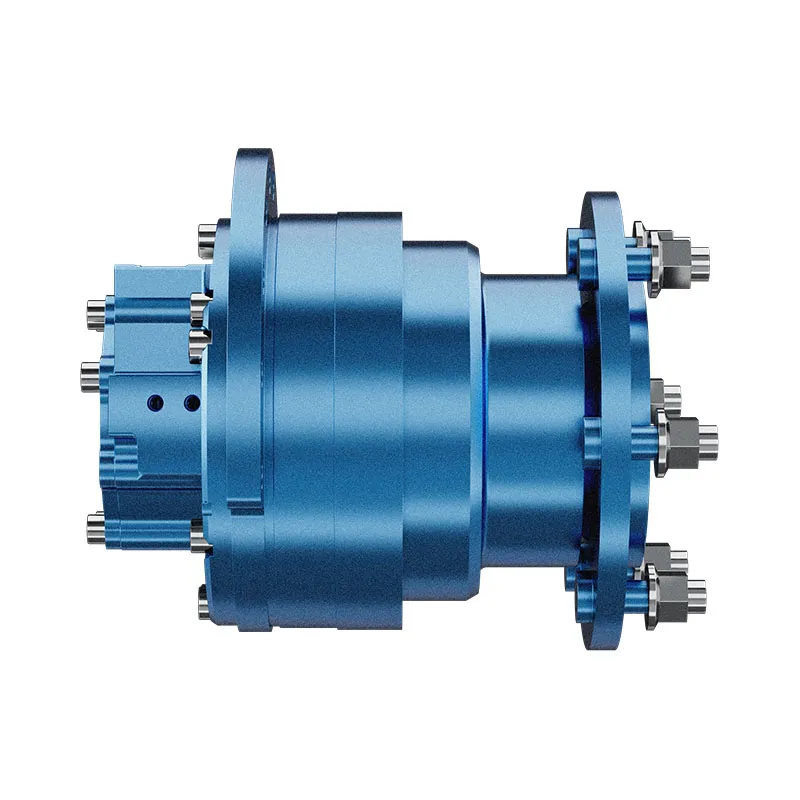
In a radial piston motor, the pistons act around the shaft against a crank, eccentric, or cam arrangement. The exact torque mechanism depends on the design. A multi-lobe cam motor and a crankshaft-type radial motor should not be treated as identical simply because both use radial pistons. Their speed ranges, bearing arrangements, displacement options, and service procedures can differ substantially.
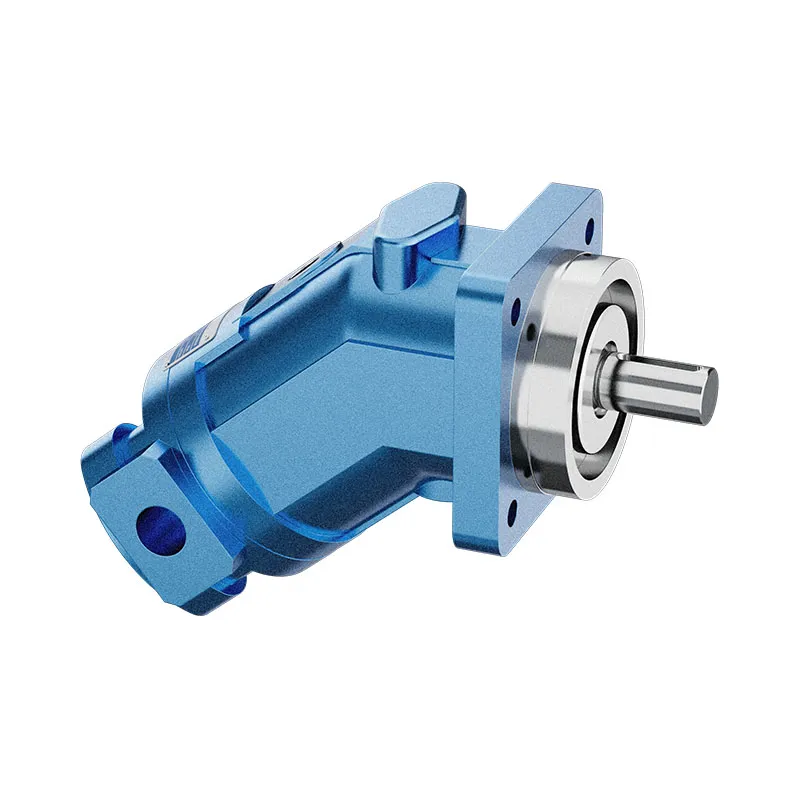
In an axial piston motor, the piston group is arranged generally along the rotating assembly. The mechanism can use a swash plate or a bent-axis arrangement. A bent-axis motor is therefore an axial piston motor; it is not a third category alongside radial and axial motors. This matters when comparing quotations that use different marketing labels for essentially related designs.
The outside shape alone cannot establish every internal feature. A product photograph helps identify mounting, shaft, and housing details, but the sectional drawing and model documentation establish the operating mechanism. Do not infer that a motor has a particular displacement control, integrated brake, or wheel-bearing capability from its general appearance.
Compare equivalent shaft duties first
Two motors can only be compared fairly when they are evaluated at the same output requirement. Specify shaft torque, speed, direction, operating duration, starting frequency, and ambient conditions. Then calculate the hydraulic input each motor needs at that duty point. Comparing a radial motor at a low shaft speed with an axial motor at its best-efficiency speed does not reveal which is better for the actual machine.
For a preliminary SI estimate, theoretical motor torque is T = delta-p × D / (20 × pi), where T is in N·m, pressure difference delta-p is in bar, and displacement D is in cm³/rev. Estimated output torque multiplies that value by mechanical efficiency. Use pressure difference across the motor, not pump pressure alone; return-line pressure reduces the pressure available to produce torque.
The corresponding ideal speed is n = 1000 × Q / D, with flow Q in L/min and speed n in rpm. Actual speed also depends on volumetric efficiency. These positive-displacement relationships provide a common comparison framework. They do not establish starting torque, minimum speed, transient capability, or a safe continuous operating point for an unspecified motor.
Consider an illustrative duty of 800 N·m at 60 rpm with 200 bar available across the motor. Assuming 0.90 mechanical efficiency solely for this example, estimated displacement is 800 × 20 × pi / (200 × 0.90), approximately 279 cm³/rev. At 0.90 volumetric efficiency, input flow would be about 18.6 L/min. Replace both assumed efficiencies with supplier data before selection; neither value is a Prance product specification.
Direct drive versus a gearbox
A low-speed radial piston motor may remove the need for a reduction gearbox, but direct drive is not automatically simpler at the machine level. Check the mounting space, brake arrangement, bearing support, service access, and total rotating inertia. A larger motor that eliminates a gearbox may still require a substantial support structure and additional cooling.
An axial piston motor with a reduction gearbox can provide the required slow output while keeping motor speed within a favorable operating region. The gearbox adds losses, backlash, lubrication requirements, and an additional failure point. It can also provide a useful mechanical ratio and isolate the motor from some external shaft loads when the output bearings are designed accordingly.
Evaluate total installed cost rather than motor purchase price alone. Include gearbox, coupling, mounting bracket, brake, pipework, filtration, controls, spare parts, and commissioning. If the gearbox is retained in an existing machine, an axial motor replacement may require fewer mechanical changes. If an entirely new direct-drive assembly is being designed, a radial solution may deserve closer consideration.
A practical application comparison
The following table is a qualitative decision aid. It is based on the different mechanisms and the duty checks described above, not a numerical performance ranking. NPTEL's industrial oil hydraulics course provides background on positive-displacement units and hydrostatic transmissions; the final decision still requires model-specific documentation.
| Application requirement | Radial piston motor questions | Axial piston motor questions |
|---|---|---|
| Slow direct output | Is starting torque adequate at the required oil temperature? Is motion stable at the lowest commanded speed? | Is a gearbox needed to reach stable output speed? What losses does it add? |
| Broad speed range | Is the maximum speed suitable for both operating and transport modes? | Can displacement control supply the required torque and speed envelope? |
| Wheel or drum integration | Does the exact unit have bearings rated for the external load and moment? | Will the gearbox or separate bearings carry the load instead of the motor shaft? |
| Reversing or overrunning duty | Are pressure peaks, replenishment, and braking addressed? | Are controls stable during displacement changes, reversal, and braking? |
| Long operating shifts | Are continuous ratings and thermal balance demonstrated at the duty point? | Are case flow, leakage losses, and cooling requirements documented? |
| Retrofit procurement | Do ports, mounting, shaft, and case-drain requirements match? | Does the chosen control option match the existing circuit and command signal? |
Starting, creeping, and stopping
Breakaway behavior can decide a selection that looks satisfactory on a steady-state calculation. A loaded conveyor, winch, or rotary table may need torque before appreciable motion begins. Ask for starting-torque information at the actual pressure difference and fluid condition. A rated running torque is not automatically a guaranteed starting torque.
Very slow motion also deserves its own check. Leakage, friction, oil viscosity, and load variation can cause speed irregularity. Require a demonstrated minimum stable speed under the expected load rather than accepting an unloaded minimum-speed claim. If position accuracy matters, include feedback, transmission backlash, and the control valve's low-flow behavior in the assessment.
During stopping or lowering, the load may drive the motor. Neither piston orientation makes a motor a parking brake. Determine how load holding, controlled deceleration, and emergency stopping are provided. The circuit may need suitable braking or counterbalance functions and replenishment to prevent low-pressure conditions. The final arrangement must be engineered for the particular machine and its applicable safety requirements.
Bearing loads and interfaces
Motor torque capacity and output-bearing capacity are separate questions. A shaft connected to a pulley, sprocket, drum, or wheel can experience radial force, thrust, and bending moment. Record the force direction and its distance from the mounting face. A longer overhung distance can change bearing suitability even when the transmitted torque is unchanged.
Do not assume every radial motor can directly support a wheel or that every axial motor must use separate bearings. Both conclusions depend on the exact construction. Request the allowable shaft-load information, mounting instructions, and any load-versus-speed limitations. For an existing assembly, inspect the original support arrangement before deciding that the replacement can carry the same load.
Compare shaft geometry, spline standard, flange, pilot diameter, mounting bolts, ports, and rotation convention. A motor that fits the bolt pattern can still have an unsuitable shaft engagement or pressure rating. Product family names and similar photographs are insufficient evidence of interchangeability.
Oil, drainage, and thermal behavior
Both motor families require fluid conditions suitable for their particular design. Confirm viscosity, cleanliness, operating temperature, material compatibility, and case-pressure limits using the selected documentation. Include cold starts and hot continuous operation. A system that performs well after warming up may still exceed permissible conditions when started with cold oil.
Where a separate case drain is required, route it according to the motor instructions and assess back pressure at the operating flow. A convenient return-line connection is not automatically acceptable. Shared drains and restrictive fittings can increase case pressure, especially during simultaneous operation of several components.
Efficiency losses become heat that the circuit must remove. Compare motor performance at the required duty point, not just a single peak-efficiency figure. Add gearbox and valve losses when estimating system heat. If the motor spends significant time stalled, throttled, or repeatedly accelerating, a steady-state running calculation alone will miss important operating conditions.
A useful supplier enquiry
Send one duty sheet to all suppliers. Include required continuous and peak output torque, speed range, load cycle, available flow, pressure difference, return pressure, oil temperature range, external shaft loads, and circuit type. Attach an installation drawing and identify the intended braking and feedback arrangement. This makes proposals comparable and reduces the chance of selecting on displacement alone.
Ask each supplier to identify the exact configuration and provide performance data at your required operating points. Request drawings, control descriptions, allowable case pressure, shaft-load information, and maintenance requirements. For a variable unit, include maximum and minimum displacement settings and the behavior if the command or pilot pressure is lost.
Prance's radial and axial piston product ranges provide possible starting points for an enquiry. Their presence in the catalog does not establish suitability for the example duty in this article. Confirm the complete ordered configuration, documented limits, and integration responsibilities before approving a purchase.
Häufig gestellte Fragen
Is a bent-axis motor axial or radial?
A bent-axis motor belongs to the axial piston family. The angle between its rotating group and drive axis distinguishes its mechanism from a swash-plate axial design; it does not turn it into a radial piston motor.
Does a radial motor always produce more torque?
No. Torque depends on displacement, pressure difference, efficiency, and the permitted operating conditions. Compare actual continuous and starting output at the required duty instead of comparing family names.
Can an axial motor replace a radial motor?
Possibly, but a direct swap requires much more than similar displacement. Speed range, gearbox needs, interfaces, shaft loads, drainage, controls, and braking must all be checked. Preserve the original machine's required behavior.
Which motor is best for low-speed operation?
Evaluate the demonstrated starting torque and minimum stable speed under load. A radial direct drive may suit the requirement, while an axial motor with a suitable reduction can also work. The complete drive arrangement decides.
Can either motor hold a suspended load by itself?
Do not use internal motor resistance as a guaranteed holding function. Specify and verify the appropriate load-holding and braking arrangement for the machine, including loss-of-power behavior and safe maintenance isolation.
Related products and engineering guides
For a duty-based enquiry, review Radialkolbenmotor MCR. Confirm the complete ordered configuration, drawings, operating conditions and integration responsibilities with the supplier. Related resources: Bereich der Kolbenmotoren, Berechnung der Motorleistung, case-drain flow measurement, starting versus running torque, Bent-Axis vs Swash-Plate Hydraulic Motor: Selection Guide, Hydraulic Motor for Winches: Torque, Braking, and Drum Speed.
University lesson: hydraulic motors
This NPTEL-NOC IITM university lecture explains the motor torque and flow principles used for the duty calculations above.

Technical references
- NPTEL: Grundlagen der industriellen Ölhydraulik und Pneumatik
- NIOSH: Verletzungen durch gefährliche Energie verhindern
- NPTEL: motor and hydrostatic transmission learning material
These sources provide technical, educational and safety context. Example calculations are illustrative, and neither their inputs nor another manufacturer’s component data establish a Prance product rating or brand affiliation.