Wenzhou Prance Hydraulic Equipment Co., Ltd.

Motor–Gearbox Spline Wear: Lubrication and Fretting at the Interface
Hydraulic motor gearbox coupling spline lubrication must be specified for the mechanical interface, not assumed from the presence of hydraulic oil inside the motor. A plug-in motor can have a spline supplied by gearbox oil, an approved grease arrangement, or another defined lubrication method. The correct choice depends on the complete motor–gearbox assembly. Fretting, uneven tooth contact, corrosion, and lubricant starvation require different investigations. Before replacing a worn motor shaft, identify how lubricant reaches the spline, what relative movement is permitted, and whether both mating parts remain serviceable.
Separate the hydraulic circuit from the spline interface
A hydraulic motor converts pressure and flow into torque and rotation. Its internal lubrication follows the design of its rotating group, bearings, housing, and drain passages. The external shaft connection transfers that torque into another machine. These spaces may be separated by seals and mounting features.
Consequently, clean hydraulic oil and correct motor case pressure do not prove that the gearbox input spline receives lubricant. A sealed interface can remain dry while both adjacent components have satisfactory oil levels. Conversely, a deliberately oil-fed spline requires its intended supply and drainage paths to remain available.
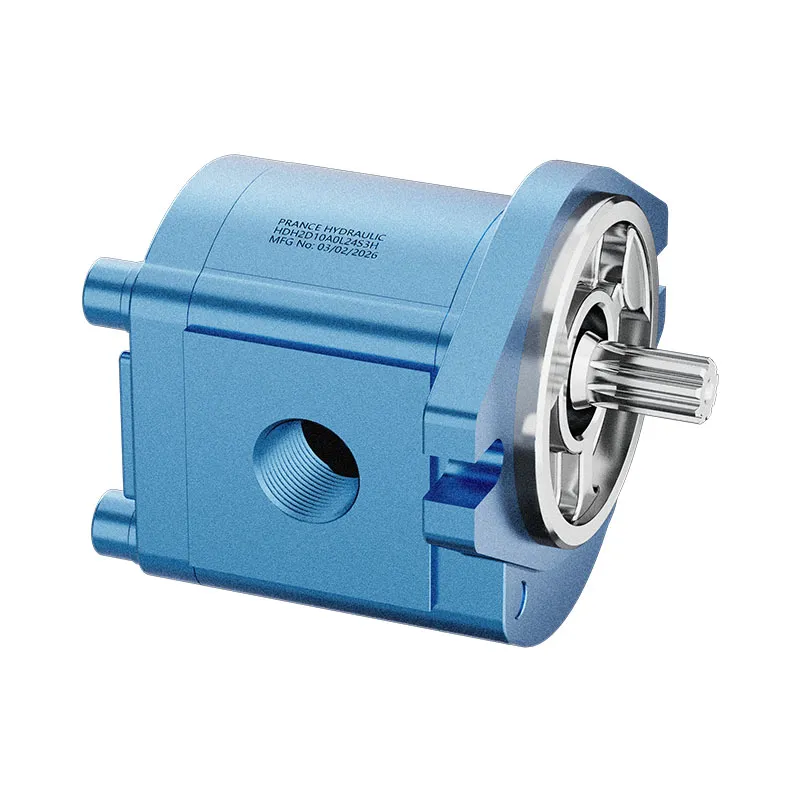
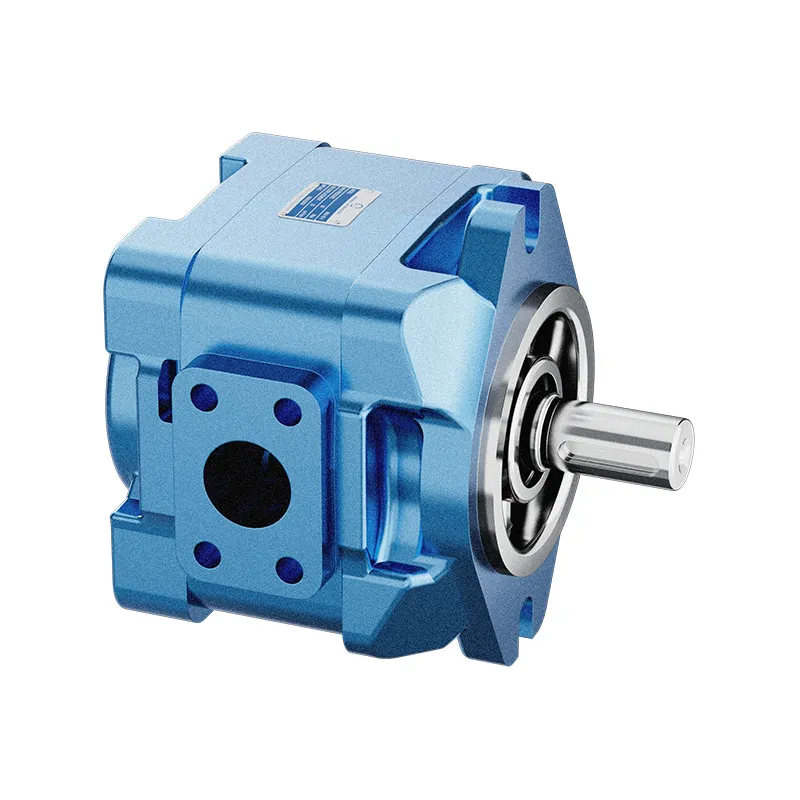
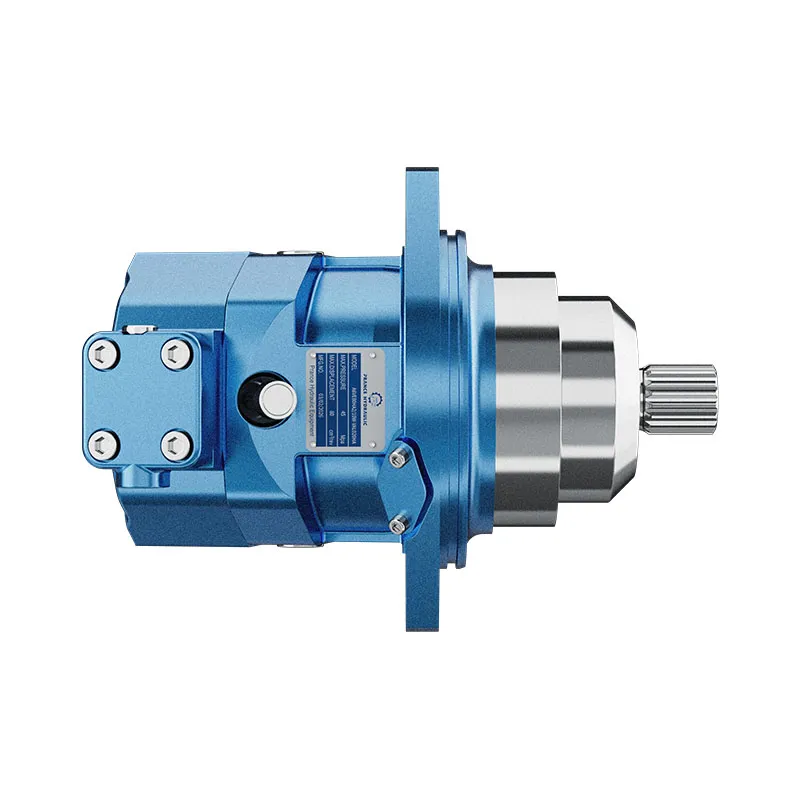
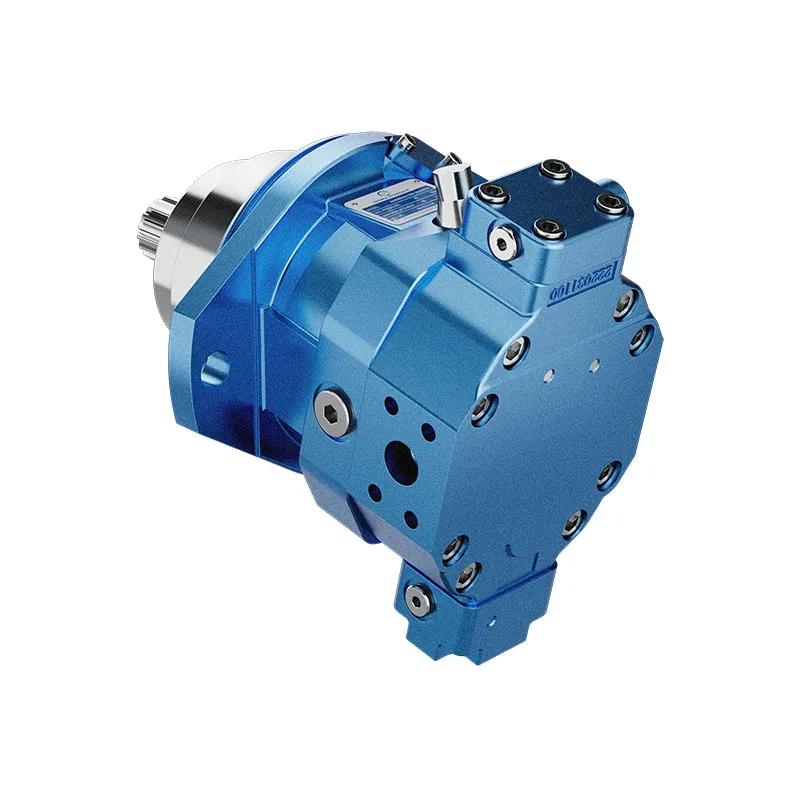
For a Prance A6VE plug-in motor inquiry, confirm the exact motor and gearbox codes and obtain the interface drawing. A product-family photograph can identify the mounting concept. It cannot prove a wet-spline arrangement, an approved grease specification, or a path connecting the gearbox sump to the shaft teeth.
Understand what fretting means
Fretting is surface damage associated with repeated small relative movements between contacting parts. A spline transmits torque through its tooth flanks, yet small movements can occur because of load variation, vibration, alignment errors, and elastic deformation. The nominal connection may appear stationary while microscopic motion continues at the contact.
NASA’s published discussion of fretting describes spline damage and the importance of maintaining lubricant at affected surfaces. IIT Madras’s machine-design lesson distinguishes splash and pumped lubrication, illustrating why lubricant delivery is a design question. These references explain the mechanism; they do not prescribe a lubricant or tolerance for an unidentified industrial motor.
Red or dark debris can be a useful clue, particularly on ferrous parts, but appearance alone is not a complete diagnosis. Distinguish fretting from abrasive wear, corrosion during storage, plastic deformation from overload, and damage caused during assembly. Several mechanisms may be present in the same connection.
Identify the intended lubrication arrangement
A wet spline depends on the designed oil path reaching the working tooth contact over the required operating conditions. It may involve splash, immersion, directed supply, or another arrangement. The gearbox oil level at rest does not by itself prove adequate delivery at every mounting angle or speed.
A grease-lubricated interface needs an approved lubricant, a defined application method, and a way to retain the lubricant while excluding contamination. More grease is not automatically better. Excess material can interfere with seating or enter spaces where it is not intended. Use the assembly instructions for quantity and location.
A supplier may approve a specific coating or assembly compound as part of a defined system. Do not substitute an anti-seize product, general bearing grease, or a different viscosity oil based only on color or availability. Compatibility with seals, operating temperature, materials, and any existing lubricant must be established.
Assess the interface as a pair of components
Inspect the male and female spline together. Replacing only the motor shaft can leave a worn gearbox sleeve that concentrates contact on the new part. Compare tooth profile, contact pattern, clearance, engagement length, and any damage with the drawing and service criteria for the assembly.
Confirm the complete spline designation. Tooth count alone does not establish interchangeability. Profile, pitch or module, pressure angle where applicable, fit class, centering method, and usable length can all matter. A connection that slides together can still have an unsuitable fit or insufficient engagement under load.
Check the pilot, mounting face, and locating features as well. If the intended pilot does not locate the motor correctly, the spline may be forced to accommodate misalignment that the assembly was not designed to tolerate. Bolts should not be used to pull an incorrectly seated motor into position.
Use the damage pattern to guide the next question
| Entdeckung | Possible concern | Nachweis zu erlangen | Incomplete response to avoid |
|---|---|---|---|
| Dry contact surfaces where oil feed is specified | Lubricant delivery or retention problem | Oil path, orientation, level and approved supply conditions | Assuming the hydraulic motor drain lubricates the spline |
| Fine oxide debris with local polishing | Fretting or corrosion with small movement | Contact pattern, fit, vibration and storage history | Treating debris color as a final diagnosis |
| Heavy contact near one end of the engagement | Misalignment or geometric mismatch | Pilot fit, face condition and engagement dimensions | Adding grease without checking location |
| Deformed or cracked teeth | Excessive load, impact or fatigue | Torque history, reversals, jams and material assessment | Reusing the mating part without inspection |
| Contaminated grease or damaged interface seals | Ingress and retention failure | Seal condition, cleaning and service method | Topping up over contaminated material |
cURL Too many subrequests by single Worker invocation. To configure this limit, refer to https://developers.cloudflare.com/workers/wrangler/configuration/#limits.
cURL Too many subrequests by single Worker invocation. To configure this limit, refer to https://developers.cloudflare.com/workers/wrangler/configuration/#limits
cURL Too many subrequests by single Worker invocation. To configure this limit, refer to https://developers.cloudflare.com/workers/wrangler/configuration/#limits.
cURL Too many subrequests by single Worker invocation. To configure this limit, refer to https://developers.cloudflare.com/workers/wrangler/configuration/#limits.
cURL Too many subrequests by single Worker invocation. To configure this limit, refer to https://developers.cloudflare.com/workers/wrangler/configuration/#limits.
Plan service without exposing workers to stored energy
Before removing a motor or opening a guard, follow the machine’s hazardous-energy procedure. Hydraulic pressure, suspended loads, accumulators, brakes, and rotating inertia can remain hazardous after the prime mover stops. NIOSH’s hazardous-energy alert emphasizes controlling unexpected startup and stored-energy release during servicing.
Support components and the driven mechanism using the specified method. A motor removal can affect brake operation or release a load path. Protect open hydraulic ports and gearbox openings from contamination, and preserve the orientation and condition of parts before cleaning.
Avoid hammering a shaft or forcing the mounting bolts to overcome a tight fit unless an approved procedure explicitly calls for the action. Resistance can indicate a mismatch, damaged teeth, inadequate alignment, or interference. Investigate it before continuing assembly.
Define a repair and acceptance plan
The repair plan should state which parts are retained, measured, replaced, or referred for specialist assessment. Include the mating sleeve or gearbox input, locating features, seals, and lubricant path. Record the approved lubricant and application method so future maintenance does not quietly substitute another product.
Acceptance should reproduce relevant operating conditions progressively under the machine manufacturer’s procedure. Check seating, leakage, abnormal sound, vibration, temperature behavior, and required machine performance. Establish a baseline for later inspection rather than promising that fresh lubricant eliminates all future wear.
Some interface defects are not visible during a short functional run. A motor that turns correctly can still have limited engagement or an unsuitable fit. Dimensional verification and documentation therefore remain necessary even when the initial machine test appears normal.
Prepare a complete inquiry for Prance
Provide the full motor code, gearbox manufacturer and model, spline drawing, mounting orientation, operating speed, torque duty, reversals, and expected loaded starts. Include the gearbox lubricant, level or supply arrangement, interface seal details, and photographs of both mating parts. Describe when the wear was discovered and whether the machine had recent mounting or drive changes.
Ask whether the proposed motor configuration is mechanically compatible with that gearbox and how the interface is intended to be lubricated. Keep this question separate from the hydraulic motor’s fluid specification and drain requirements. Both must be correct, but one does not establish the other.
When drawings or service limits are missing, request them before declaring a worn sleeve acceptable. A short delay for dimensional confirmation is more useful than fitting a new motor into a connection whose load distribution and lubrication remain unknown.
Häufig gestellte Fragen
Does hydraulic oil inside the motor lubricate its external spline?
Only if the verified assembly includes a path that supplies that interface. Many internal and external spaces are separated. Confirm the motor–gearbox drawing instead of assuming communication from the presence of oil nearby.
Can grease stop every form of spline wear?
No. An approved lubricant can support the intended contact, but it does not correct a mismatched profile, inadequate engagement, overload, misalignment, or a damaged mating sleeve. Diagnose the interface before changing lubricant.
Does red debris always mean the spline must be replaced?
It can indicate oxidation associated with fretting, but disposition depends on measured damage and the service criteria. Preserve the evidence, inspect both parts, and compare with the approved limits rather than deciding from color alone.
Is replacing the motor shaft enough after spline damage?
Not necessarily. The gearbox input or coupling sleeve may also be worn or geometrically unsuitable. Inspect the pair and the locating features; a damaged mating part can shorten the life of the replacement shaft.
What proves that a plug-in motor fits a gearbox?
The complete interface drawing, spline designation, pilot, mounting face, shaft projection, engagement, clearance, ratings, and lubrication arrangement must agree. Tooth count and the ability to assemble the parts are insufficient by themselves.
Verwandte Produkt- und Ingenieurressourcen
Hydraulischer Schrägachsen-Konstantkolbenmotor A6VE, Hydraulikmotor-Produktpalette, Auswahl des Hydraulikmotor-Kupplungssystems: Fehlposition und Drehmomentkapazität, Pump–Motor Soft Foot: Warum das Anziehen einer Schraube die Ausrichtung verändert. Bestätigen Sie den vollständigen Produktcode und die Anwendungsanforderungen bei der Anforderung einer Konfigurationsüberprüfung.
Technische Referenzen
- NASA: fretting and lubrication of spline interfaces
- IIT Madras NPTEL: machine lubrication delivery methods
- NIOSH: preventing uncontrolled release of hazardous energy
Further learning: hydraulic motors
3.2 – Hydraulic Pumps by NPTEL-NOC IITM provides background on pump operating principles. Use this lesson for the energy-conversion fundamentals. Seal leakage, relief-groove timing and spline lubrication require the specific component documentation, not inference from a general lesson. It supplements the component fundamentals; it is not a test procedure for the complete circuit discussed above.