Wenzhou Prance Hydraulic Equipment Co., Ltd.

Hydraulic Motor Factory Test Report: Torque, Speed, and Leakage
A hydraulic motor test report is useful only when its measurements are tied to the exact motor configuration and stated test conditions. Review displacement, pressure difference, inlet flow, speed, output torque, temperature, case pressure and drain flow together. A single efficiency percentage or a pass stamp does not prove that the motor will meet a different machine duty. Ask which procedure and acceptance limits were used.
This guide explains how buyers can review a factory or repair test report. It distinguishes measured results from calculated values and identifies missing information before a component is accepted. It does not invent a universal leakage, torque or efficiency threshold.
Identify the motor and the purpose of the test
The report should identify the full model code, serial number where applicable, tested configuration and date. Shaft, seal, port, bearing, brake and control options can change what the test establishes. If the report covers a sample unit rather than the delivered motor, that distinction should be explicit in the order agreement.
State whether the test is incoming inspection, production acceptance, repair verification or a performance characterization. These purposes can involve different procedures and operating points. A routine production check may not provide a complete operating map, and a type-test curve may not document the condition of a particular repaired unit.
Require a defined test method
Ask for the procedure identifier, revision and reference method. The method should describe the circuit, operating points, warm-up, stabilization, measurements and calculation definitions. Without these details, two reports may appear comparable while measuring different quantities under different conditions.
Identify which standard is referenced and whether the supplier is reporting conformity to the full method or only using selected principles. Do not treat a standard number in a footer as proof that every requirement was performed. If the purchase requires a particular method, define it before the test rather than trying to reinterpret an incompatible report afterward.
Read the pressure references correctly
Motor torque is associated with pressure difference across its work ports. Inlet pressure alone cannot establish that difference when outlet pressure is significant. The report should show both pressures or clearly state the measured differential. It should also identify pressure measurement locations and whether reported values are gauge or absolute.
Case pressure is a separate quantity that affects housing and seal conditions. A test bench with a low-restriction drain may produce a different housing condition from the installed machine. Check the drain arrangement and destination pressure. A motor can pass the bench test while the machine later creates unacceptable case pressure through its plumbing.
Check flow, speed and displacement definitions
Theoretical speed for a motor can be related to inlet flow and displacement. Actual speed differs because of leakage and other operating effects. Confirm whether the reported displacement is nominal, measured or an effective value under a stated condition. For variable motors, identify the selected displacement and how it was established.
Record inlet flow, shaft speed and any separate drain or flushing flow. Do not assume that drain flow represents all internal losses. Some motor designs route leakage internally to a work port, and intentional flushing flow can appear in the case line. The report must define what the measured flow includes before it can support a wear or efficiency conclusion.
Review output torque and power together
Output torque should come from an identified measurement or clearly described calculation. If a torque sensor or dynamometer is used, the report should state the arrangement and relevant calibration. A calculated theoretical torque is not the same as measured delivered shaft torque.
Mechanical shaft power is calculated from torque and rotational speed. In SI units, power in watts equals torque in N m multiplied by angular speed in radians per second. For an illustrative point, 100 N m at 300 rpm corresponds to approximately 3.14 kW. That example illustrates the calculation; it is not a specification for any product.
Distinguish the efficiency values
Volumetric efficiency relates actual speed to the theoretical flow-and-displacement relationship under the stated convention. Mechanical or hydraulic-mechanical efficiency relates delivered torque to theoretical torque. Overall efficiency relates useful shaft power to hydraulic input power. Confirm the exact definitions and which losses are included in each calculation.
Do not multiply percentages without checking that they describe the same operating point and compatible definitions. A low-speed starting result and a high-speed running efficiency are different measurements. Efficiency also changes with pressure, speed, viscosity and temperature, so one headline figure cannot describe the entire motor envelope.
Use a report-review table
| Report field | What should be clear | Why the field matters |
|---|---|---|
| Unit identity | Full code, serial or sample status and configuration | Connects the result to the supplied component |
| Test conditions | Fluid, temperature, speed, flow and pressure points | Establishes comparability with the application |
| Pressure measurements | Work-port differential and case reference | Separates torque input from housing conditions |
| Drehmoment und Drehzahl | Measured values and instrument arrangement | Supports delivered power and performance evaluation |
| Leakage or drain flow | Included paths and any flushing contribution | Prevents incorrect wear or efficiency conclusions |
| Acceptance limits | Source, duty definition and pass criteria | Explains what the reported pass actually means |
An empty or ambiguous field should generate a targeted clarification request. It should not be replaced by an assumed value copied from another motor.
Check temperature, viscosity and stabilization
The test should state the hydraulic fluid and its temperature at identified locations. Viscosity influences leakage, friction and filling behavior. Results measured before stable operating conditions can differ from warm continuous-duty performance. Ask how stabilization was defined and whether readings were taken after that condition was reached.
For a cold-start requirement, a warm bench result may not be enough. Conversely, a cold low-load check does not establish the sustained hot-duty behavior. Define the required temperature conditions in the acceptance plan. Do not infer temperature capability from a test performed at an unspecified or convenient workshop condition.
Review instrumentation and uncertainty
Ask which instruments measured pressure, flow, torque, speed and temperature, and whether calibration or traceability was current for the test. Resolution is not the same as accuracy, and an instrument displaying many digits does not automatically justify a precise efficiency claim. The report should use sensible significant figures.
Where acceptance lies close to a limit, measurement uncertainty becomes particularly important. Agree how uncertainty and rounding are treated rather than accepting a borderline result by formatting. Identify sensor locations, test-line losses and any correction used. A traceable test record allows the result to be repeated and reviewed.
Confirm the coverage of direction and controls
A bidirectional motor may need checks in both rotation directions, especially where the application uses reversal. Record the viewing convention and port mapping. For variable or controlled motors, identify the command, selected displacement and pressure references. Testing one fixed control condition may not cover the machine's full operating range.
If a brake is fitted, define whether the report includes release, holding or other approved brake checks. A motor performance test does not automatically establish brake function. Starting torque, low-speed smoothness and control response may require separate procedures rather than being inferred from steady-state output measurements.
Look for raw data behind summary claims
A useful report includes the operating points and measured values supporting its conclusion. Curves should have units, conditions and clear axes. A pass stamp without data can establish that a supplier completed an internal check, but it may not provide enough evidence for the buyer's application acceptance.
Request raw readings or a suitable summarized test sheet when the order requires them. Distinguish omitted data from failed performance: a missing temperature does not prove the motor overheated, but it prevents a confident comparison. Write clarification questions that address the specific gap rather than rejecting or accepting the report as a whole without analysis.
Compare the bench result with the machine
Map the reported operating points to the actual duty. Check flow availability, pressure difference, oil temperature, case pressure, direction and external shaft loading. A bench fixture may not reproduce an overhung sprocket load or a pressurized shared drain. Those installation conditions need separate verification.
Use the factory report as one part of acceptance, then record installed performance through the relevant duty. If the machine result differs, compare test conditions before concluding that the motor changed. A restrictive adapter, incomplete brake release or different viscosity can explain a difference that is not visible in the original bench report.
Specify the required report before placing the order
List the operating points, measurements, test method and acceptance criteria with the supplier. State whether results must be serial-specific and whether both directions, controls or brake functions are included. Identify the documents and raw data required with delivery. This prevents a disagreement over what a standard factory test was supposed to prove.
For a repair, request before-and-after findings where available and identify replaced parts. Keep the report linked to the configuration and service record. Avoid treating a repair provider's generic test sheet as evidence that an unresolved machine-side cause has been corrected.
Häufig gestellte Fragen
Is a pass stamp enough to accept a motor?
It depends on the agreed scope. For application verification, review the procedure, conditions, measured values and acceptance limits. A stamp alone does not show compatibility with a different duty.
Is inlet pressure enough to calculate output torque?
No. The relevant hydraulic input is pressure difference across the motor, and actual output also depends on losses. Check outlet pressure and the definition used in the report.
Does high drain flow always mean the motor failed?
Not necessarily. Interpret the flow with temperature, pressure, speed, design and any flushing contribution. Compare it with the exact configuration's accepted conditions.
Can one efficiency value describe the whole motor?
No. Efficiency varies with operating conditions. Use relevant points or curves, and distinguish volumetric, mechanical and overall efficiency.
What should be requested with a repair test report?
Ask for unit identity, inspection findings, replaced parts, test method, conditions, measurements and acceptance criteria. Installed verification is still needed for machine-side causes.
Produktdaten und entsprechende technische Ressourcen
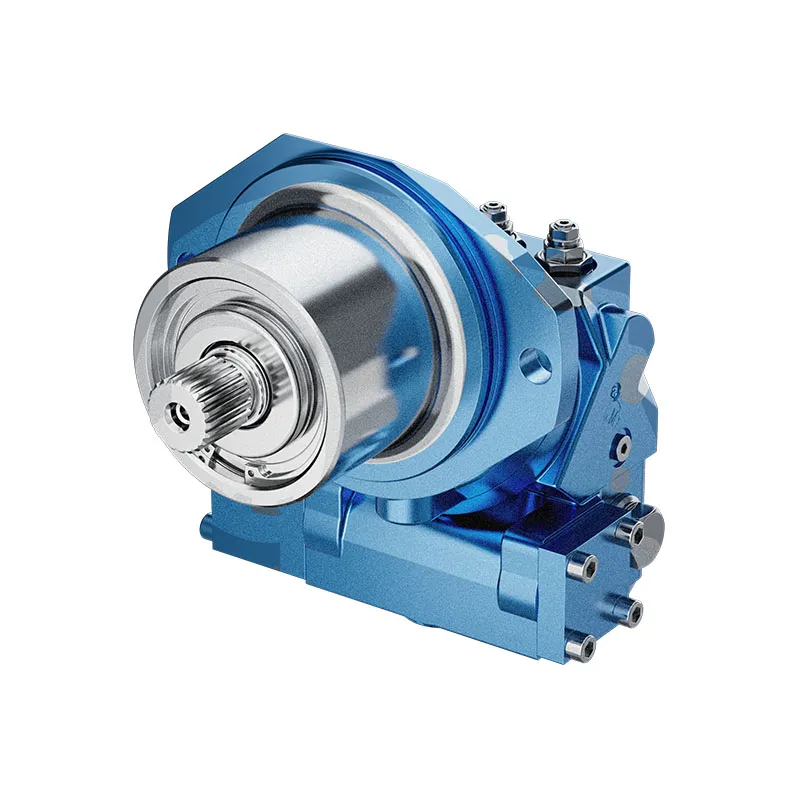
Für eine Anfrage zu einem bestimmten Produkt, bitte überprüfen Sie Konstant-Hydromotor A2FE und die vollständige Spezifikation und Installationsbedingungen zu liefern. Bereich der Kolbenmotoren, Bereich der Orbitalmotoren, Motorkasten-Druckkontrollen, Motorabfluss-Durchflussmessung, Berechnung der Motorleistung, Handbuch zur Austauschbarkeit von Hydraulikmotoren: Was muss übereinstimmen, Orbit Motor Internal Leakage: Wear Points and Diagnostic Tests. Die Produktfotos veranschaulichen die Katalogkonfigurationen; sie geben jedoch keine Druck-, Geschwindigkeits- oder Wellenlastwerte für eine nicht bestätigte Bestellung an.
Lehrveranstaltung an der Universität: Grundlagen des hydraulischen Motors
NPTEL-NOC IITM stellt eine Lehre über den hydraulischen Motor aus dem Institut für Technik und Ingenieurwissenschaften in Madras vor. Die Vorlesung unterstützt die Unterscheidung zwischen hydraulischem Eingangs- und Abtrieb, wie in dieser Anleitung beschrieben. Die spezifischen Installationseinstellungen und Betriebsgrenzen des jeweiligen Bauteils erfordern weiterhin die Dokumentation des ausgewählten Motors.
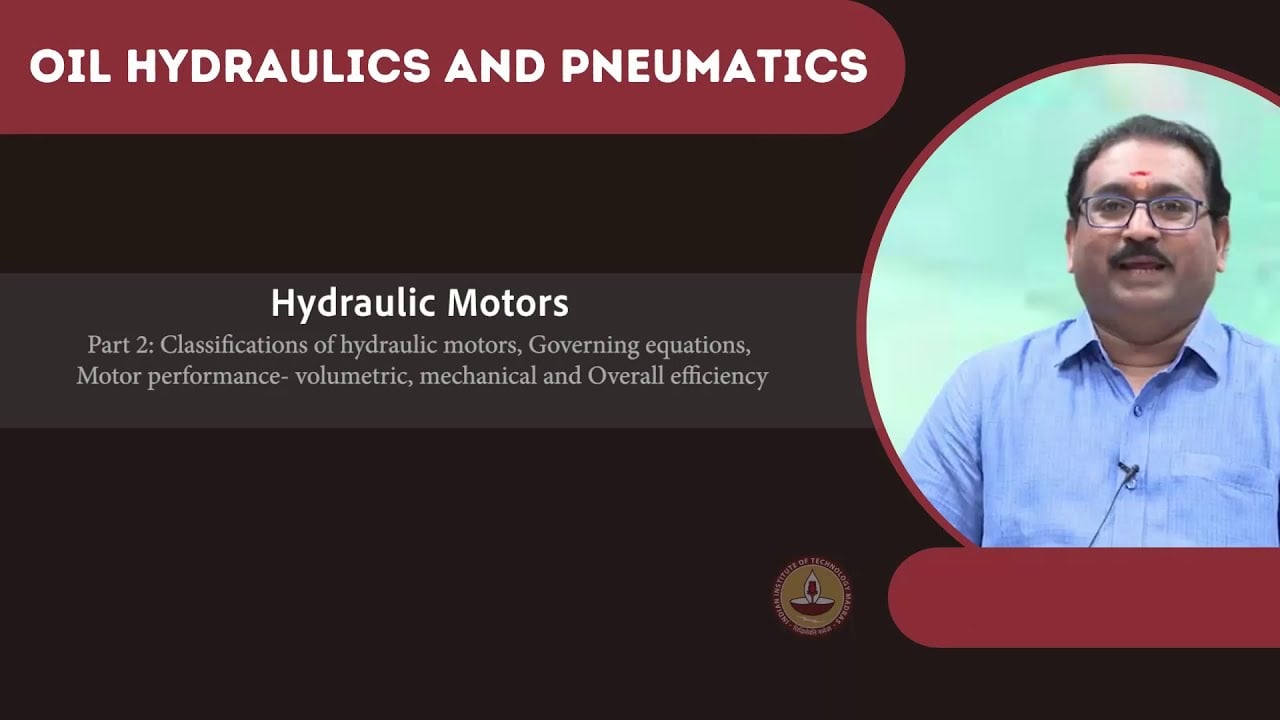
Öffnen Sie die NPTEL-Vorlesung zu Hydraulikmotoren.
Technische und Sicherheitsreferenzen
- NPTEL: Grundlagen der industriellen Ölhydraulik und Pneumatik
- NIOSH: Verletzungen durch gefährliche Energie verhindern
- Technische Referenz: Prinzipien des Betriebes von Orbitalmotoren und Installation
Diese Referenzen liefern ein pädagogisches und technisches Kontext. Die spezifischen Bewertungen für bestimmte Modelle von Referenzherstellern sind keine Spezifikationen für ein Prance-Produkt und implizieren keine Zugehörigkeit oder Genehmigung der jeweiligen Marke.