Wenzhou Prance Hydraulic Equipment Co., Ltd.

Hydraulikmotor Nass-Bremsöl-Kompatibilität: Reibung und gemeinsame Flüssigkeiten
Hydraulic motor wet-brake oil compatibility must be checked against the brake assembly and the complete lubrication arrangement, not just the motor’s hydraulic-oil specification. Oil in a wet friction pack affects friction behavior and cooling as well as wear. A fluid that works in the motor circuit may therefore be unsuitable for the brake or a shared transmission compartment. Identify every oil cavity and obtain the applicable equipment approval before selecting a replacement fluid.
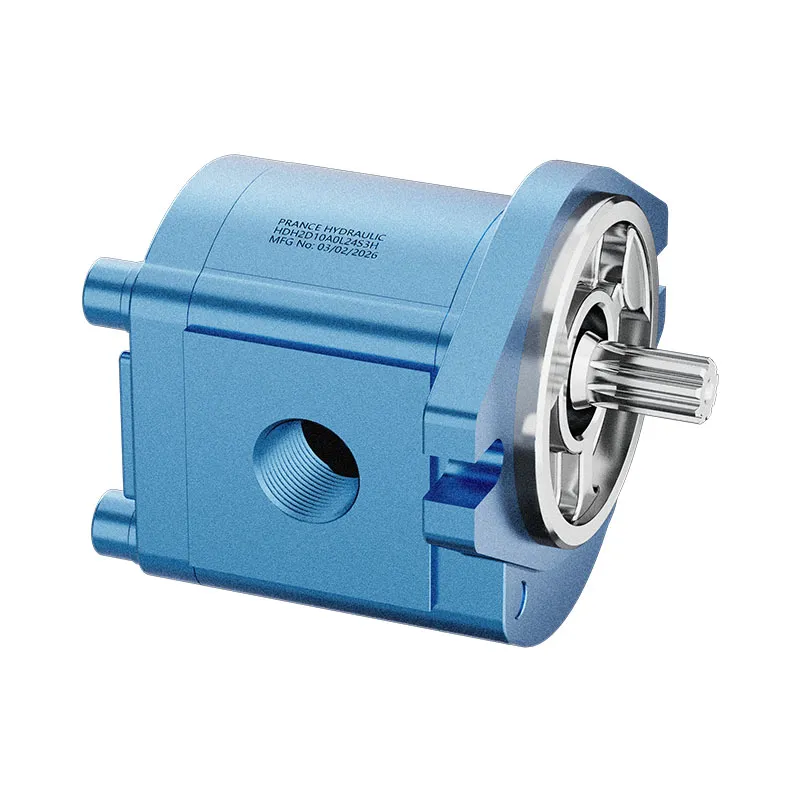
A wheel-drive motor photograph does not establish that a wet brake is included, that its release circuit shares the friction-pack oil, or that a particular transmission fluid is approved. Those details require the assembly drawing and actual component documentation.
Distinguish the motor, release circuit, and friction pack
A hydraulic motor converts hydraulic input into shaft output. A brake restrains motion. On assemblies with hydraulically released brakes, release pressure operates a mechanism; that function must not be confused with the lubrication and cooling requirements of the friction surfaces. Depending on construction, these functions can involve separate cavities or shared fluid paths.
Trace the connections using the manufacturer’s drawing. Identify motor working ports, case drain, brake release, lubrication supply, and any gearbox or axle sump. Mark which cavities communicate under normal operation and which are intended to remain separate. Do not infer an internal connection merely because two hoses return to the same general area.
This distinction changes the oil question. An oil selected for a hydraulic release line is not automatically the correct oil for the brake pack. Similarly, the presence of oil around a friction pack does not mean that the service-brake actuation system uses automotive brake fluid. Follow the specification for each identified circuit.
Why viscosity alone cannot settle compatibility
Viscosity influences flow, film formation, and temperature behavior, but it does not fully describe friction performance. Wet friction systems depend on the interaction of fluid, friction material, contact conditions, and operating temperature. Two oils with apparently similar viscosity can have different additive systems and different suitability for a particular brake.
Avoid assuming that any oil advertised as reducing friction is beneficial. A brake needs controlled friction to transmit the required restraining torque. The correct fluid is the one accepted for the assembly and duty, not the one with the most persuasive general lubrication claim.
The Society of Tribologists and Lubrication Engineers discusses oil’s friction and cooling roles in wet brakes. That principle explains why a brake’s lubricant requirements deserve a separate review. It does not create an approval for a particular oil or justify a numerical friction target without the brake manufacturer’s data.
Determine whether the reservoir is genuinely shared
A shared reservoir may serve hydraulics, transmission components, wet brakes, or other functions. In that arrangement, the selected fluid must meet the requirements of all affected components. A dedicated hydraulic reservoir can have a different specification from a superficially similar machine with a common sump.
Shell’s mobile-equipment fluid guide explicitly distinguishes equipment requirements, including shared reservoirs and wet-disc brakes. Use that distinction to ask the right question about the machine. Do not turn a general fluid category such as universal tractor transmission oil into approval for every installation.
If drawings are incomplete, resolve the uncertainty before changing fluid. The equipment manufacturer may be able to identify the arrangement from the serial number and assembly code. Sampling can help identify existing fluid, but an analysis alone does not prove which compartments were designed to communicate.
Use a component-by-component selection table
The following table is an enquiry and diagnosis aid. It intentionally avoids assigning an oil grade or approval to an unidentified motor or brake. Each decision depends on the installed assembly and its current documentation.
| Component or cavity | Question to answer | Consequence for oil selection |
|---|---|---|
| Motor working circuit | Which fluid specification and operating range apply? | Preserve motor lubrication and operating limits |
| Motor case | Where does case leakage drain, and at what allowed pressure? | Avoid assuming it is a brake lubrication supply |
| Brake release circuit | Which medium and seal compatibility are specified? | Keep release-fluid approval distinct from friction-pack oil |
| Wet friction pack | Which lubricant and friction requirements apply? | Reject viscosity-only substitution |
| Gearbox or shared sump | Which additional approvals must coexist? | Select for the complete shared system |
| Separate compartments | What prevents and detects cross-contamination? | Investigate unexpected transfer rather than normalizing it |
Write the source document and revision beside each completed answer. When two documents conflict, obtain clarification for the actual serial-number range. Do not combine the most convenient instruction from each and call the result equivalent.
Interpret chatter without blaming the oil immediately
Brake chatter can raise a legitimate compatibility question, particularly after a fluid change, but noise alone does not identify the cause. Mechanical condition, operating temperature, control behavior, contamination, and the friction system itself may also require investigation. Record when the symptom occurs and what changed before it began.
Distinguish chatter during commanded braking from dragging while a brake should be released. The latter requires checking the release arrangement and mechanical condition under the equipment procedure. A fluid change is not a substitute for confirming that the brake is actually releasing as intended.
Do not diagnose by adding an aftermarket friction modifier. An additive can alter the approved formulation and affect other components in a shared sump. If a supplier recommends a treatment, obtain written acceptance for the complete assembly and understand how it changes subsequent sampling and replacement requirements.
Investigate an unexplained level change
A falling level in one compartment and a rising level in another can suggest fluid transfer, but verify the measurement method first. Temperature, machine attitude, checking procedure, and operating state can affect readings. Compare levels under the same prescribed conditions before concluding that a seal has failed.
If transfer remains plausible, identify the possible interfaces from the drawing and seek an approved diagnostic procedure. Do not block a motor case drain, overpressurize a compartment, or run the machine with plugs removed as an improvised test. Such actions can create damage and obscure the original fault.
Preserve samples from the affected compartments before topping up or draining. Label each with location, operating hours, temperature context, and recent additions. Ask the laboratory what comparison it can support. A mixed sample from an unidentified drain container is much less useful for identifying a migration path.
Treat an oil change as a maintenance intervention
Before draining, secure the machine against motion, isolate energy, and follow the procedure for stored hydraulic energy and suspended or gravity-driven loads. A spring-applied brake may change state when release pressure changes; establish the mechanical restraint required by the equipment instructions.
Use the specified drain, fill, and level-check procedure for each cavity. A common-looking housing can contain separate fills. Do not assume that opening one drain removes all oil, or that filling one compartment establishes the correct level elsewhere. Identify breathers and level points without modifying them.
Residual fluid matters when formulations differ. Obtain the approved flushing and residual-contamination requirements instead of assuming that a simple drain-and-refill is sufficient. Keep transfer containers clean and dedicated where necessary. Do not use a container that previously held automotive brake fluid, solvent, or an unidentified lubricant.

Verify performance under the approved acceptance procedure
Record the correct fluid product, batch, quantity, and applicable approval before the machine returns to service. Verify levels and inspect for leakage following the manufacturer’s sequence. Confirm that the release system operates within its specified conditions and that the brake functions under the prescribed test method.
A brake check must be appropriate to the machine and its risk. Do not use an uncontrolled slope, suspended load, or people standing near a moving drive as a shortcut. If the service procedure or suitable test equipment is unavailable, keep the machine secured until a competent service team can perform the required test.
Observe temperature, dragging, noise, and repeatability within the permitted duty. Compare the result with the baseline and acceptance criteria. A quiet short run does not establish long-term compatibility, and an apparently successful motor test does not prove the brake’s holding performance.

Define the limits of the catalog product connection
Prance’s BMR wheel orbit motor page is relevant to a wheel-drive enquiry. Its original exterior photographs identify the product context. They do not establish an integrated wet brake, a shared oil sump, a friction-material specification, or an approved brake lubricant for the customer’s complete drive.
For an assembly enquiry, provide the motor code together with the brake, axle, or gearbox identification. Include a drawing showing the relevant cavities and connections. This prevents a supplier from answering a motor-oil question when the actual concern is brake-pack lubrication or a shared transmission requirement.
If the assembly uses separate suppliers, identify who approves the combined system. A motor supplier’s acceptance of a hydraulic fluid cannot silently become the brake supplier’s acceptance. Close that gap before ordering a replacement lubricant or component.
Questions about wet-brake fluid selection
Kann gewöhnliches Hydrauliköl das spezifizierte Nassbremsöl ersetzen?
Nur wenn die Gerätdokumentation oder der verantwortliche Hersteller ausdrücklich die genaue Substitution genehmigt. Ähnliche Viskosität ist unzureichend, da die Bremse und alle gemeinsam genutzten Komponenten zusätzlichen Reibung und Materialanforderungen unterliegen können.
Identifiziert ein hydraulischer Freigabeport das Reibungspaketöl?
No. Release actuation and friction-pack lubrication can be separate functions. Trace the actual assembly drawing and follow the specification for each cavity. Do not infer a shared fill from the phrase hydraulically released.
Sollte eine Klapperbeschwerde mit einem Additiv behandelt werden?
Nicht als erster Diagnoseschritt. Stellen Sie zunächst die Fluididentität, Zulassungen, Betriebsbedingungen sowie mechanische oder Steuerungsfehler fest. Verwenden Sie ein Additiv nur, wenn die verantwortliche Gerätebehörde es für das vollständig betroffene System akzeptiert.
Does a BMR motor photograph prove that a brake is included?
Nein. Das Foto zeigt nur das sichtbare Katalogprodukt. Ein integrierter Bremse und seine Schmierstoffanordnung erfordern den vollständigen Montagecode und unterstützende Dokumentation, nicht eine Schlussfolgerung aus Rad-Antriebsanwendungen.
What information makes an oil enquiry actionable?
Geben Sie die Motor- und Bremscodes, Maschinennummer, Kavitätsdiagramm, aktuelle und vorgeschlagene Flüssigkeitsprodukte, Betriebstemperaturen, Symptomhistorie und relevante Handbuchseiten an. Bitten Sie um Bestätigung, die das vollständige gemeinsame System sowie das erforderliche Wechsel- und Abnahmeverfahren abdeckt.
Verwandte Produkt- und Ingenieurressourcen
Hydraulischer Rad-Gerinomotor BMR, Hydraulikmotor-Produktpalette, Hydraulischer Motorbremse Freigabedruck: Einrichtung und Test, Kaltstarts von Hydraulikmotoren: Viskosität, Losbrechmoment und Gegendruck. Bestätigen Sie den vollständigen Produktcode und die Anwendungsanforderungen bei der Anforderung einer Konfigurationsüberprüfung.
Technische Referenzen
- STLE: wet-brake friction and cooling fundamentals
- Shell: equipment-specific fluid requirements and shared reservoirs
Universitätslektion: Hydraulikmotoren
6.3 – Hydraulic Motors by NPTEL-NOC IITM provides background on motor operating principles. The lesson explains the associated component fundamentals; fluid compatibility and manifold repair approvals must come from the written sources and the actual equipment documentation. It supplements the component fundamentals; it is not a test procedure for the complete circuit discussed above.