Wenzhou Prance Hydraulic Equipment Co., Ltd

Radial Piston Motor Working Principle: Torque at Low Speed
A radial piston motor converts hydraulic pressure and flow into shaft torque and rotation using pistons arranged radially relative to the shaft. Pressure acting on the pistons creates force against a defined cam, eccentric or other reaction geometry, and the distributor coordinates supply and exhaust as the mechanism turns. Different radial-piston designs use different geometries, so one cutaway cannot represent every product.
This guide explains the energy conversion, main components and selection questions for buyers and engineers. It does not assign a pressure, speed, torque or efficiency rating to an unidentified motor. Use the technical data for the exact configuration being considered.
Follow the energy from hydraulic input to the shaft
The hydraulic circuit supplies flow and a pressure difference across the motor. The motor converts part of that input into useful mechanical shaft power, with losses appearing through friction, leakage and other effects. Flow and displacement primarily determine the speed relationship, while pressure difference and displacement determine theoretical torque.
Outlet pressure must be included when establishing the available differential. A pump gauge showing high inlet pressure does not by itself describe the motor's driving condition. Likewise, the commanded pump flow may differ from the flow reaching the motor. Use actual conditions at defined measurement points when checking performance.
Identify the radial piston arrangement
Radial describes how the pistons are oriented relative to the shaft, not a single universal internal construction. A design may use a cam-ring arrangement, an eccentric geometry or another manufacturer-specific mechanism. The reaction surfaces and distributor details determine how piston force is converted into rotation.
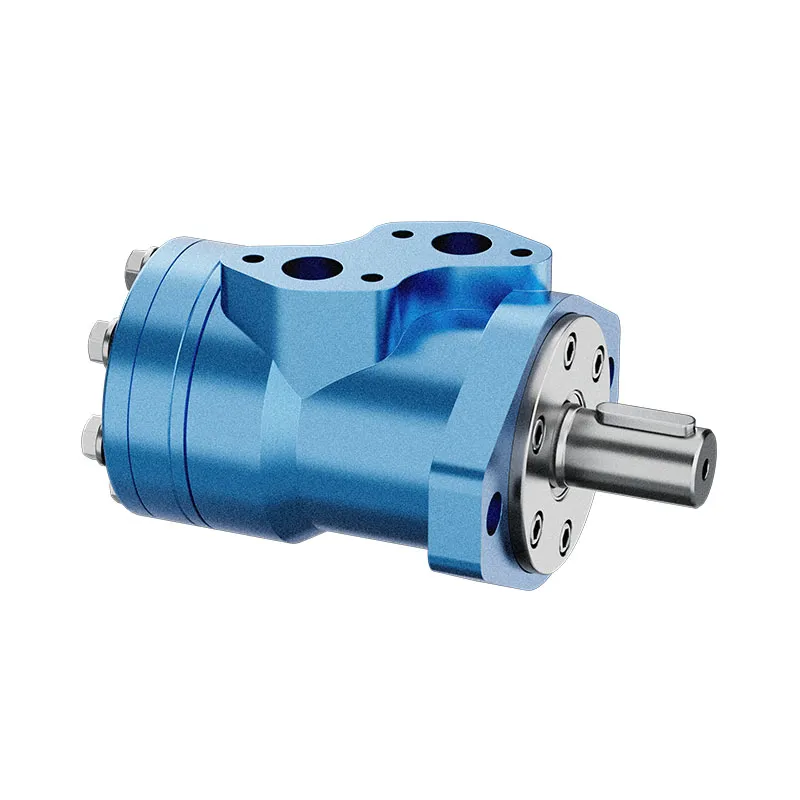
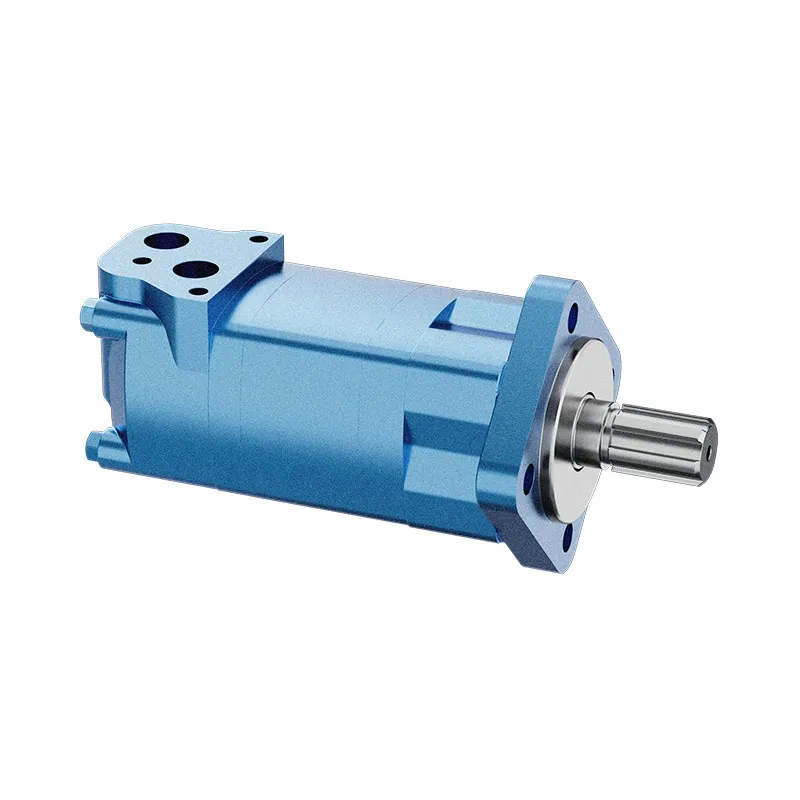
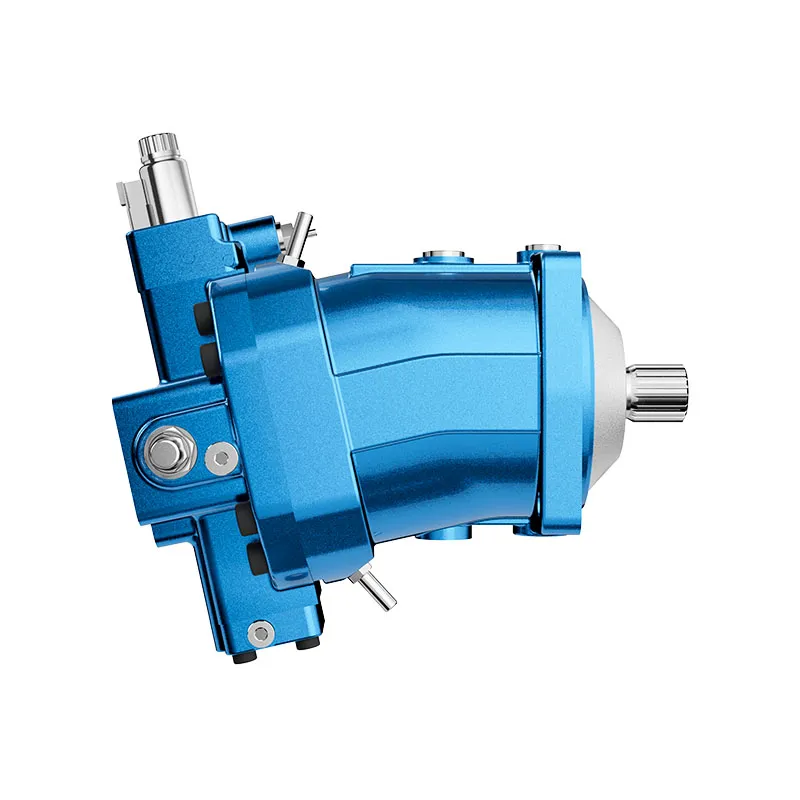
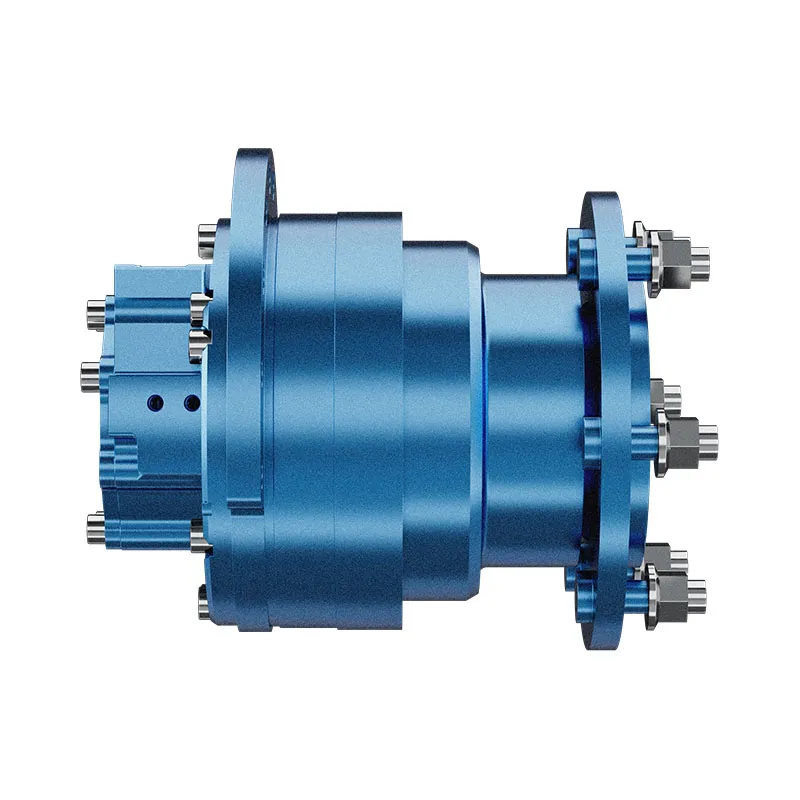
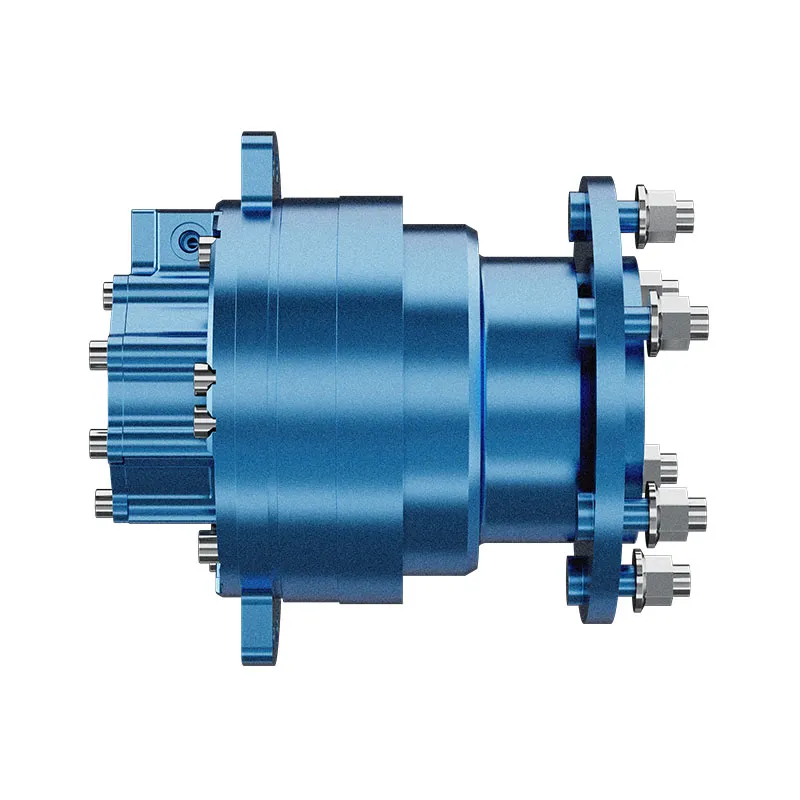
Review the selected motor's technical description and cutaway where available. Keep educational drawings separate from ordering data. A product photograph can show housing, shaft and ports but cannot establish internal cam count, piston sequence or service procedure. Do not infer these features from external appearance alone.
Understand the pressure-force relationship
Pressure acting over a piston area produces a force in an ideal static description. The reaction geometry converts that force into a tangential effect and torque about the shaft. The effective lever arm changes according to the design and piston position. Multiple working pistons contribute through the operating sequence.
This explanation does not make a single piston-force calculation a complete motor rating. Internal geometry, distributor behavior, mechanical losses and operating limits matter. Use displacement and documented motor performance for practical selection, and use detailed geometry only when it is verified for the actual design.
See why the distributor is essential
The distributor connects appropriate chambers to the pressure and outlet paths as their volumes change. Expanding chambers receive supply in the intended motoring state, while contracting chambers discharge through the defined outlet path. Correct coordination supports useful torque rather than opposing or short-circuiting the intended movement.
Distributor designs and internal timing are configuration-specific. Do not apply assembly marks from an orbital or axial-piston motor to a radial-piston unit. Repairs need the exact service procedure and matched-part information. For buyers, the important task is to obtain the selected motor's documentation and acceptance data rather than specify an internal timing position from general theory.
Relate displacement, flow and speed
For a fixed displacement, theoretical speed in rpm is approximately 1000 times flow in L/min divided by displacement in cubic centimeters per revolution. Actual speed depends on volumetric performance at the operating point. A larger displacement generally produces a lower theoretical speed for the same supplied flow, but configuration limits still apply.
As an illustrative calculation, 60 L/min supplied to a 300 cubic-centimeter-per-revolution motor gives 200 rpm theoretically. If the defined volumetric efficiency is 0.90 at that condition, the corresponding calculation gives 180 rpm. These are teaching inputs, not specifications for a Prance radial-piston model or acceptance limits for an order.
Relate pressure difference to torque
In consistent SI units, theoretical torque is pressure difference multiplied by displacement per revolution and divided by two pi. Actual shaft torque is lower under ordinary motoring because of mechanical losses. Starting torque needs its own documented performance rather than an efficiency taken from a different running point.
For a teaching example, 100 bar pressure difference and 300 cubic centimeters per revolution produce about 477 N m theoretical torque. That value assumes the stated units and ideal conversion. It does not establish continuous, peak or starting capability. The selected motor's curves and duty qualifications govern the usable result.
Compare motor features with application needs
| Feature to review | Application question | Evidence required |
|---|---|---|
| Starting performance | Can the motor move the actual load from rest? | Model-specific starting data and load calculation |
| Comportamento a baixa velocidade | Is smooth movement needed near the lower speed range? | Relevant operating data or an agreed test |
| Pressure and speed limits | Are demanding conditions continuous or intermittent? | Configuration-specific limits and duty definitions |
| Shaft and bearing option | Does the transmission impose external forces? | Load chart and complete mechanical drawing |
| Drain and lubrication | Are housing conditions maintained in every mode? | Installation and circuit requirements |
| Displacement or mode options | Does the machine need a changed operating range? | Exact option code and control behavior |
The table avoids assuming that all radial-piston motors share the same strengths or limits. Selection should match the actual duty and the offered configuration.
Understand low-speed and starting claims
Radial-piston motors are often considered for torque-demanding applications, but smoothness and starting capability must be verified for the selected model. A broad statement such as high torque does not tell a buyer the available breakaway performance at the required pressure, temperature and load.
If the machine needs slow controlled travel, indexing or repeated loaded starts, define those requirements explicitly. Ask which data covers the relevant point and whether a test is needed. Do not carry a favorable result from one speed into the whole operating range or claim zero-speed control capability without supporting information.
Distinguish radial from axial piston geometry
An axial-piston motor places pistons generally along the shaft-related axis and uses its particular bent-axis or swash-plate geometry to create the working motion. A radial-piston motor uses a radial arrangement and its corresponding reaction mechanism. The geometry affects packaging and the way the internal forces are managed.
Neither geometry is universally better. Compare real torque-speed requirements, efficiency at the duty, available space, controls, cost and service needs. A pump article explaining a swash plate can support understanding of a related conversion mechanism, but pump control behavior and motor operating limits must remain distinct.
Review the complete circuit around the motor
Check directional control, relief protection, replenishment, load control and any brake. A motor driving a load is in a different energy state from one being driven by that load. Deceleration, reversal or towing can require flow paths that are not obvious from a simple steady motoring diagram.
Maintain the approved case-drain and housing-fill arrangement. Some configurations or modes have special requirements, and a drain line is not interchangeable with a working return. Confirm any flushing contribution and destination pressure. The circuit must support the selected motor throughout the defined operating modes, not just at one running point.
Include the mechanical interface and external loads
Compare the flange, pilot, shaft geometry, projection and engagement with the machine. Check radial force, axial thrust and overhung moment from wheels, sprockets or gears. A motor with adequate output torque can still be unsuitable for the external bearing load or mounting arrangement.
Request the complete shaft and bearing option and the relevant load conditions. If an adapter is proposed, review its effect on distance, alignment and stiffness. Product size and appearance cannot substitute for a documented load check. Keep the hydraulic performance and mechanical loading reviews connected in the purchasing record.
Verify the installation with measured conditions
Before startup, inspect connections, oil fill, mounting, coupling and any brake sequence. Confirm rotation from the defined viewing side at reduced risk. Increase toward the real duty using the approved commissioning procedure and record flow, speed, both work pressures, case pressure and temperature.
Include loaded starting, low-speed motion and reversal where the application uses them. If a mode such as freewheeling is required, verify its separate conditions and limits. An unloaded rotation check is useful but does not demonstrate the motor's suitability for the machine's full operating envelope.
Specify a radial-piston motor RFQ
Provide required torque and speed through the duty cycle, starting and reversing events, available flow and pressure difference, fluid and temperature. Include the hydraulic schematic, installation orientation, external shaft loads and complete mating-interface drawing. Identify brake, control or displacement options that the machine needs.
Ask for configuration-specific curves, continuous and short-duration limits, drain requirements and acceptance tests. Request confirmation of the actual combination of conditions rather than separate catalog maxima. A useful offer explains how the selected motor matches the defined application and identifies any necessary machine changes.
Perguntas frequentes
What makes a radial piston motor rotate?
Pressure creates force on pistons, and the selected reaction geometry converts that force into torque. A distributor coordinates supply and exhaust through the working sequence.
Does more flow always mean the motor may run faster?
Flow affects the theoretical speed relationship, but the selected motor's speed, filling, lubrication and thermal limits still apply. Do not exceed its approved operating envelope.
Can theoretical torque be used as a product rating?
No. Actual output and permitted duty depend on losses and configuration-specific limits. Use the documented starting, continuous and peak information for selection.
Is a radial motor always better than an axial motor?
No. Compare the actual torque-speed duty, installation, controls and service requirements. Geometry alone does not establish the best application match.
What should be tested on the installed machine?
The relevant loaded operating points, starting, low-speed behavior, pressure and housing conditions, temperature and any required reversal or other operating mode. Record the conditions and acceptance basis.
Produtos e recursos de engenharia relacionados
Para uma consulta sobre um componente, consulte Motor de Pistões Radiais MCR e forneça a especificação completa e as condições de instalação. Guia relacionado: Área de atuação do motor de pistão, Faixa de alcance do motor orbital, Verificações de pressão no motor, Medição de vazão de drenagem do motor, Calculo da eficiência do motor, Carga do eixo do motor hidráulico: limites radiais, axiais e de sobrecarga, Hydraulic Motor Factory Test Report: Torque, Speed, and Leakage, swash-plate pump geometry and flow. As fotografias dos produtos ilustram as configurações do catálogo; elas não estabelecem a classificação de pressão, velocidade ou carga axial para um pedido não confirmado.
Conferência universitária: fundamentos do motor hidráulico
O NPTEL-NOC da IITM apresenta uma aula sobre motor hidráulico do IIT Madras. A apresentação apoia a distinção entre a entrada hidráulica e a saída do eixo, conforme descrito neste guia. As limitações de instalação e operação específicas dos componentes ainda exigem a documentação do motor selecionado.
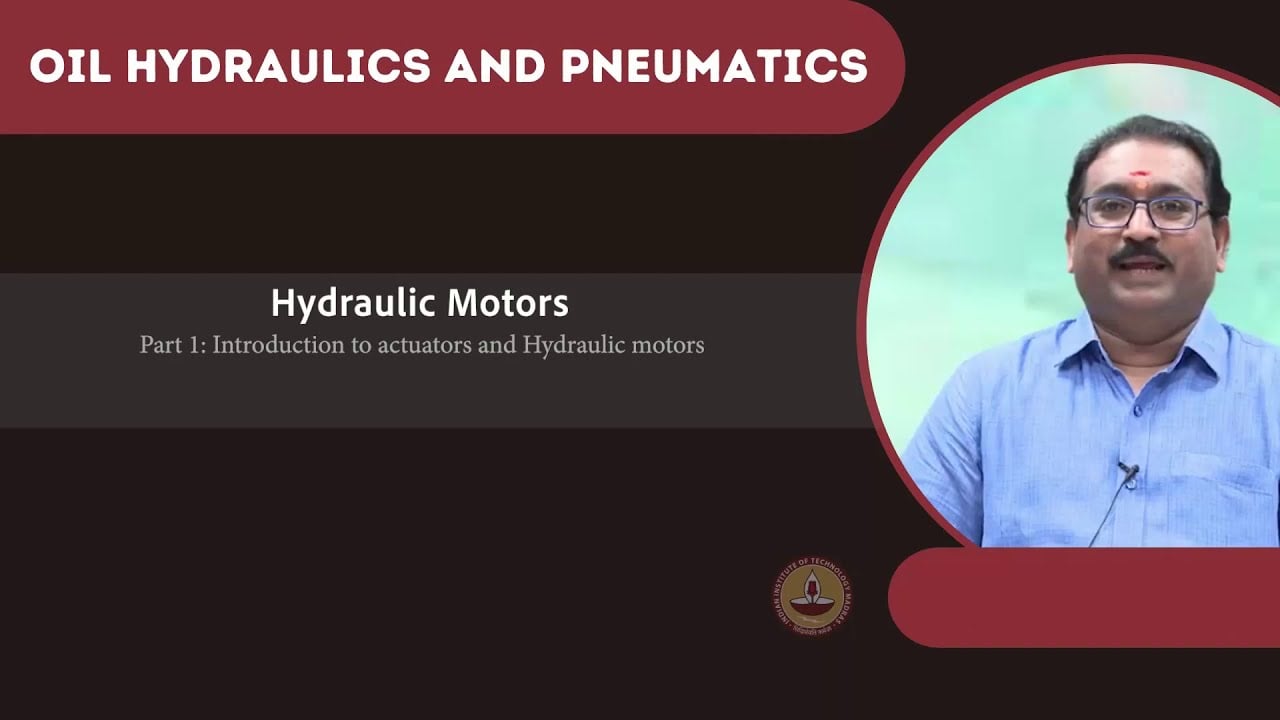
Aprenda mais sobre os motores hidráulicos no NPTEL.
Referências técnicas e de segurança
- NPTEL: Fundamentos de Hidráulica e Pneumática Industrial
- NIOSH: prevenção de lesões causadas por energia perigosa
- Referências técnicas: princípios de funcionamento e instalação de motores orbitais
Essas referências fornecem contexto educacional e técnico. As classificações específicas de um modelo de fabricante não constituem especificações para um produto da Prance e não implicam filiação ou autorização à marca.