Wenzhou Prance Hydraulic Equipment Co., Ltd

Pump Pressure Ratings: Continuous, Intermittent, and Peak Limits
Hydraulic pump pressure ratings describe both pressure magnitude and the conditions under which the pump may operate. Continuous, intermittent and peak are different duty categories; they are not three settings an operator can choose freely. A pump that survives a short pressure excursion is not automatically suitable for repeated production cycles at that pressure. Start with the approved data sheet for the complete pump code, then compare its limits with a measured pressure history, operating speed, fluid condition and intended service life. When the sheet does not define a duration or cumulative allowance, request clarification instead of inventing a universal time limit.
The Danfoss technical definitions illustrate why manufacturer-specific terminology must be read carefully. They are not Prance operating limits or a product recommendation.
What the three pressure categories actually tell you
Continuous pressure normally identifies a pressure permitted for sustained operation within the manufacturer’s accompanying conditions. Those conditions matter as much as the headline number. Speed, fluid viscosity, temperature, inlet pressure and bearing load can restrict the usable operating envelope. A continuous rating is therefore a conditional design limit rather than a promise that every installation will achieve unlimited life.
Intermittent pressure permits a higher or otherwise restricted operating condition only under a defined duty rule. The rule may specify the duration of one event, its frequency, the fraction of operating time, the total accumulated exposure, or several of these together. The word alone does not tell you which definition applies. Two suppliers can use similar terminology with different restrictions, so a comparison table needs the actual definitions beside the numbers.
Peak pressure usually concerns brief excursions or exceptional events. It should never become a target for the relief valve or a normal production setpoint merely because it is the largest number on the sheet. Some documents use maximum pressure, nominal pressure or rated pressure instead. Read their definitions before translating those terms into continuous, intermittent and peak categories.
Build a pressure history before choosing a pump
An average gauge reading hides the very events that can determine whether a pump is suitable. Record pressure at a relevant location through startup, productive work, reversals, standby and shutdown. Identify whether each reading is absolute pressure, gauge pressure or pressure difference. A line pressure measured far from the pump may differ from outlet pressure because of hose losses, restrictions and transient behavior.
Choose measurement bandwidth for the event being investigated. A slow display can be adequate for a steady operating point while missing a fast switching spike. Document sensor range, sampling rate, calibration status and location. Do not claim that no transient exists simply because a damped mechanical gauge remains steady. Where an approved test requires access to a pressurized system, use trained personnel and the machine’s safe test procedure.
Keep the original time series. A short summary containing maximum pressure and average pressure is useful for discussion, but it cannot show whether the maximum lasted milliseconds or minutes. It also cannot distinguish a single unusual event from a high-frequency cycle repeated throughout every shift. Those are different fatigue and reliability questions.
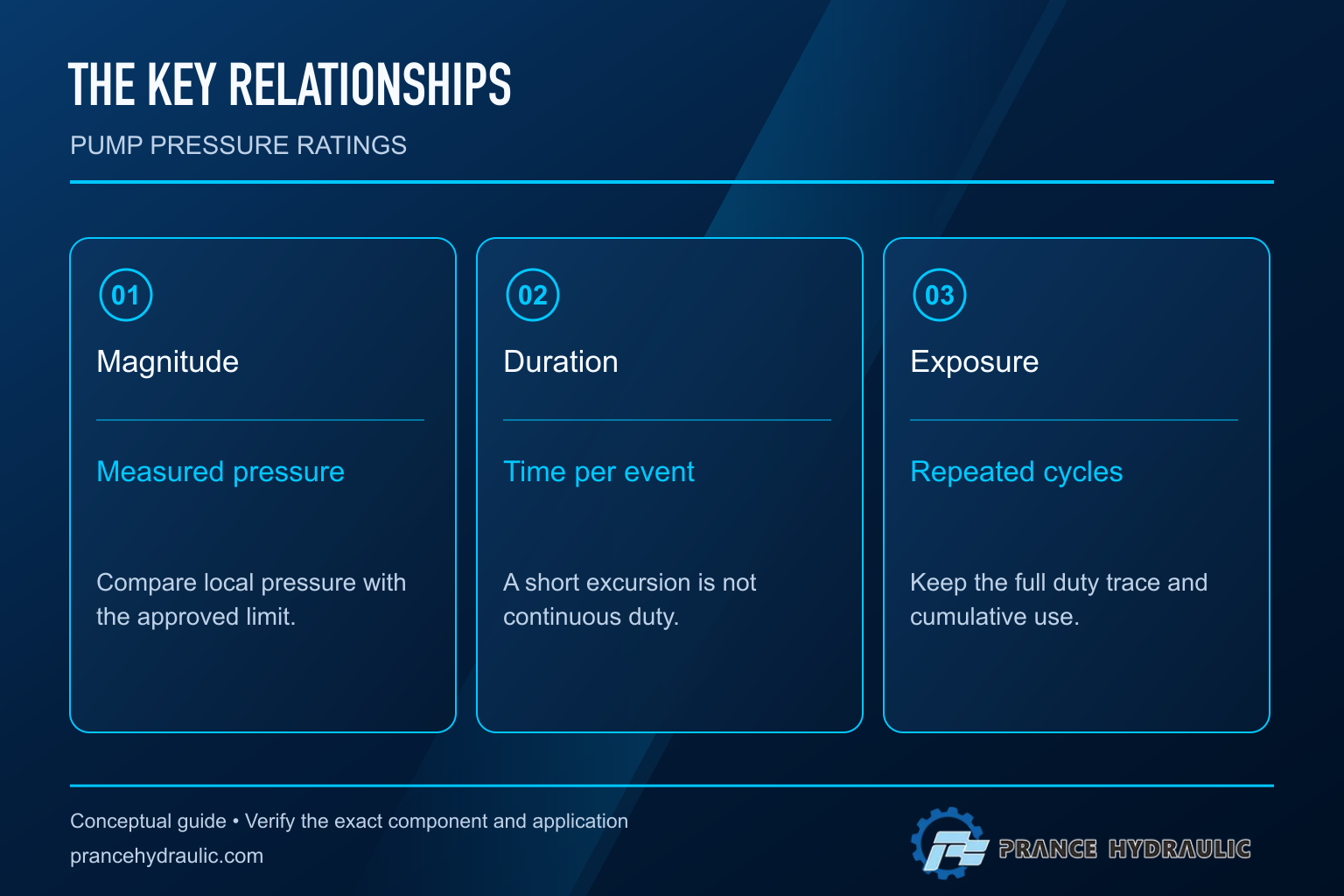
Compare magnitude, duration and accumulated exposure
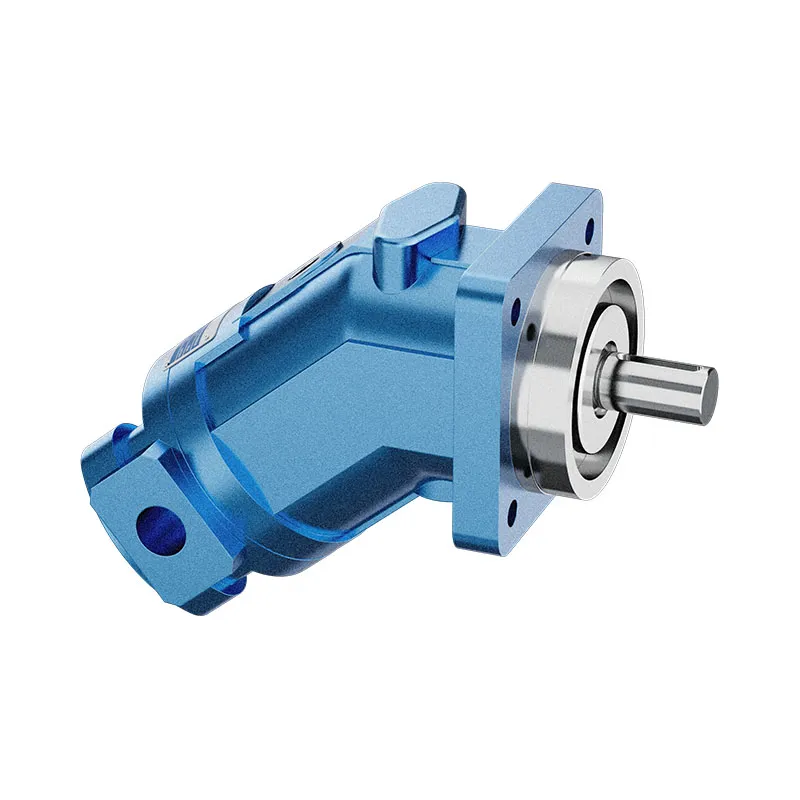
The following table is a review aid, not a replacement for a manufacturer’s rating definitions. No numerical pressure or time allowance is assigned to the A2FO product shown in the associated catalog link.
| Duty question | Evidence to collect | What the answer changes |
|---|---|---|
| What is the normal loaded pressure? | Stable pressure and speed during productive operation | Continuous operating-envelope comparison |
| How high does each excursion rise? | Suitable recorded transient measurements | Maximum or peak-limit comparison |
| How long does an elevated event last? | Time above each relevant boundary | Single-event duration review |
| How often is the event repeated? | Cycle count and operating schedule | Repetition and accumulated-duty review |
| What else happens at the same time? | Temperature, speed, inlet condition and shaft load | Combined-condition compatibility |
| Which document defines the limit? | Complete order code and approved revision | Whether the comparison is valid at all |
The distinction is practical. A machine may spend most of its shift at moderate pressure, but a repetitive reversal can produce a high excursion during every cycle. A different machine may experience a similar maximum only during an occasional exceptional event. The same average pressure does not establish that both installations impose the same duty.
A hypothetical duty-cycle example
Consider a teaching example with a 60-second cycle: 40 seconds at 120 bar, 15 seconds at 180 bar and 5 seconds at 220 bar. These are invented operating points used to explain bookkeeping; they are not ratings or recommended settings for any Prance pump. The time-weighted arithmetic mean is (40 × 120 + 15 × 180 + 5 × 220) / 60 = 143.3 bar.
That mean cannot prove suitability. The pump still encounters 220 bar for five seconds in every cycle, or 300 seconds in an hour if the machine repeats the cycle continuously. The approved document must permit both the pressure and its duration, and any repetition or lifetime restriction must also be satisfied. A mean value below a continuous limit does not cancel an excursion above an allowed limit.
Do not turn the arithmetic mean into an equivalent fatigue pressure without an accepted model. Fatigue damage depends on construction and load history, and a simple linear average does not capture that relationship. Send the full duty trace to the supplier when the application approaches a boundary. Keep assumptions about daily hours and annual cycles visible so that the review can be updated when production changes.
Why the relief setting does not define the pump rating
A relief valve regulates pressure through a real flow-dependent response. Its setting is one input to the circuit, while pump outlet pressure can also reflect pressure override, valve response, line dynamics and sensor location. A valve adjusted to a nominal number does not guarantee that every transient remains below that number.
The pump’s approved pressure envelope should guide the protection design. Check the relief valve’s own specifications and the actual flow that it must handle. Review startup, cold operation and sudden changes in load. Never increase a setting to cure low actuator speed without investigating delivered flow, load, restrictions and control behavior. Higher pressure does not create free flow capacity.
Where a pressure-compensated pump is involved, review compensator and relief coordination using the actual circuit. A fixed displacement pump has different flow behavior and may require an unloading arrangement for efficient standby. This article addresses rating interpretation; it does not prescribe a universal compensator margin or a relief setting for either architecture.
Check speed, fluid and mechanical conditions together
Pressure ratings belong to an operating envelope. A pump can be within a stated pressure number while operating outside a permitted speed or viscosity range. Restricted suction, unsuitable fluid temperature or excessive external shaft load can create a separate failure mechanism. The pressure label should therefore sit beside the other selection conditions rather than replacing them.
Fluid cleanliness and lubrication influence reliability, but a cleaner reservoir does not authorize operation above a pressure limit. Similarly, reducing average oil temperature does not automatically make an unapproved peak acceptable. Treat each documented limit as a condition that needs its own evidence. If the application combines several severe conditions, obtain an application review rather than assuming that individually acceptable values are acceptable in combination.
For an A2FO series inquiry, identify displacement, rotation, shaft, mounting, port configuration and fluid requirements with the full order code. The website’s series description establishes the product category and general application role. It does not establish a particular unit’s pressure-duration table or confirm that every optional construction shares the same limits.
Avoid misleading comparisons between quotations
A purchasing comparison can look precise while comparing incompatible definitions. One quotation may list a nominal pressure, another an intermittent maximum, and another a test pressure. Putting those values into a single column headed working pressure hides the difference. Add columns for the document revision, definition, applicable speed and duty restrictions.
Ask suppliers to identify any missing assumptions explicitly. If a quotation contains only a headline pressure, request the technical document that defines it. A hydrostatic proof or production test is not permission for normal operation at the test pressure. Likewise, a description such as heavy duty does not quantify the permissible cycle.
Keep the selection decision tied to the machine’s actual work. A pump with a higher peak number may still be unsuitable because of inlet requirements, speed range, mounting loads or insufficient displacement. A useful comparison explains why the candidate satisfies the complete duty rather than ranking products by the largest pressure printed in a brochure.
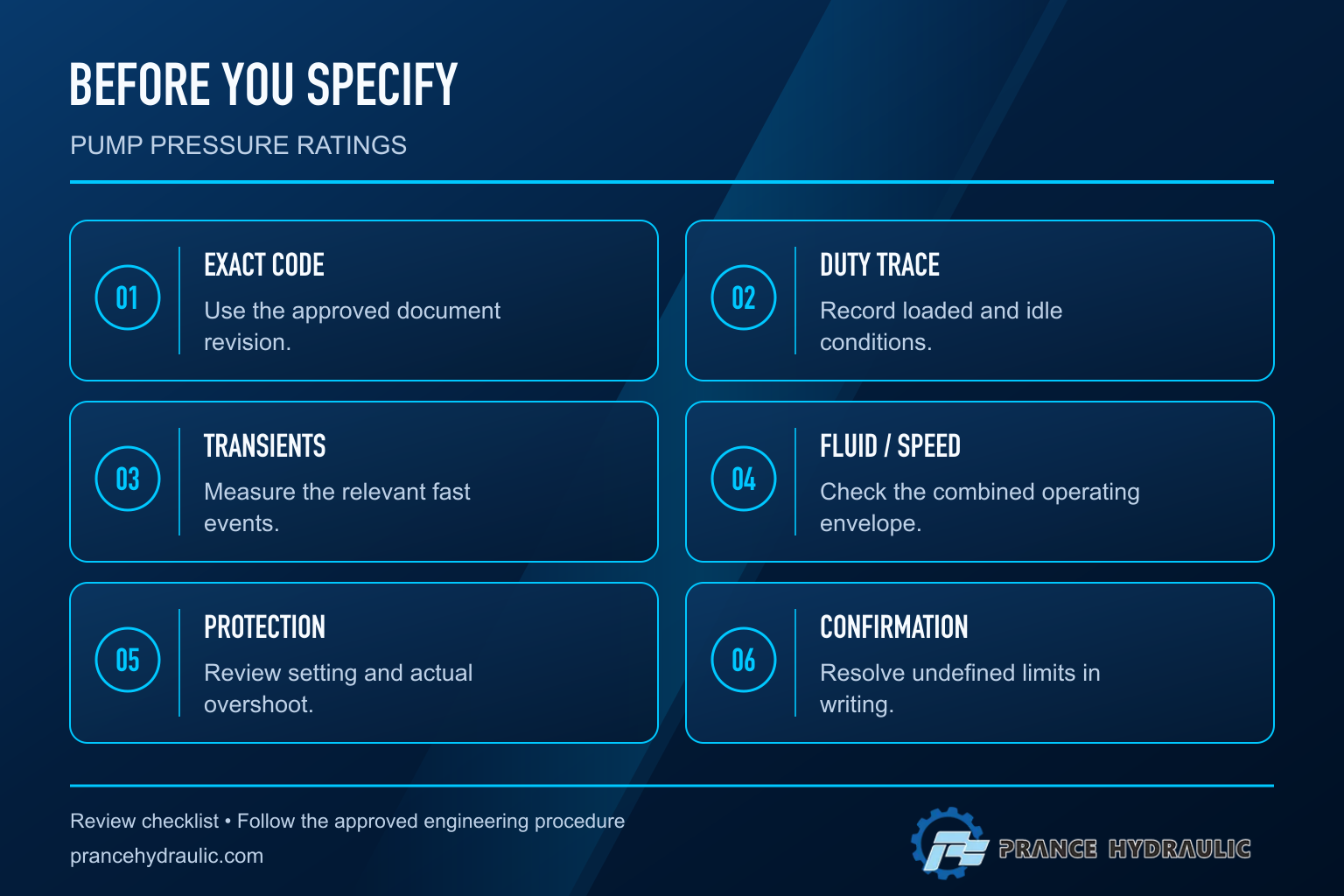
Verify the installation after selection
Commissioning should confirm that the approved assumptions match operation. Record a representative warm cycle and the relevant startup conditions, using the accepted test procedure. Compare measured pressures and speeds with the reviewed envelope. Check whether production timing, tooling or load has changed since the original inquiry.
Save the baseline trace with sensor details and the pump code. If a later change introduces faster reversals or a heavier load, repeat the duty review instead of treating the original approval as permanent. The NPTEL fluid-power course listed below provides operating-principle background; the NIOSH source supports control of hazardous energy during investigation. Neither supplies model-specific pressure limits.
Frequently asked questions
Is intermittent pressure always allowed for the same number of seconds?
No. There is no universal duration established by the word intermittent. Use the definition for the complete pump code and document revision, including single-event, repetition and cumulative restrictions where specified.
Can the relief valve be set at the peak pump pressure?
Do not assume so. The protection design must account for the approved pump envelope, relief behavior, actual flow and transients. A peak limit is not automatically an acceptable steady relief setting.
Does a low average pressure make high spikes acceptable?
No. Average pressure hides excursion magnitude and duration. Each event must comply with the applicable limits, and repeated exposure must meet any duty or life restrictions.
Is proof-test pressure a normal working rating?
No. A test condition demonstrates a particular verification under stated circumstances. It does not by itself authorize continuous or intermittent operation at that pressure.
What should accompany a pressure-rating inquiry?
Provide the complete pump code, circuit, pressure-time record, speed, temperature, fluid details, inlet conditions, cycle frequency and expected operating hours. Ask for written clarification of any undefined rating term.
Product and related engineering resources
The A2FO Series Axial Piston Fixed Displacement Pump is the relevant product category for this guide. The illustrations explain concepts and do not depict the product internals or establish operating limits. Confirm the complete code and approved documentation. Related resources: A2FO Series Axial Piston Fixed Displacement Pump, hydraulic pump range, High Pressure Piston Pump: Ratings, Limits & Use Cases, Hydraulic Pump Standby Pressure Too High: Causes and Diagnosis.
Sources and limits of this guide
Educational principles and explicitly hypothetical calculations only. No pressure, time limit, internal geometry, thermal-relief setting or performance curve is assigned to a Prance product. Actual service and selection require the approved data sheet for the complete order code and circuit review.
- NPTEL: Industrial Oil Hydraulics and Pneumatics
- NIOSH: hazardous energy prevention
- Danfoss Basic Information: manufacturer-specific pressure terminology; not Prance limits or product endorsement
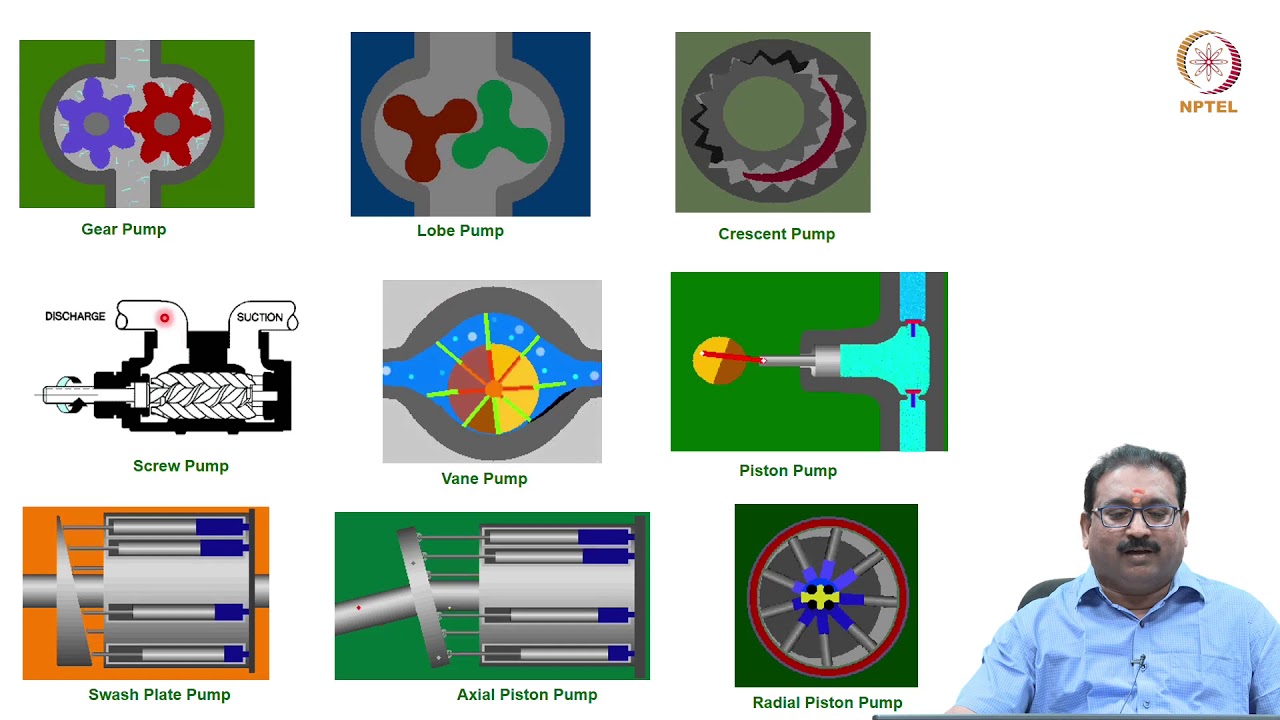
University lesson: operating principles
NPTEL-NOC IITM presents 3.1 – Hydraulic Pumps. The lesson supports the hydraulic pump operating principles; rating durations remain specific to the approved data sheet used in this discussion; it is not a model-specific performance or installation approval.