Wenzhou Prance Hydraulic Equipment Co., Ltd.

Closed-Loop Pump Bypass: Why Recovery Is Not Road Towing
A closed-loop hydraulic pump bypass can allow limited machine recovery, but it does not by itself authorize towing. The disabled pump may stop turning while the wheels still drive the hydraulic motor, circulating oil without the normal charge supply. Lubrication, replenishment, heat and braking therefore need separate checks. Before moving a disabled machine, obtain its approved recovery procedure and the instructions for the exact pump, motor and drive arrangement. If those documents do not establish a permitted recovery method, use an approved transport or mechanical recovery arrangement rather than experimenting with the bypass.
Why a bypass changes the oil path without disconnecting the drive
During normal propulsion, the pump supplies one side of the closed loop and receives flow through the other. During external movement, a connected wheel or track can drive the motor instead. The rotating motor then displaces fluid into the loop. With no suitable circulation path, that displaced fluid can build pressure and resist movement. A bypass provides a specified alternative path around part of the hydrostatic transmission.
The important distinction is between relieving hydraulic resistance and mechanically separating the drivetrain. Opening a bypass generally leaves the motor connected to the wheels. Its internal parts may continue rotating, and oil still passes through restrictions. The machine can therefore become easier to move without becoming suitable for sustained towing. Reduced resistance is an observation, not evidence that lubrication and speed requirements are satisfied.
Different pump designs implement the bypass differently. Some cross-connect the main loop; others use arrangements involving charge galleries or relief assemblies. A familiar-looking plug or screw does not identify the correct mechanism. The manufacturer’s exact illustration and operating instructions are necessary before anyone changes a service feature.
Treat missing charge flow as a separate operating condition
In a running closed-circuit transmission, the charge circuit replaces leakage and supports functions defined by that particular design. When the prime mover stops, a mechanically driven charge pump may also stop. External movement can nevertheless keep the motor rotating. The resulting condition is different from powered travel at the same wheel speed.
A cross-port path does not automatically replace fluid lost through leakage. It also does not prove that every bearing, control passage or housing receives its required oil. The correct recovery assessment therefore asks both where displaced loop fluid goes and how the selected units remain filled and lubricated. Do not assume an external charge source exists because a schematic for another machine includes one.
The Danfoss transmission recommendations linked below distinguish limited bypass movement from towing and warn about operation without charge flow. They illustrate the engineering issue; they are not an instruction to apply a Danfoss arrangement or allowance to a Prance AA4VG pump. A machine-specific procedure must resolve the actual circuit.
Motor speed matters more than the tow vehicle’s speedometer
Ground speed is only an indirect measure of what happens inside the motor. Tire size, axle reduction, final-drive gearing and the mechanical connection determine motor speed during movement. A slow-looking vehicle can still rotate a connected hydraulic unit rapidly if the drive ratio is high.
As a simplified kinematic example, assume an effective tire rolling circumference of 3 meters, travel speed of 3 kilometers per hour and a motor-to-wheel speed ratio of 20:1. Wheel speed would be about 16.7 rpm and motor speed about 333 rpm. These are hypothetical inputs, not a permissible recovery speed. Tire slip, actual rolling radius and the real drivetrain must be considered in an engineering calculation.
This example explains why another vehicle’s towing instruction cannot be copied using ground speed alone. Even a correct speed conversion does not establish adequate lubrication, allowable duration or braking. Those are additional constraints. Record both the approved machine movement limit and its relationship to the selected motor, rather than treating one calculated shaft speed as complete permission.
Heat can accumulate while the engine is stopped
Moving a hydraulic motor against a restricted circulation path requires mechanical power. Some of that power becomes heat in the oil and components. An inactive cooling system may remove heat differently from normal operation. Low ground speed can reduce power input, but it does not eliminate heat or provide an unlimited duration.
Do not judge the entire transmission from the temperature of one accessible housing. Fluid can heat locally, and a touch check cannot establish compliance with internal operating limits. Nor should a short successful movement be extended into a long tow simply because no external leak appears. The absence of an immediate symptom is weaker evidence than a documented operating boundary.
The Danfoss pressure-and-speed applications manual explains why bypass arrangements are intended for restricted recovery duties. Its model-related limits belong to its reference designs. For an installed Prance-related pump application, obtain the relevant controlled instructions and the machine designer’s recovery approval rather than transferring the manual’s example allowances.
Separate bypass operation, brake release and load restraint
A machine that becomes hydraulically movable may still have a spring-applied parking brake, a mechanically locked drive or another holding device. Conversely, releasing a holding device can allow gravity to move the machine before the recovery equipment takes control. These functions must be coordinated by the approved recovery plan.
Identify what holds the machine before any release takes place. Account for slopes, suspended attachments, articulated sections and other stored energy. The NIOSH hazardous-energy guidance linked below supports controlling those energy sources before service. A bypass is not a replacement for wheel restraint, rated recovery equipment or an approved brake-release procedure.
Do not loosen a hydraulic line as a substitute for bypass operation. It can release stored pressure, admit contamination and remove a required oil supply. Do not use engine starting or joystick operation as an improvised way to reseat an unknown bypass. The correct sequence depends on the installed design and must come from its instructions.
Use a recovery decision table before authorizing movement
The following table organizes the decision. It deliberately gives no universal towing speed, distance, adjustment angle or number of turns.
| Evidence available | Lo que establece | What still needs resolution |
|---|---|---|
| Exact machine recovery instruction | Approved overall recovery method and sequence | Whether installed parts still match the documented configuration |
| Pump-specific bypass instruction | Correct bypass hardware and its operating condition | Motor lubrication, speed and complete machine movement approval |
| Verified drivetrain ratio and tire data | Relationship between ground movement and motor rotation | Permitted speed and duration for the actual hydraulic units |
| Documented brake-release arrangement | How the holding function is released and restored | Independent restraint and control throughout recovery |
| Approved mechanical disconnect procedure | Defined separation of selected drive components | Braking, support, reconnection and transport requirements |
| Only an easy-to-move observation | cURL Too many subrequests by single Worker invocation. To configure this limit, refer to https://developers.cloudflare.com/workers/wrangler/configuration/#limits | cURL Too many subrequests by single Worker invocation. To configure this limit, refer to https://developers.cloudflare.com/workers/wrangler/configuration/#limits |
cURL Too many subrequests by single Worker invocation. To configure this limit, refer to https://developers.cloudflare.com/workers/wrangler/configuration/#limits.
cURL Too many subrequests by single Worker invocation. To configure this limit, refer to https://developers.cloudflare.com/workers/wrangler/configuration/#limits
cURL Too many subrequests by single Worker invocation. To configure this limit, refer to https://developers.cloudflare.com/workers/wrangler/configuration/#limits.
cURL Too many subrequests by single Worker invocation. To configure this limit, refer to https://developers.cloudflare.com/workers/wrangler/configuration/#limits.
cURL Too many subrequests by single Worker invocation. To configure this limit, refer to https://developers.cloudflare.com/workers/wrangler/configuration/#limits.

cURL Too many subrequests by single Worker invocation. To configure this limit, refer to https://developers.cloudflare.com/workers/wrangler/configuration/#limits
After an approved recovery, the bypass and any released brake or disconnect must be restored using their prescribed procedures. A partially open bypass can create internal recirculation and poor drive performance. Continuing to operate may then obscure the original fault with additional heat or a loss of useful delivery.
The service record should identify which features were operated, how normal positions were verified and whether contamination or oil loss occurred. If the procedure calls for filling, bleeding or inspection before starting, complete those steps first. Do not assume that restoring an external lever automatically restores every internal operating condition.
Return-to-service testing must address the original failure and the recovery actions. Confirm the machine’s required drive, neutral and holding behavior under the approved test conditions. For the next service event, retain the exact recovery instruction with the machine records so the decision does not depend on memory or a generic internet diagram.

Preguntas frecuentes
Does opening the pump bypass disconnect the hydraulic motor?
Usually it changes a hydraulic flow path rather than mechanically disconnecting the motor. Confirm the actual circuit and drivetrain. A motor that remains connected can still rotate during external movement and needs an approved lubrication and operating condition.
Can a universal slow towing speed be used?
No. Ground speed translates into motor speed through the actual tires and gearing, while permitted movement also depends on duration, lubrication, temperature and braking. Use the machine-specific recovery instruction and the selected units’ documentation.
Is a pump bypass the same as a motor freewheeling circuit?
No. A pump service bypass is one possible feature within a complete transmission. A motor freewheeling assessment must address its replenishment, lubrication, speed and protection. One feature does not establish the complete circuit's suitability.
Why does the machine move easily but still lack towing approval?
A bypass may reduce hydraulic resistance while leaving other restrictions unresolved. Ease of movement does not demonstrate adequate charge supply, cooling, motor speed margin or controlled braking. Those conditions need their own documented approval.
What should accompany a request for recovery advice?
Send the machine model, complete pump and motor codes, schematic, drive ratio, brake arrangement and the available recovery instructions. Explain the failure and intended movement. Do not operate an unidentified service screw while waiting for the review.
Recursos relacionados de productos e ingeniería
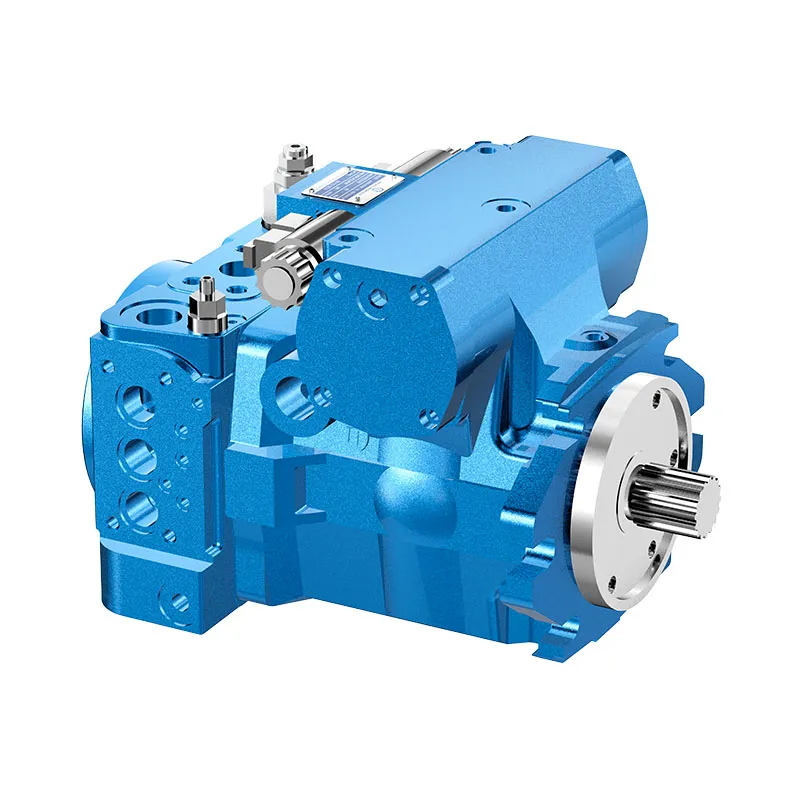
Bomba de pistones de desplazamiento variable de circuito cerrado AA4VG, gama de productos de bombas hidráulicas, Circuito de desacoplamiento del motor hidráulico: flujo de bypass y de reposición, Presión de carga en circuito cerrado: qué suministra y cómo diagnosticar la pérdida. Confirmar el código completo del producto y los requisitos de aplicación al solicitar una revisión de configuración.
Referencias técnicas
- Danfoss: Pressure and Speed Limits for Hydrostatic Units, reference bypass limitations
- Danfoss: Transmission Circuit Recommendations, reference bypass and charge circuit principles
- NIOSH: Preventing Deaths from Uncontrolled Hazardous Energy
Aprendizaje adicional: bombas hidráulicas
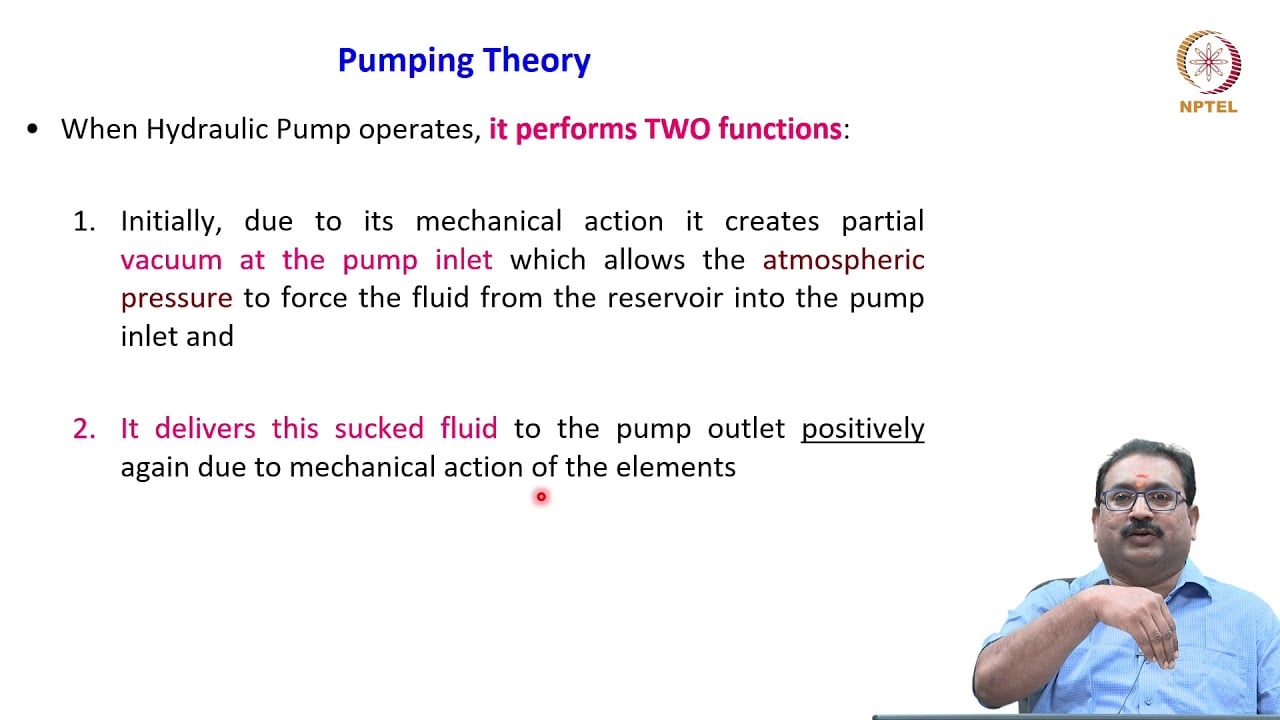
3.2 – Hydraulic Pumps by NPTEL-NOC IITM provides background on pump operating principles. Pump fundamentals explain displacement and flow. This lecture does not demonstrate the diagnostic or recovery procedure described here. It supplements the component fundamentals; it is not a test procedure for the complete circuit discussed above.