Wenzhou Prance Hydraulic Equipment Co., Ltd.

Control de la bomba hidráulica NFPE frente al control por retroalimentación: qué significa una orden fija
An NFPE hydraulic pump control does not use mechanical swashplate feedback to hold a commanded displacement. A feedback displacement control compares its command with swashplate position through its feedback mechanism. That difference changes how you interpret a machine that slows when load increases, even when electrical command current stays constant.
Before changing a controller setting or ordering a replacement pump, identify the installed control architecture. Two proportional solenoids and a similar connector do not establish equivalent control behavior. This guide explains the distinction and a document-led evaluation process; it is not a calibration procedure for an unidentified pump.
What the two control descriptions actually mean
Displacement is the volume a pump is designed to move per shaft revolution at a particular geometry. In a variable axial-piston pump, swashplate position changes that geometry. The electrical control commands a hydraulic servo arrangement rather than directly delivering useful output flow through the electrical connector.
El Danfoss H1P technical information describes NFPE as non-feedback proportional electric control. Its response depends on current, input speed and system pressure. The H1T service manual separately explains an EDC arrangement using mechanical swashplate position feedback. These are reference designs, not evidence that an unidentified Prance pump contains those exact components.
An important practical distinction follows: checking current verifies one input to the control, not the complete hydraulic response. A technician should record the control option before interpreting that measurement. A buyer should request the required behavior before accepting a proposed substitution based only on displacement size or connector appearance.
Displacement feedback is different from machine speed feedback
A pump may have internal mechanical displacement feedback without an electronic angle sensor. Conversely, a machine controller may use a speed sensor even when the pump itself lacks mechanical swashplate feedback. These loops sense different things and must be described separately in a specification.
Internal displacement feedback concerns pump geometry. Machine speed feedback concerns a measured shaft, wheel or other moving member. A controller can use that machine measurement to revise its output command, but the result depends on controller configuration, available hydraulic authority and the machine operating envelope. The existence of a sensor alone proves none of those conditions.
When reading a schematic, ask where the sensed quantity originates and where the corrective action goes. A line returning from the swashplate to a control spool represents a different function from wiring returning a motor-speed signal to a controller. Confusing them can lead to an RFQ that asks for the wrong control option.
Compare the behavior before comparing part numbers
The following table organizes the questions to resolve. Its descriptions concern control principles, not guaranteed performance of a particular pump or machine. Use the reference manuals above for their specific examples and obtain the installed unit’s own documentation for acceptance criteria.
| Evaluation question | NFPE reference behavior | Feedback displacement control | Qué verificar |
|---|---|---|---|
| What does current establish? | A control input whose displacement response also depends on operating conditions | An input balanced against displacement feedback within the control design | Actual control curve and applicable speed and pressure |
| Is mechanical position feedback present? | Absent in the referenced NFPE design | Present in the referenced H1T EDC design | Correct control schematic and complete option code |
| Does constant command ensure motor speed? | No independent speed guarantee | No independent speed guarantee | Pump speed, motor displacement, leakage and machine controller |
| Can a connector match prove interchangeability? | No | No | Electrical drive, neutral behavior, response and hydraulic options |
| What is a useful replacement acceptance record? | Behavior across documented operating conditions | Commanded displacement behavior across documented conditions | Machine-specific limits and approved commissioning method |
A purchasing comparison that lists only voltage and maximum displacement leaves the central behavioral difference unresolved. Include what the machine must do when load changes, what response is acceptable and which document defines the test. Do not invent a percentage tolerance when no acceptance requirement exists.
Why a machine can slow with unchanged electrical command
Start by separating input shaft speed, pump displacement, delivered flow and motor response. If the prime mover slows, the pump makes fewer revolutions per minute. If actual pump displacement changes, volume per revolution changes. Leakage and motor conditions can further change useful motion. A single speed symptom cannot identify which factor changed.
For an NFPE reference design, a pressure-related change in displacement can be part of the documented characteristic. That observation should first be compared with the correct control information rather than automatically treated as a failed feedback linkage. There may be no such mechanical linkage in that control architecture.
For a feedback displacement control, unchanged current still does not rule out pressure limiting, insufficient servo supply, a controller override or another documented restriction. The feedback mechanism works within the available hydraulic and mechanical conditions. It cannot eliminate every limit imposed elsewhere in the machine.
Use a controlled comparison instead of a current-only conclusion
Begin with existing machine records and a safe, approved diagnostic procedure. Identify whether the observations were taken at comparable input speed, oil condition, operating direction and load. Records from a cold unloaded start and a warm loaded operation do not isolate control architecture as the cause of a difference.
Next, distinguish a controller’s requested output from a verified electrical measurement. A displayed percentage may describe a software command rather than measured solenoid current. Record the quantity and measurement method explicitly. Do not assume a percentage corresponds to the same current on two different machine configurations.
Finally, compare the observed behavior with the exact control documentation. A useful conclusion names the expected relationship, the operating conditions and the mismatch. “The current is the same, so the pump must be defective” skips the variables needed to support that conclusion and may result in replacing a serviceable unit.
Neutral and failure response need their own review
Normal displacement behavior and neutral safety are separate acceptance questions. An operating curve does not establish stopping distance, brake function or the response to every electrical or hydraulic failure. Those depend on the complete machine design and the installed control option.
A separate service task concerns mechanical linkage engagement rather than identifying the architecture: Retroalimentación del control mecánico de la bomba hidráulica: comprobar el acoplamiento del varillaje.
The reference H1T manual describes specific neutral and servo-return behavior for its controls. Treat that description as belonging to the referenced assembly. Do not transfer it to another pump family or claim that disconnecting an arbitrary connector is a safe way to prove the machine will stop.
Before inspection or service, follow the machine’s isolation and stored-energy procedure. The guía de energía peligrosa de NIOSH explains why an electrical stop alone does not address all energy sources. A qualified person must establish the machine-specific conditions for any powered diagnostic work.
Replacement specifications should describe functions
A useful replacement request includes the full pump code and controller identification, then describes the operating task. State whether the machine requires a particular command-to-displacement characteristic, a specified response under changing load or integration with an existing speed-control loop. Attach the schematic revision that applies to the actual machine.
Compare the offered pump families while defining the required control behavior: Prance hydraulic pump range.
Ask the supplier to identify differences rather than answer only whether the pump fits. A mechanically compatible unit can require a different controller calibration, wiring arrangement or commissioning procedure. Such changes need an engineering review before the machine is returned to operation.
For an uncertain nameplate, provide clear photographs and the available machine documentation without guessing missing code positions. A partial code should remain partial in the inquiry. An invented suffix can make an otherwise careful comparison point to the wrong control architecture.

What the Prance product photograph can establish
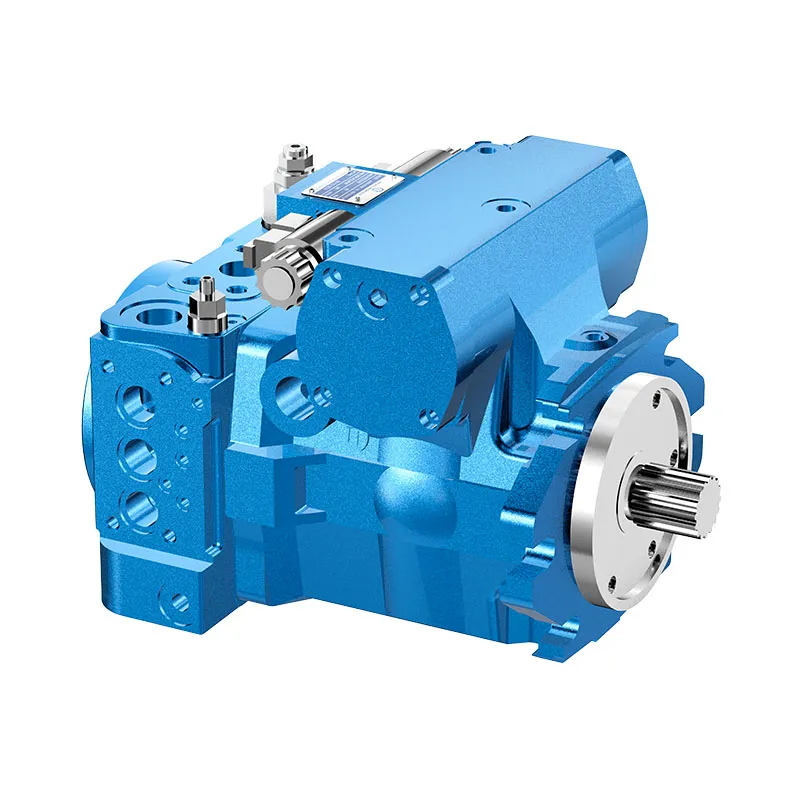
Prance lists an AA4VG-family closed-loop variable-displacement piston pump. The original website photographs identify that offered product family and its visible external features. They do not prove that a particular delivered unit has NFPE, the referenced H1T feedback arrangement or any particular internal sensor.
Use the product listing to identify the offered family before requesting its exact control documentation: AA4VG Closed Circuit Variable Piston Pump.
Use the product page to begin a configuration inquiry, then supply the complete installed model and machine requirements. The exact control option, compatibility and supporting documentation must be confirmed for the proposed unit. No current range, response time or pressure rating from the reference manuals is presented here as a Prance specification.
This boundary matters during troubleshooting as well as purchasing. An external photograph can help identify what document to request, but it cannot replace the control schematic or establish the condition of a hidden feedback mechanism.

Decide what evidence would change the diagnosis
If the installed code confirms NFPE and the measured response follows its documented operating characteristic, investigate machine requirements and controller matching before labeling the behavior a failed feedback control. If the code confirms displacement feedback and the response falls outside its applicable conditions, follow the manufacturer’s diagnostic sequence.
If the complaint is motion near neutral, use the distinct diagnosis discussion: Hydrostatic Neutral Creep: Separating Pump Offset from Load Effects.
If the control identity remains uncertain, stop the substitution decision at that point. Request the correct documents or supplier clarification. That is a specific missing input with a clear next action, rather than a reason to adjust neutral or increase command until the symptom disappears.
Keep the final acceptance focused on the original task: the required machine response under defined conditions. Record which control was supplied, which settings were approved and which checks were performed. This makes a later service decision possible without reconstructing assumptions from connector photographs.
Preguntas frecuentes
¿Significa NFPE que la bomba no tiene ningún tipo de realimentación?
No. El término describe la ausencia de realimentación mecánica de desplazamiento en el control de la bomba mencionada. La máquina puede seguir utilizando sensores de velocidad, presión u otros sensores en circuitos de control independientes. Su existencia y finalidad deben verificarse en la documentación de la máquina.
Can a pump with feedback have no electronic angle sensor?
Yes. Mechanical feedback can act inside the control assembly without sending an electronic angle signal to the machine controller. Identify the feedback mechanism from the correct schematic rather than from the visible number of wires.
Is one control type always more accurate for every application?
No universal ranking follows from the names. Define the controlled quantity, operating conditions and required response. A displacement-control comparison alone does not establish complete vehicle speed accuracy or suitability for a particular duty.
Can the existing controller be retained after a control-type change?
That requires a compatibility review. Electrical drive, command mapping, response, neutral behavior and machine safeguards must match the replacement. An unchanged connector is insufficient evidence that the existing controller setup remains acceptable.
Should load-related speed loss be corrected by increasing current?
Not before the cause and control architecture are established. Additional command can obscure a hydraulic limit or create an unintended response. Compare the documented behavior and use the machine manufacturer’s approved diagnostic and commissioning process.
Referencias
- Danfoss — H1P 115/130 technical information: NFPE reference control
- Danfoss — H1T service manual: reference design only, not Prance specifications
- NIOSH — Preventing Worker Deaths from Uncontrolled Hazardous Energy
Siguiente paso
Resolve the exact model and applicable documentation before changing the assembly or controller. Send the complete nameplate, component location and machine requirements to Prance for a configuration review.
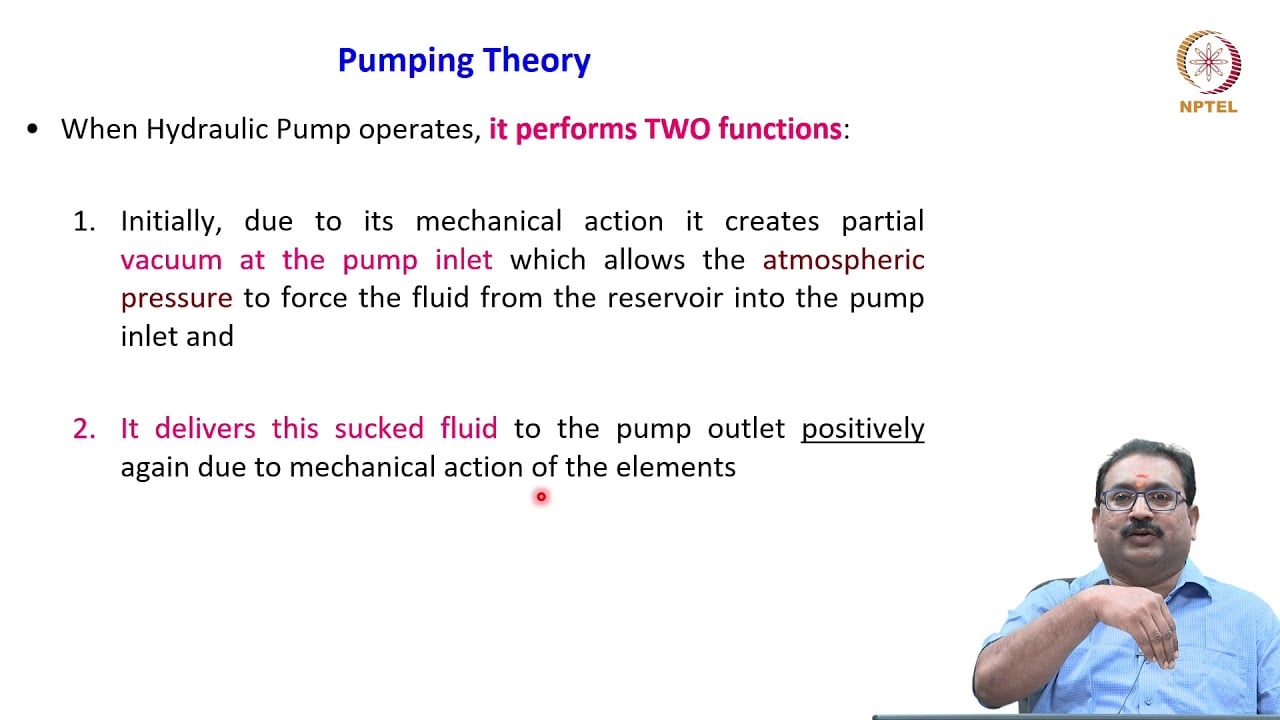
Aprendizaje adicional: bombas hidráulicas
3.2 – Hydraulic Pumps by NPTEL-NOC IITM provides background on pump operating principles. Pump fundamentals explain displacement and hydraulic energy conversion; this lecture does not demonstrate this particular control, fastener tightening or cartridge installation. It supplements the component fundamentals; it is not a test procedure for the complete circuit discussed above.