Wenzhou Prance Hydraulic Equipment Co., Ltd

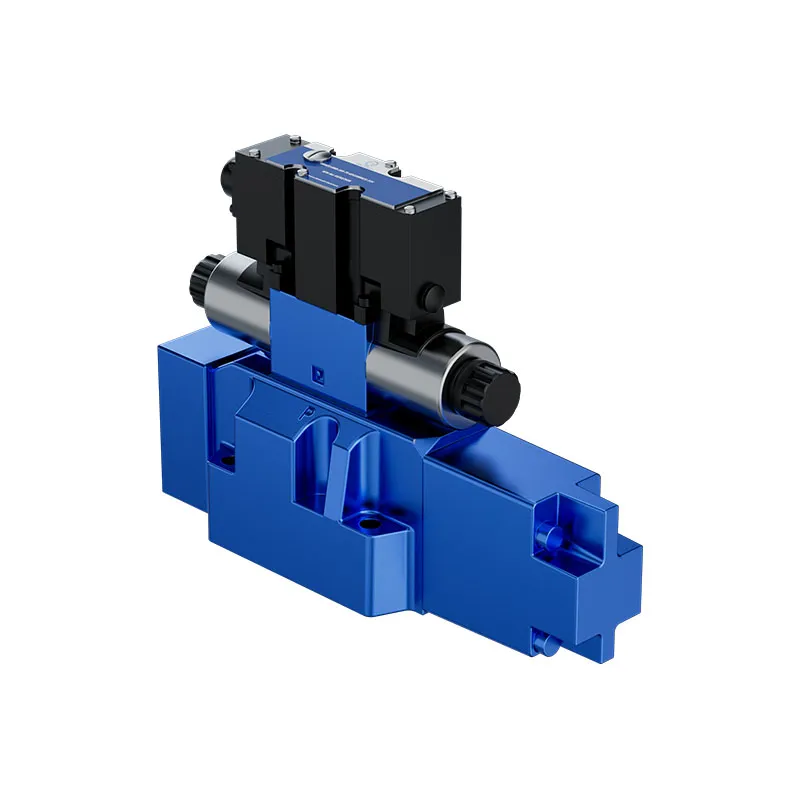
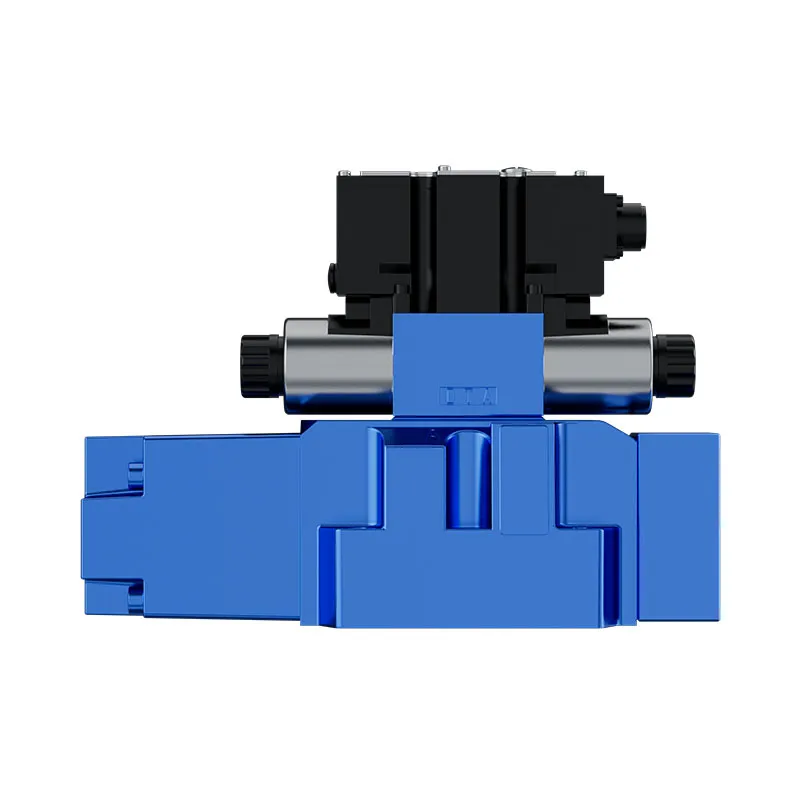
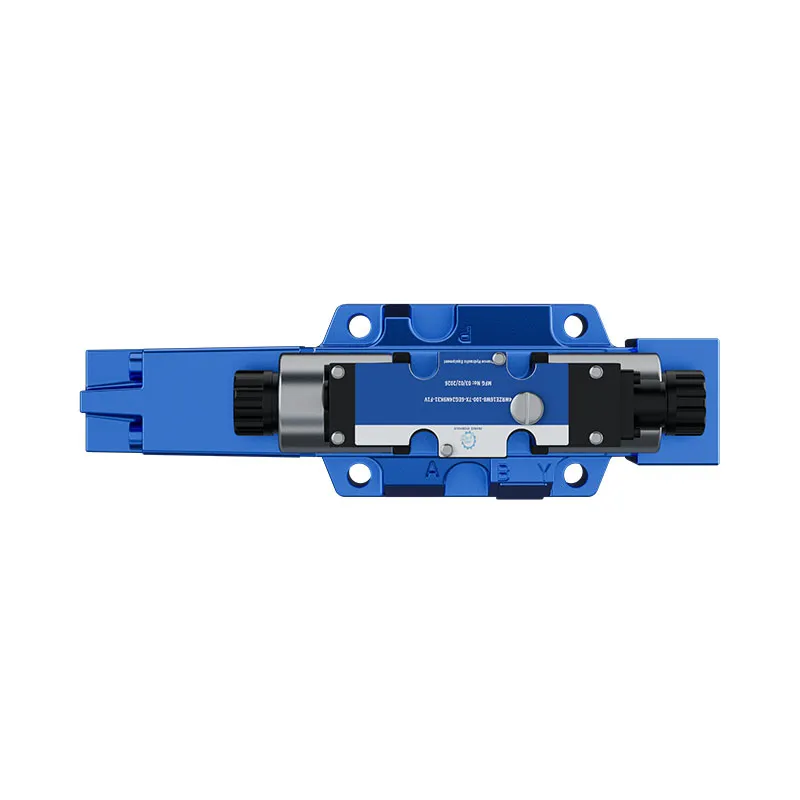
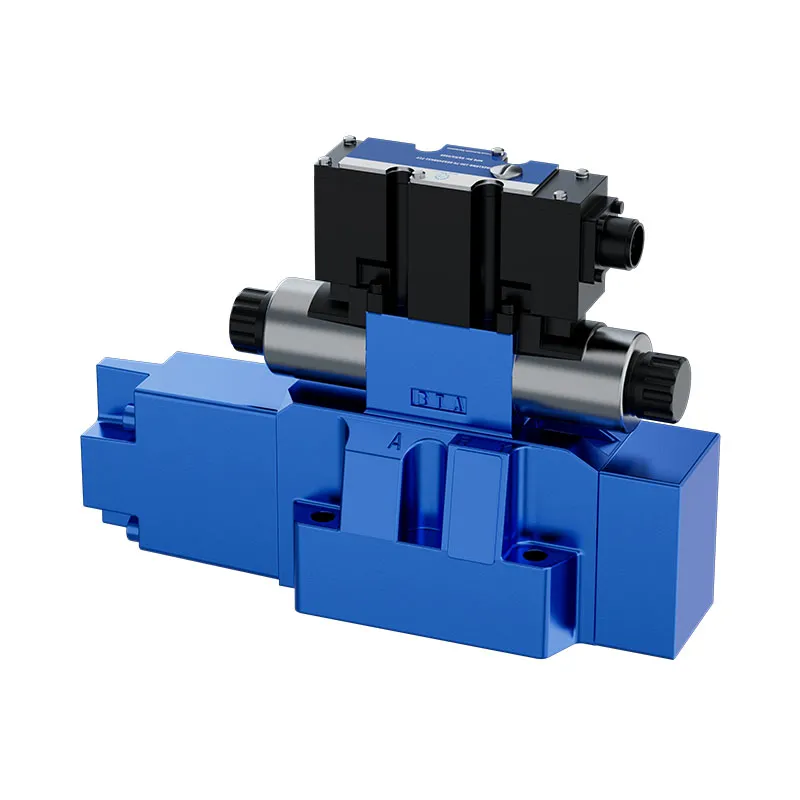
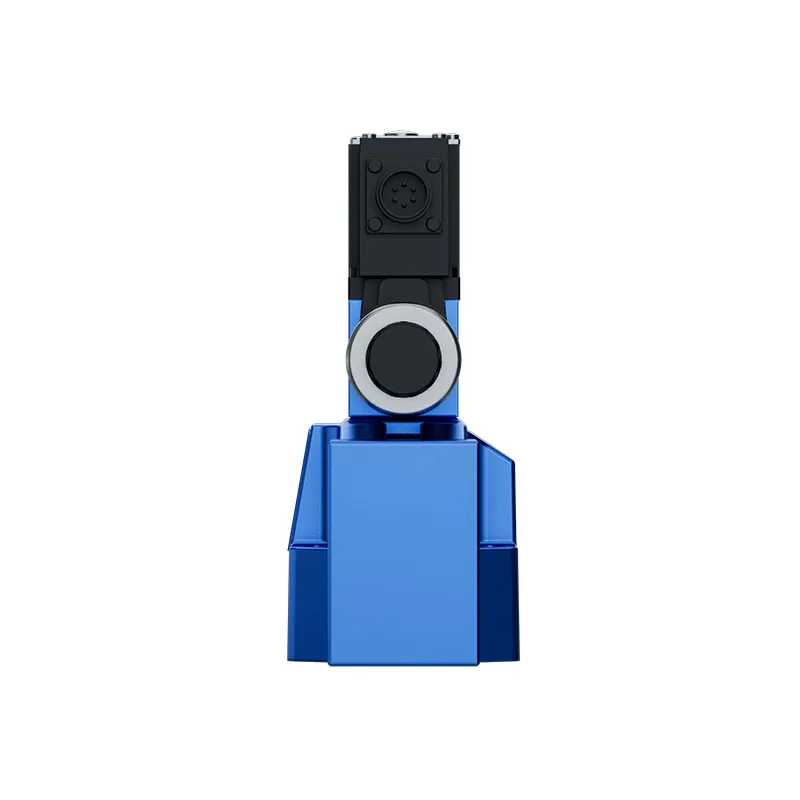
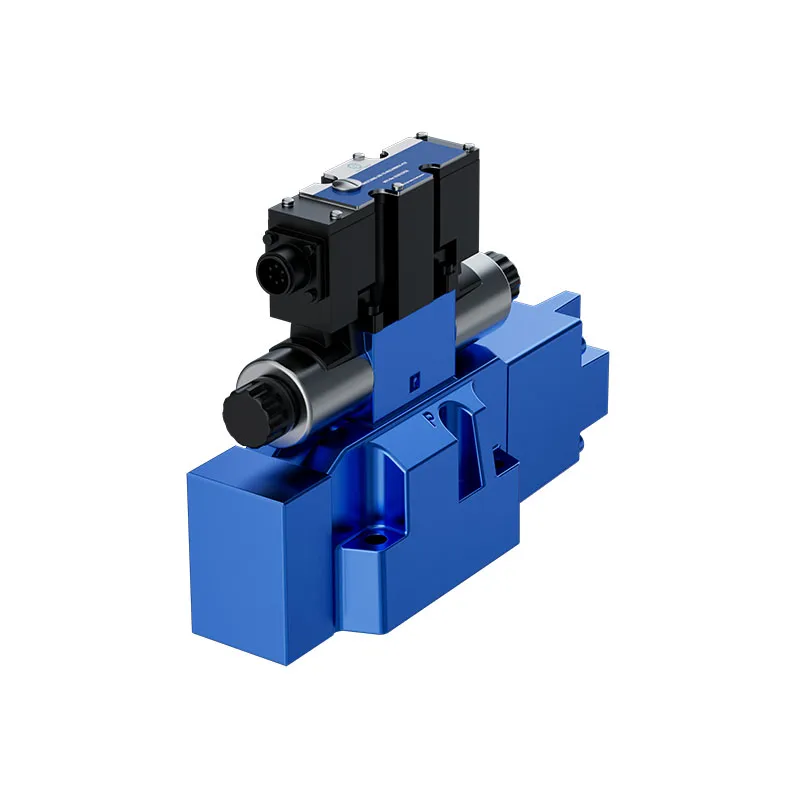
Pilot Proportional Valve for Press 4WRZE
1.Pilotoperated proportional directional valve
2.For subplate mounting
3.The control of direction and rate of flow
4.Spring centered control spool
5.Valve and proportional control electronics from a single source
Detailed description
1.Pilot-operated proportional directional valve: It adopts a pilot control structure, which can realize precise proportional control of the main valve core through the pilot valve, ensuring stable and accurate control of the hydraulic system, and is widely used in occasions requiring stepless adjustment of flow and direction.
2.For subplate mounting: This mounting method is compact and space-saving, facilitating centralized installation and maintenance of the valve group, and ensuring good interchangeability, which is suitable for standardized hydraulic system design and assembly.
3.The control of direction and rate of flow: The valve can simultaneously control the flow direction of hydraulic oil and the flow rate, realizing stepless adjustment of the actuator’s movement direction and speed, meeting the requirements of different working conditions for precise control.
4.Spring centered control spool: The spring-centered design ensures that the spool automatically returns to the neutral position when the control signal is lost, cutting off the oil circuit and preventing accidental movement of the actuator, improving the safety and reliability of the system.
5.Valve and proportional control electronics from a single source: Integrating the valve body and proportional control electronics from one supplier ensures perfect matching between components, reduces compatibility problems, simplifies after-sales maintenance, and guarantees the overall performance and stability of the control system.
Selection and RFQ
This valve series should be selected from the circuit function and approved control requirements. Confirm flow, pressure, spool or control function, electrical interface, mounting pattern and fluid cleanliness before final selection.
Information to include in your RFQ
- Required flow and working pressure
- Circuit function, spool or proportional-control requirement
- Electrical supply, command signal and feedback requirement where applicable
- Mounting pattern, port size, fluid and filtration class
Related resources
Technical data (for applications outside these parameters, please consult us!)
hydraulic (measured with HLP46, θoil=40 ℃+5 ℃ and p=100 bar)
| Size | Size | 10 | 16 | 25 | 32 | 52 | |
| Operating pressure - Pilot control valve |
External pilot oil supply Internal pilot oil supply |
bar | 30 to 100 | 20 to 100 | |||
| _ | |||||||
| bar | 100 to 315 only with "D3" | 100 to 350 only with "D3" | |||||
| -Main valve | bar | Up to 315 | Up to 350 | Up to 350 | Up to 350 | Up to 350 | |
| Return flow pressure | - Port T (port R) (external pilot oil retum) |
bar | Up to 315 | Up to 250 | Up to 250 | Up to 150 | Up to 250 |
| - Port T (internal pilot oil return) |
bar | Up to 30 | Up to 30 | Up to 30 | Up to 30 | - | |
| - Port Y | bar | Up to 30 | Up to 30 | Up to 30 | Up to 30 | Up to 30 | |
| Flow of the main valve | l/min | Up to 170 | Up to 460 | Up to 870 | Up to 1600 | Up to 2800 | |
| Pilot flow at ports X and Y with stepped input signal 0→100% | l/min | 3.5 | 5.5 | 7 | 15.9 | 7 | |
| Pilot volume for switching process 0→100% | cm3 | 1.7 | 4.6 | 10 | 26.5 | 54.3 | |
| Hydraulic fluid | See table below | ||||||
| Hydraulic fluid temperature range(at the valve working ports) | ℃ | -20 to +80 (preferably +40 to +50) | |||||
| Viscosity range | mm2/s | 20 to 380 (preferably 30 to 46) | |||||
| Maximum admissible degree of contamination of the hydraulicfluid, cleanliness class according to ISO 4406 (c) | |||||||
| - Pilot control valve | Class 18/16/13 1) | ||||||
| - Main valve | Class 20/18/15 1) | ||||||
| Hysteresis | % | ≤6 | |||||
The cleanliness classes specified for the components must be adhered to in hydraulic systems. Effective filtration prevents faults and at the same time increases the life cycle of the components.
| Hydraulic fluid | Classification | Suitable sealing materials |
Standards | |
| Mineral oils and related hydrocarbons | HL, HLP | NBR,FKM | DIN 51524 | |
| Flame-resistant | -containing water | HFC (Fuchs HYDROTHERM 46M,Petrofer Ultra Safe 620) | NBR | ISO 12922 |
| Important information on hydraulic fluids! -For more information and data on the use of other hydraulic fluids refer to data sheet 90220 or contact us! -There may be limitations regarding the technical valve data (temperature, pressure range, life cycle, maintenance intervals, etc.)! -The flash point of the process and operating medium used must be 40 K greater than the maximum solenoid surface temperature. - Flame-resistant- containing water:The maximum pressure differential per control edge 175 bar. Pressure preloading at the tank port > 20% of the pressure differential; otherwise, increased cavitation. - Life cycle as compared to operation with mineral oil HL,HLP 50% to 100% |
||||
Electric
| Valvetype | .WRZ 1) | .WRZE | ||
| Voltage type | Direct voltage | |||
| Command value overlap | % | 15 | ||
| Maximum current | A | 1.5 | 2.5 | |
| Solenoid coil resistance | - Cold value at 20 °C | Ω | 4.8 | 2 |
| - Maximum hot value | Ω | 7.2 | 3 | |
| Duty cycle | % | 100 | ||
| Maximum coil temperature 3) | ℃ | 150 | ||
| Protection class of the valve according to EN 60529 | IP65 with mating connectors mounted and locked | |||
Control electronics
| Type 4WRZ | Digital amplifier in Euro-card format 2) | VT-VSPD-1-2X/...according to data sheet 30523 | ||
| Analog amplifier in Euro-card format 2) with 1 ramp time |
VT-VSPA2-1-2X/V0/T1, according to data sheet 30110 | |||
| Analog amplifier in Euro-card format 2) with 5 ramp times |
VT-VSPA2-1-2X/V0/T5, according to data sheet 30110 | |||
| Analog module amplifier 2) | VT-11118-1X/... according to data sheet 30218 | |||
| Type 4WRZE | Analog command value module 2) | Integrated in the valve, see page 14 | ||
| VT- SWMA-1-1X/... according to data sheet 29902 | ||||
| Analog command value module 2) | VT-SWMAK-1-1X/... according to data sheet 29903 | |||
| Digital command value card 2) | VT-HACD-1-1X/... according to data sheet 30143 | |||
| Analog command value card 2) | VT-SWKA-1-1X/... according to data sheet 30255 | |||
| Current consumption | Imax | A | - | 1.8 |
| - Impulse current | A | - | 3 | |
| Command value signal | - Voltage input "A1" | V | - | ±10 |
| - Current input "F1" | mA | - | 4 to 20 | |
1) With Bosch Rexroth AG control electronics
2) Separate order
3) Due to the temperatures occurring at the surfaces of the solenoid coils, the European standards ISO 13732-1 and EN 982 need to be adhered to.
