Wenzhou Prance Hydraulic Equipment Co., Ltd

Hydraulic Control Valves: How Direction, Pressure, and Flow Differ
Hydraulic control valves regulate direction, pressure, and flow in a hydraulic circuit. Buyers usually start with those three function families, then decide whether continuous proportional command, open- versus closed-center matching, and a short set of circuit facts belong in the conversation before any product route is reviewed.
The sections below separate function jobs from actuation and packaging labels, show why circuit-center type matters early, and map the inputs that turn a family answer into a usable supplier discussion.
What Hydraulic Control Valves Do in a Circuit
A hydraulic control valve is a fluid-power device that manages where hydraulic fluid goes, how much pressure a circuit may hold, and/or how fast actuators move. In plain language, it decides the oil path, the force limit the circuit can push against, and/or the speed of a cylinder or motor.
That family role sits upstream of brand labels and model codes. A distributor who receives an RFQ that only says “control valve” still needs to learn whether the buyer wants path control, pressure limiting, or speed control first.
Hydraulic fluid is controlled directly or automatically by these valves so actuators can start, stop, reverse, hold force, or move at a planned rate. Final fit still depends on the complete circuit and the model documentation that applies to that circuit.
The Three Function Families: Directional, Pressure, and Flow
Buyers usually start with three function families—directional, pressure, and flow—because those labels describe different circuit jobs rather than interchangeable SKUs.
A directional control valve starts, stops, or routes flow so an actuator follows the intended path. A pressure control valve limits or sets pressure, often discussed as relief, reducing, or sequence roles at overview level. A flow control valve meters or limits flow so actuator speed can be influenced.
| Function family | Circuit job | Plain-language picture | First buyer question |
|---|---|---|---|
| Directional control valve | Starts, stops, or routes fluid path | Chooses where oil goes so a cylinder or motor moves the intended way | Do we need path control—extend, retract, or hold a work line? |
| Pressure control valve | Limits or sets circuit pressure | Keeps force within a planned limit or sets a pressure condition | Do we need a pressure limit or a pressure condition in the circuit? |
| Flow control valve | Meters or limits flow | Helps set how quickly the actuator moves | Do we need speed control rather than another path change? |
Keep those jobs distinct when an enquiry mixes several labels. Path control and speed control answer different questions, even when both devices sit in the same manifold.
Where Proportional Control Fits Without Becoming a Spec Review
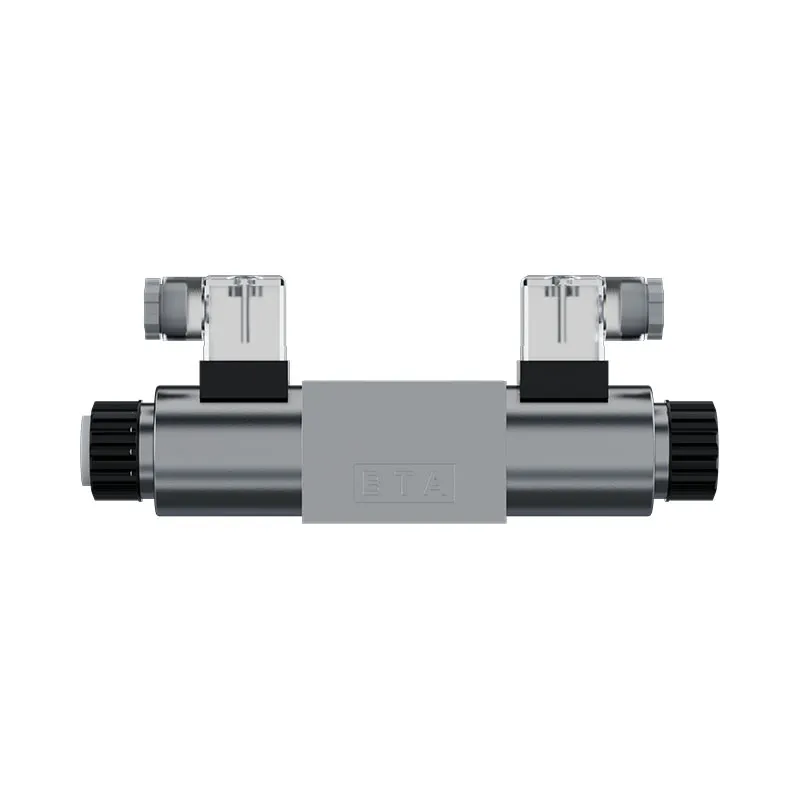
Proportional valves continuously adjust direction and/or flow under an electronic command when the circuit needs more than discrete on/off switching. They sit beside the three function families as a continuous-command option, not as a fourth interchangeable “type” that replaces taxonomy.
An OEM that already knows it needs path control may still ask whether continuous metering belongs in scope. That is the right moment to name proportional control and to keep hysteresis, response curves, and closed-loop detail out of this overview.
When continuous command is in scope, Prance names a Proportional Valve 4WRAE route as a direct-actuated open-loop option for direction and volume flow with a spring-centred control spool. Selection still needs circuit function, flow, pressure, electrical/command interface, mounting, and fluid-cleanliness confirmation.
For hysteresis and related proportional detail, see Hydraulic Proportional Valve Hysteresis Review.
Labels That Are Not Primary Valve Types
Manual, solenoid, and pilot describe how a valve is driven. Monoblock, sectional, cartridge, and subplate describe packaging. Neither set replaces the directional / pressure / flow job.
Solenoid actuation is one common drive method on directional valves. It is not a separate function family. Treating “solenoid valve,” “sectional valve,” and “directional valve” as equal type names collapses three different label systems into one word.

A buyer comparing catalogues can record the function family first, then record actuation and mounting as separate fields. For a deeper actuation contrast, see Manual vs Solenoid Hydraulic Valve.
Match Open-Center or Closed-Center Before You Choose
Circuit-center type changes how a centered valve interacts with the pump, so it must be known before a directional control valve discussion. An open-center circuit often returns pump flow through the valve’s open center when the spool is centered. A closed-center circuit keeps pressure available at the valves without that unload path.
From the field: A TractorByNet open-center or closed-center discussion shows buyers bundling circuit identification with float wear, an extra remote, and GPM sizing for a replacement valve. That mix is why center architecture should be recorded before a directional purchase talk begins.
Mobile-equipment readers often mix open-center circuit and closed-center circuit language with install topology. Wrong center type, or a power-beyond placement that does not match the install, can make an otherwise familiar directional valve the wrong device for that circuit.

Record center type beside function family. Do not use this overview as a relief-setting procedure; that work belongs on Hydraulic Relief Valve Setting Guide.
A Practical B2B Checklist for Hydraulic Control Valves
Collect circuit function, flow, pressure, control signal, mounting, ports, fluid, and cleanliness before talking product routes. Those fields turn a family answer into a conversation a supplier can continue without guessing the machine.
Prance publishes a hydraulic valves product-family route covering directional and proportional options. The Hydraulic Valves family route asks buyers to start with circuit function, flow, pressure, control signal, mounting, and fluid-cleanliness requirements. Those published inputs are the circuit function / RFQ inputs checklist below.
| Information to gather | Why it matters in the conversation | Example clarification |
|---|---|---|
| Circuit function and spool or proportional-control need | Separates path, pressure, speed, and continuous-command jobs | Is the need directional start/stop/direction, pressure limiting, flow metering, or continuous proportional command? |
| Flow and working pressure | Ties the valve discussion to circuit demand | What flow and working pressure does the circuit use in normal operation? |
| Control signal / electrical interface | Defines how the valve will be driven | Manual, solenoid, pilot, or proportional command—and which electrical interface applies? |
| Mounting style and port layout | Names how the valve will be installed and plumbed | What mount pattern and port sizes or orientations are on the machine? |
| Fluid type and cleanliness class | Captures the oil and filtration condition the valve must live with | What hydraulic fluid and ISO cleanliness target apply? |
A system integrator who already knows the job is directional can compare that checklist with the published fields on the family route and on named model pages before opening a product conversation.
Valve Product Context: Family Route and Directional 4WE
Prance publishes a hydraulic-valve product-family route covering directional and proportional options. After the checklist above is filled in as far as the machine data allows, open the Hydraulic Valves family page to compare those published inputs with available circuit facts.
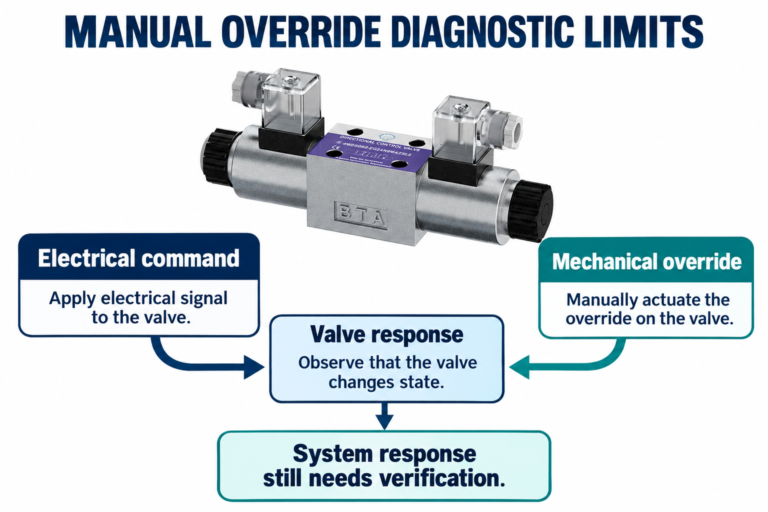
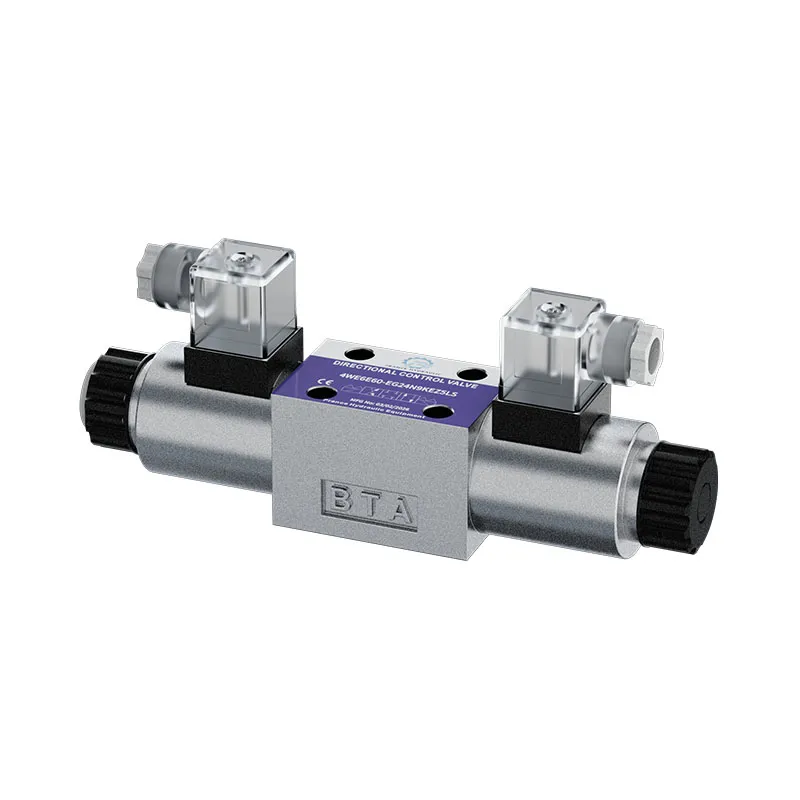
When the need is directional start, stop, and direction of flow, review the Directional Valve 4WE route next. The Directional Valve 4WE route identifies 4WE6 / 4WE10 solenoid-operated directional spool valves that control start, stop, and direction of flow. The same route documents solenoid replacement with the pressure-tight chamber left closed, plus a concealed manual override for emergency spool movement.
RFQ fields on that route include flow, pressure, circuit/spool function, electrical interface, mounting, ports, fluid, and filtration class. Incomplete circuit data is the wrong moment to treat either route as a system fit.

If continuous command remains in scope after the directional need is clear, keep the Proportional Valve 4WRAE route as the open-loop proportional option named earlier rather than collapsing both jobs into one model discussion.
What This Guide Deliberately Leaves to Related Topics
Check-valve applications, relief setting, manual-versus-solenoid choice, coil failure, and proportional hysteresis belong in dedicated articles, not this overview. This overview stays on family taxonomy, label hierarchy, circuit-center matching, and the RFQ handoff.
- Check-valve application depth: Hydraulic Check Valve Applications
- Relief setting procedure: Hydraulic Relief Valve Setting Guide
- Actuation contrast: Manual vs Solenoid Hydraulic Valve
- Coil-specific failure: Hydraulic Solenoid Valve Coil Failure
- Proportional hysteresis: Hydraulic Proportional Valve Hysteresis Review
Contamination can stick or wear a valve, yet type selection is not a cleanliness substitute and is not a repair procedure. Heat, sticking, or wrong motion still need circuit evidence beyond a family label.
FAQs
What are hydraulic control valves?
Hydraulic control valves are fluid-power devices that manage direction, pressure, and/or flow so actuators can move, hold force, or change path as the circuit requires. Buyers usually meet them as a family of directional, pressure, and flow valves before any model conversation begins.
What are the three main types of hydraulic control valves?
The three main types are directional, pressure, and flow control valves. Proportional valves add continuous electronic adjustment of direction and/or flow when discrete switching is not enough.
How does a directional control valve differ from a flow control valve?
A directional control valve sets the fluid path—start, stop, or reverse. A flow control valve meters or limits flow to influence actuator speed. Path and speed are different jobs, so the two labels are not interchangeable SKUs.
When should a buyer consider a proportional valve?
Consider a proportional valve when the circuit needs continuous command of direction and/or flow rather than only on/off switching. Keep hysteresis and response detail on a dedicated proportional page once that need is confirmed.
Why does open-center vs closed-center matter for control-valve choice?
Open-center and closed-center architectures change how a centered valve interacts with the pump. Matching center type before choosing a directional control valve reduces the risk of installing a familiar-looking valve that does not unload or supply the circuit correctly.
What information should I prepare before asking for a hydraulic control valve quotation?
Prepare circuit function, flow, working pressure, control signal or electrical interface, mounting, ports, fluid, and filtration or cleanliness. Add spool function or proportional-control need when those details are known. Those are the same classes of inputs published on Prance valve routes.
Can valve type alone diagnose heat, sticking, or wrong motion?
No. Family labels identify the job a valve is meant to do; they do not diagnose heat, sticking, or incorrect motion by themselves. Those symptoms need circuit evidence, and contamination warnings do not replace a maintenance investigation.
Is a solenoid valve the same thing as a hydraulic control valve?
No. Solenoid describes an actuation method used on some control valves. The primary function families remain directional, pressure, and flow, with proportional control as a continuous-command option when needed.