Wenzhou Prance Hydraulic Equipment Co., Ltd.

Clasificaciones IP de solenoides hidráulicos: bobina, conector y protección instalada
A hydraulic solenoid valve IP rating describes specified protection against access, solids, and water ingress into the relevant electrical enclosure. It must be checked for the complete installed coil, connector, gasket, and cable arrangement. A sealed-looking plug or a rating printed on one component does not establish the protection of the finished assembly. Select against the actual exposure and obtain the conditions attached to the exact supplied combination.
For buyers, the most useful question is not simply whether the valve is waterproof. Ask which parts the rating covers, how they must be assembled, and whether the exposure involves rain, jets, immersion, chemicals, or condensation. Those conditions are different. This guide explains the decision without assigning an unverified IP rating to a Prance product.
Read both numerals and the scope of the claim
IEC 60529 classifies degrees of protection provided by enclosures. The first characteristic numeral concerns protection associated with solids and access; the second concerns water. Intertek’s testing overview provides a useful public explanation of the numbered categories. The standard’s existence does not mean that every electrical valve has been tested to every category.
For familiar examples, IP65 combines dust-tight protection with the specified water-jet category, while IP67 combines dust-tight protection with temporary immersion under specified test conditions. These descriptions are category explanations, not guarantees against every real cleaning or flooding event. The declaration and test conditions for the actual assembly remain decisive.
An X indicates that the corresponding characteristic numeral is not specified in that code; it should not be read as a numeric zero. Ask which characteristic has actually been declared. Also identify whether the claim covers the coil enclosure, connector alone, or their assembled interface. Ambiguous scope is a purchasing question to resolve before installation.
Match the exposure instead of choosing the largest number
Describe the environment in physical terms: where the valve is located, how liquid reaches it, how often exposure occurs, and whether power is present during that exposure. A valve inside a clean cabinet faces different conditions from one beside a wash station or on exposed mobile equipment.
Temporary immersion and water-jet resistance address different test situations. Do not assume an immersion declaration automatically covers every jet-cleaning exposure. Where both conditions are relevant, request explicit evidence for both, together with any restrictions. A larger second numeral is not a substitute for understanding the kind of water exposure.
Hot cleaning, detergents, salt, hydraulic oil, ultraviolet exposure, and impact introduce additional questions beyond the basic water category. Ask for material compatibility and environmental qualifications separately. An enclosure that prevents water ingress during its declared test may still suffer chemical attack, corrosion, or cable damage in an unsuitable application.
Treat the electrical connection as an assembly
The sealing path can include the coil connector face, flat gasket, plug housing, retaining screw, cable gland, cable jacket, and any unused opening. Each interface must match the manufacturer’s documented combination. A plug that fits electrically may have different sealing details or assembly requirements.
Confirm the connector form, keying, contact arrangement, cable outlet, and electrical options. Indicator lamps, rectifiers, and suppression devices can change the supplied connector configuration. They must suit the voltage, current type, driver, and wiring. A higher ingress rating does not correct reversed polarity or an incompatible suppression circuit.
Cable diameter matters because a gland is designed to seal over a defined range. The sealing surface should be the intended cable jacket, with the correct insert and strain relief. Tape around an undersized cable is not documented gland selection. Obtain the connector’s permitted cable range and tightening instructions rather than using an unrelated plug’s values.
Use a practical selection table
This table translates exposure into questions for the supplier and installer. It is a qualitative selection aid, not a product parameter table. IEC’s scope and Intertek’s category explanation support the rating terminology; the application checks require evidence for the actual valve assembly.
| Exposure or installation condition | Information to verify | Common purchasing mistake |
|---|---|---|
| Dust near an exposed power unit | Declared solids protection and the complete connector seal path | Treating a dust cap as an operating enclosure |
| Outdoor rain and splash | Applicable water category, installation orientation, weather and material limits | Calling the product waterproof without defining exposure |
| Routine washdown | Cleaning pressure, temperature, chemicals, distance, and matching qualification | Assuming an immersion rating covers a cleaning jet |
| Possible temporary flooding | Declared immersion conditions and assembly scope | Inferring indefinite underwater operation from IP67 |
| Oily or chemically aggressive area | Separate material compatibility evidence | Using a water test as proof of oil or detergent resistance |
| Frequent unplugging during service | Permitted maintenance, seal replacement, and inspection procedure | Expecting a disturbed or missing gasket to retain the declaration |
| Cable routed downward from a wet structure | Gland suitability, strain relief, and routing that avoids liquid collection | Considering only the plug-to-coil joint |
Inspect with electrical and hydraulic energy controlled
Before disconnecting the plug or disturbing the valve, follow the machine’s energy-control procedure. Electrical supply isolation alone may leave a suspended load, accumulator, or pressurized line capable of movement. Hydraulic isolation alone does not remove electrical shock or unexpected energization hazards. Confirm the safe state appropriate to the work.
Inspect for a missing, folded, cut, hardened, or incompatible gasket. Look for cracks, damaged threads, corrosion, cable-jacket damage, and incomplete seating. Do not clean contacts or sealing surfaces with an arbitrary solvent; use the connector manufacturer’s permitted method. A chemical that removes dirt can also damage a seal or housing.
Replace damaged sealing parts with specified items. Apply the documented fastening and gland instructions with the appropriate tools. Over-tightening can damage a housing or distort a gasket, while insufficient retention can leave the interface unsecured. This article intentionally gives no universal torque because the connector design and supplied parts determine it.
Keep water protection separate from hydraulic sealing
The electrical IP declaration does not establish hydraulic port leakage performance, spool leakage, operating pressure, or the compatibility of the valve’s wetted seals. These belong to the hydraulic specification and its operating conditions. A dry connector and a leaking hydraulic fitting are different problems requiring different evidence.
Likewise, an electrically intermittent valve is not automatically suffering water ingress. Supply voltage, wiring resistance, driver behavior, coil condition, and mechanical operation can create similar symptoms. Record whether the problem correlates with cleaning or weather, then inspect and test using the manufacturer’s procedure. Do not diagnose ingress from a blown fuse alone.
If moisture is found, identify the entry route before replacing only the coil. Water can travel along cables or collect around connectors, and condensation can be relevant even without a direct jet. A like-for-like replacement may fail again if the installation path remains unchanged. Correct the cause within the approved assembly and environmental requirements.
Interpret the product reference carefully
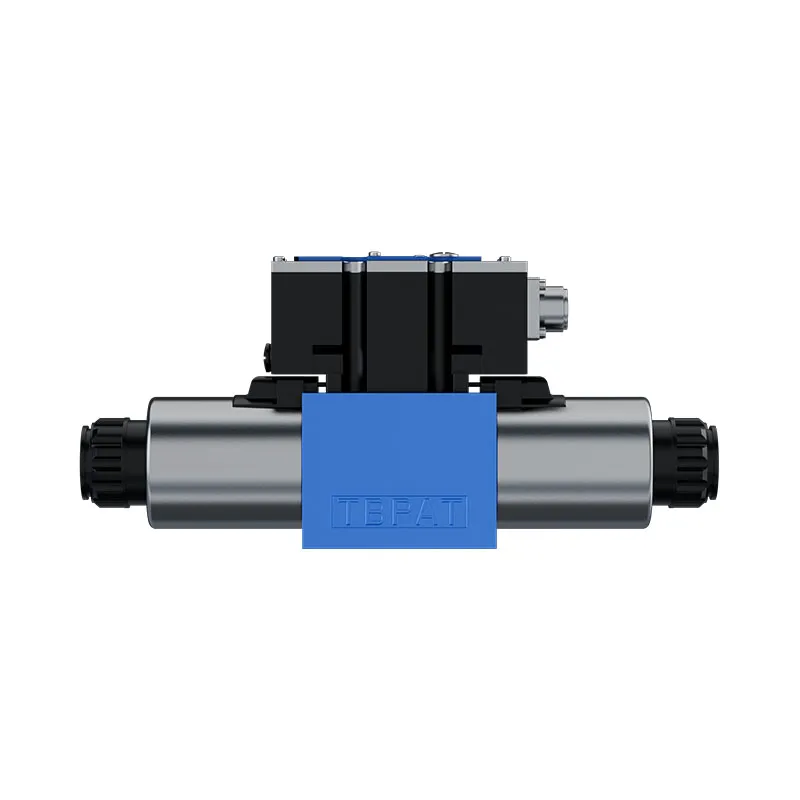
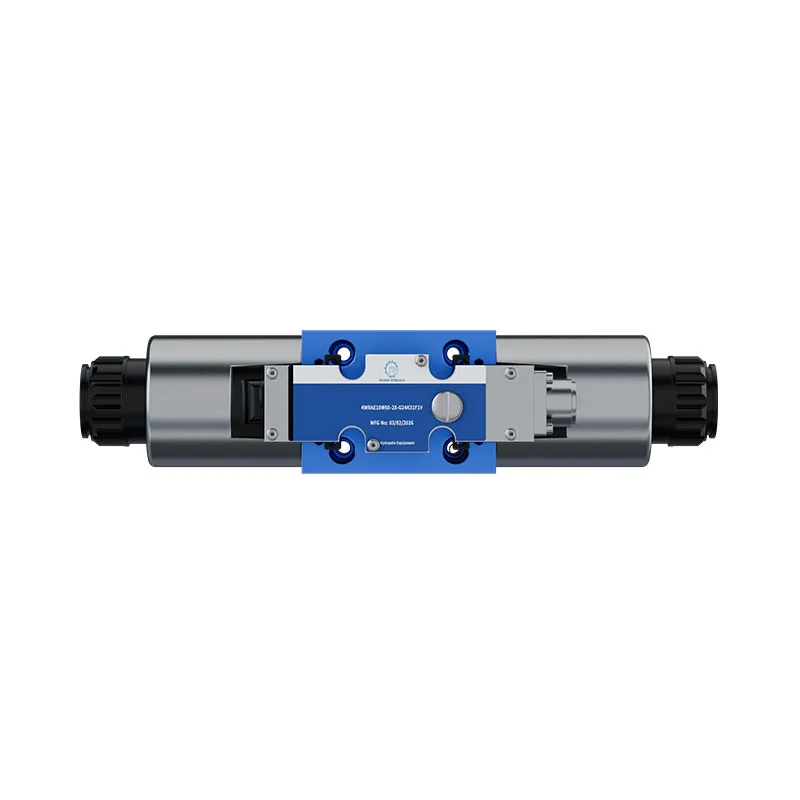
Prance’s 4WRAE product is a proportional hydraulic valve with an electrical connection, making it a relevant example for discussing connector identification and environmental requirements. The original product photographs show the exterior supplied reference. They do not prove its ingress rating, allowable cleaning exposure, or certification status.
Use the complete valve and electrical-connection code when requesting documentation. Different coil, connector, and electronics versions can have different requirements. Do not infer a rating from the appearance of a rectangular plug or transfer a declaration from another valve family. If the rating is unavailable, treat that as an unresolved selection input rather than printing an assumed IP65 label.
The photographs also cannot confirm that a site-installed gasket and cable match the documented combination. Before accepting a replacement, compare the supplied parts with the purchase specification and installation instructions. Keep the reference to the exact supplied assembly, not only the broad valve family name.
Ask for evidence that matches the purchase
A useful quotation request identifies the valve function, full model code, coil voltage and current type, connector option, cable arrangement, and target environment. Describe cleaning or flooding in concrete terms. If a customer specification names a particular IP code or another enclosure standard, include that requirement without attempting an informal equivalence.
Ask the supplier for the rating scope, relevant assembly instructions, restrictions, and supporting declaration or test evidence appropriate to the purchase. A generic catalogue statement may be useful for screening but should not override configuration-specific documentation. Retain the document revision with the purchased model and connector identification.
IP and NEMA enclosure designations should not be treated as interchangeable labels. NEMA’s published comparison specifically warns against converting an IEC classification directly into a NEMA type. Where the project requires a NEMA designation, request evidence for that designation rather than substituting an IP number selected from a comparison chart.
Verify serviceability without improvising an ingress test
After approved assembly, inspect seating, cable retention, routing, and the absence of visible damage. Complete the electrical and functional checks specified for the equipment. Refit covers and guards, and verify that servicing has not introduced unexpected valve operation or unsafe load behavior. Keep the result tied to the work actually performed.
Do not spray, immerse, or pressure-wash an energized valve to demonstrate that it is waterproof. Formal ingress tests use defined equipment, procedures, conditions, and acceptance criteria. A workshop hose test can expose personnel to hazards, damage equipment, and still fail to demonstrate compliance with the declared standard.
Set maintenance attention around the real exposure and service history. Inspect after connector disturbance or visible damage, and review recurring moisture complaints rather than repeatedly changing coils. Keep a small set of correct replacement seals and connector parts where the maintenance plan permits. The objective is to preserve the documented assembly through its service life, not simply to purchase a higher number on the next order.
Preguntas frecuentes
¿Significa automáticamente IP67 que es seguro para el lavado a presión?
No. Temporary immersion and cleaning jets are different exposures. Obtain explicit qualification for the cleaning conditions, including temperature and chemicals where applicable, and follow the assembly restrictions.
¿Establece una clasificación de conector la clasificación completa de la válvula?
No. The connector, mating face, gasket, cable gland, and installation must form the documented combination. Confirm the scope of the declaration for the finished assembly.
¿Puedo usar un cable diferente si pasa por la glandula?
Physical passage through the gland is insufficient. Check cable diameter, jacket suitability, strain relief, and the connector manufacturer’s assembly instructions before accepting the substitution.
¿Es una clasificación IP prueba de protección contra explosiones?
No. Ingress protection does not establish suitability for an explosive atmosphere. Any hazardous-location requirement needs its own applicable approvals, marking, configuration, and installation instructions.
¿Qué pasa si la página del producto no indica una clasificación IP?
Request configuration-specific evidence before selecting it for a defined exposure. Do not infer the rating from a photograph, the valve family name, or a similar-looking connector.
Recursos relacionados de productos e ingeniería
Válvula proporcional 4WRAE, gama de productos de válvulas hidráulicas, Conector DIN vs Conector Deutsch para Válvulas Solenoides Hidráulicas, Muescas de medición del carrete hidráulico: cómo la geometría moldea el control de bajo flujo. Confirmar el código completo del producto y los requisitos de aplicación al solicitar una revisión de configuración.
Referencias técnicas
- IEC60529 scope
- Intertek IP enclosure testing
- NEMA enclosure types and limits of IP conversion
- NIOSH control of hazardous energy
Lección universitaria: válvulas hidráulicas
5.3 – Directional Control Valves by NPTEL-NOC IITM provides background on valve operating principles. University lesson on directional valve construction and actuation provides context to identifying the solenoid assembly. It does not establish environmental ratings. It supplements the component fundamentals; it is not a test procedure for the complete circuit discussed above.