Wenzhou Prance Hydraulic Equipment Co., Ltd.

What Does Zero Leakage Mean for Hydraulic Valves? Seat vs Spool Sealing
Zero leakage in a hydraulic valve is meaningful only when the supplier defines the sealing path, operating state, test conditions and detection limit. A seated valve and a spool valve control internal flow in different ways, so the same phrase cannot be applied casually to both. A blocked port in a circuit symbol does not promise an absolute seal for unlimited time. For a buyer, the practical task is to translate “zero leakage” into a measurable acceptance statement and then check whether that statement is sufficient for the machine’s holding requirement. This article addresses the meaning of leakage claims; it is not a step-by-step live pressure test.
Separate external leakage from internal bypass
External leakage leaves the component through an unintended route to the surroundings. Internal leakage passes between regions inside the valve. A dry valve exterior can therefore coexist with internal bypass. Equally, observing an actuator drift does not prove that the directional valve is the only internal leakage path.
Specify the route being discussed. P to T leakage, a work port to tank, one work port to another and pilot-stage flow are different quantities. A supplier may quote one while an application depends on another. Adding them together without understanding the measurement arrangement can also create an incorrect comparison.
For a procurement request, write the port pair and valve position beside the leakage requirement. If the requirement is simply “no oil leaks,” ask whether that refers to external sealing, internal holding or both. Clarifying this before ordering is more useful than debating an unqualified marketing phrase after installation.
How spool sealing differs from seat sealing
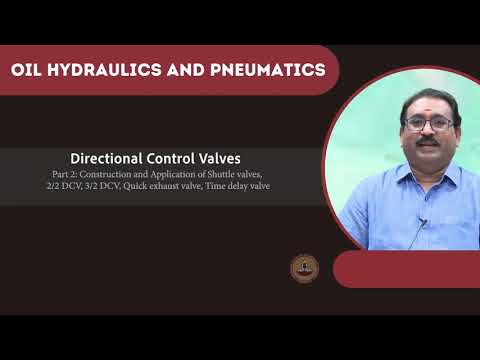
A spool moves inside a bore or sleeve and connects ports as its lands pass the port openings. Clearance at that moving interface permits movement and influences internal bypass. NPTEL’s spool-valve lesson identifies clearance, fluid viscosity and pressure as factors affecting sealing. A neutral symbol showing blocked connections describes intended function, rather than a perfect physical barrier.
A seated design closes an element against a seat. That contact can provide much tighter shutoff under specified conditions, but the result depends on the design, condition and pressure direction. Debris or damage at the sealing interface can defeat the intended shutoff. The construction name alone is not a lifetime guarantee.
This distinction helps explain why a precision metering valve and a load-holding element may serve different roles in the same circuit. A valve can provide useful directional or proportional control while another device handles a demanding holding function. Whether that combination is appropriate must be established by the machine designer.
Why the test conditions change the meaning
Leakage should be associated with pressure difference, fluid, temperature, valve position and measurement period. These conditions influence both the leakage mechanism and how it is observed. A result measured with relatively viscous fluid cannot be assumed to represent a warmer, less viscous operating condition.
Pressure difference matters because a port’s absolute pressure alone does not describe the driving condition across the sealing path. A work port at elevated pressure with a similarly pressurized neighboring passage differs from that same work port connected against tank pressure. A report that lists only inlet pressure leaves this ambiguity unresolved.
Duration and detection also matter. “No visible drops” during a short observation is not the same measurement as a collected volume over a defined interval. Neither is automatically wrong, but they answer different questions. The acceptance criterion should state the units and the instrument’s practical resolution rather than imply that an unobserved quantity is mathematically zero.
Do not import a leakage class without its scope
A leakage class is part of a particular specification or test framework. Its label has meaning only with the relevant document, edition, valve category and conditions. A class used for process shutoff equipment should not be transferred automatically to a hydraulic directional spool valve.
SAE J1235 concerns measuring and reporting internal leakage of hydraulic fluid-power valves within its stated scope. Its publicly available scope is useful for identifying an appropriate reporting subject. That public description does not provide a universal allowable leakage value, and this article does not claim access to the full paid procedure.
If a quotation says “Class VI” or “zero leakage” without identifying the governing document, request clarification. Ask which ports and positions are covered, whether reverse pressure is included and whether the quoted value is a production acceptance limit or typical performance. Treat an undefined class as an unresolved specification, not as confirmed superior performance.
Turn the claim into an acceptance statement
The table below is a qualitative purchasing aid based on the distinction between spool sealing in the NPTEL lesson and the measurement/reporting subject of SAE J1235. It supplies no manufacturer-specific limits.
| Vague statement | Missing information | A clearer requirement should identify |
|---|---|---|
| Zero leakage | Measurement method and scope | Port pair, position, pressure difference and detection limit |
| Leak-free neutral | Internal path and time | Which work ports are held, fluid condition and observation duration |
| No external leakage | Whether internal holding is covered | Separate external sealing and internal bypass criteria |
| Meets a leakage class | Governing document and applicability | Standard, edition, relevant valve category and test conditions |
| Tested at working pressure | Downstream pressure and temperature | Both sides of the measured path and the fluid condition |
| Holds the load | Complete machine behavior | Permitted movement, load condition, time and all possible leakage paths |
A usable acceptance statement can be structured without inventing a number: “For the identified valve configuration in the identified position, measured flow from the specified pressurized port to the specified collection port shall not exceed the agreed limit under the agreed fluid and temperature conditions.” Fill the limit from the approved specification, not from a generic example.
cURL Too many subrequests by single Worker invocation. To configure this limit, refer to https://developers.cloudflare.com/workers/wrangler/configuration/#limits
cURL Too many subrequests by single Worker invocation. To configure this limit, refer to https://developers.cloudflare.com/workers/wrangler/configuration/#limits.
cURL Too many subrequests by single Worker invocation. To configure this limit, refer to https://developers.cloudflare.com/workers/wrangler/configuration/#limits.
cURL Too many subrequests by single Worker invocation. To configure this limit, refer to https://developers.cloudflare.com/workers/wrangler/configuration/#limits.
cURL Too many subrequests by single Worker invocation. To configure this limit, refer to https://developers.cloudflare.com/workers/wrangler/configuration/#limits
An actuator that moves while the control is neutral presents a system symptom. Depending on the circuit, possible contributors include valve bypass, cylinder internal leakage, thermal changes and movement of the load itself. A pressure decay can also have several causes. An unqualified zero-leakage claim does not resolve that diagnostic problem.
Use the approved isolation and diagnostic procedure to separate the relevant volumes and paths. Support the load by the specified safe means and control stored energy before connecting instruments or opening the system. Do not disconnect a loaded actuator line as an informal leakage test.
If a measured component result meets its specification while the machine still moves too far, revisit the system requirement. The correct response may be a design change or a different holding arrangement rather than demanding an impossible guarantee from the same metering component.
Make the supplier response comparable
Compare results only after aligning pressure difference, temperature, fluid and measurement method. Keep typical values separate from maximum acceptance limits. A brochure’s best-case number should not be placed directly beside another supplier’s guaranteed worst-case value and treated as an equal comparison.
Also ask how the claim applies over the intended service conditions. New-component acceptance and in-service inspection are different decisions. If a supplier does not provide a wear limit, do not invent one by multiplying the new leakage figure by a convenient factor.
The next purchasing step is to return a short, explicit acceptance requirement for confirmation. The next maintenance step is to identify the actual leakage path through a safe diagnostic process. Both are more reliable than treating the word zero as a complete engineering specification.
Preguntas frecuentes
Does a closed-center spool symbol mean zero internal leakage?
No. It identifies the intended port connections in that position. Physical sealing still depends on the valve construction, clearances, fluid and pressure conditions.
Is a seated valve always leak-free?
A seated design can provide tight shutoff, but the claim must include conditions and an acceptance criterion. Contamination, damage and the applicable pressure direction still matter.
Can I compare two leakage values at different oil temperatures?
Not as equivalent results without further analysis. Temperature affects viscosity, and viscosity influences leakage. Ask for comparable test conditions or the appropriate performance data.
Does SAE J1235 set one allowable leakage for every valve?
Do not assume that. Its public scope addresses measurement and reporting for the stated valve applications. The applicable acceptance value must come from the agreed specification and relevant documentation.
Does passing a valve leakage test prove a suspended load is safe?
No. Load retention is a complete machine function. Review all hydraulic and mechanical paths, the permitted movement and the required protective measures for that application.
Recursos relacionados de productos e ingeniería
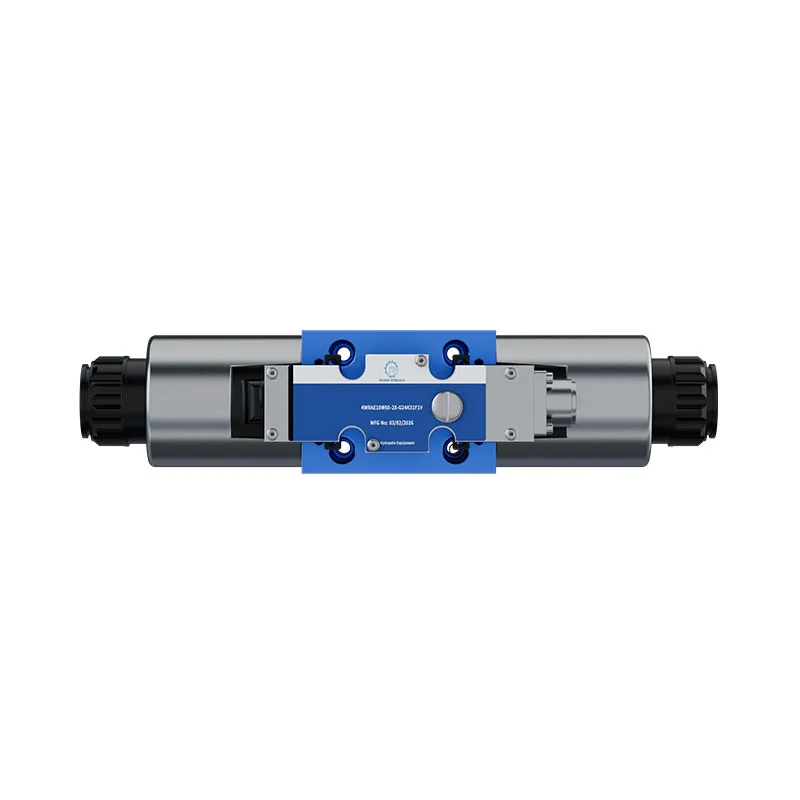
Válvula proporcional 4WRAE, gama de productos de válvulas hidráulicas, Prueba de fugas internas del ventilador direccional hidráulico, Clasificaciones IP de solenoides hidráulicos: bobina, conector y protección instalada. Confirmar el código completo del producto y los requisitos de aplicación al solicitar una revisión de configuración.
Referencias técnicas
- NPTEL: spool construction and leakage factors
- SAE J1235_202301: public scope for measuring and reporting internal leakage
Further learning: hydraulic valves
5.2 – Directional Control Valves by NPTEL-NOC IITM provides background on directional valve construction and flow routing. The university lesson provides directional-valve construction background for understanding the difference between intended port closure and an internal sealing requirement. It supplements the component fundamentals; it is not a test procedure for the complete circuit discussed above.